Finding the right balance between cost and durability matters for anyone who shares a home with an active pet. This intro looks at reliable options, from the Refined Feline Lotus Cat Tower to the Metropolitan Cat Condo, and shows why some choices last while others wear out fast.
The Frisco 42-in Heavy Duty Faux Fur Cat Tree & Condo and the Yaheetech 54″ Cat Condo offer affordable entry points without immediate replacement. Small-space solutions like the HOOBRO Small Cat Tree fit tight rooms while still standing up to daily play.
Owners should evaluate stability, materials, and size before buying. Quality pieces reduce destructive scratching and keep cats engaged. Whether choosing a lower-cost model or a premium investment piece, the goal is the same: safe climbing, lasting use, and a happier indoor life for pets.
Key takeaways: Choose stable designs and durable materials; prioritize models that match living space and activity level.
Why Vertical Space Matters in Small Apartments
In tight living quarters, using vertical zones turns unused wall and air space into play areas that meet a pet’s needs.
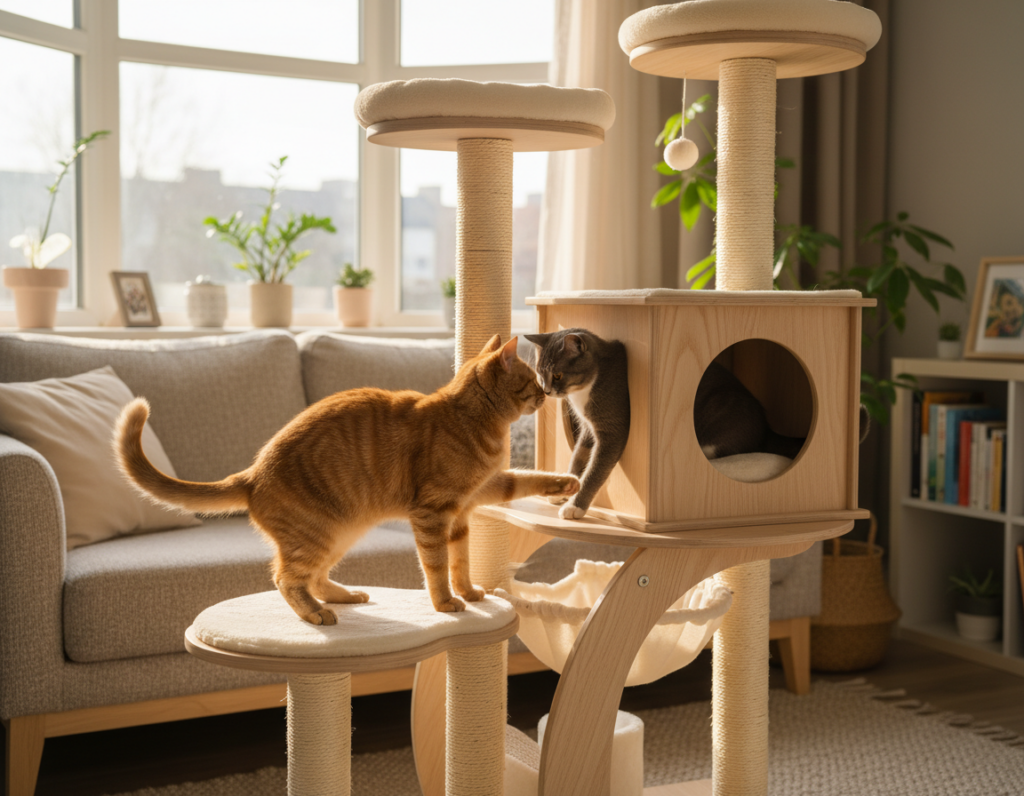
Vertical cat furniture gives cats high vantage points where they feel safe. Raised perches let them observe without conflict and help reduce tension when multiple pets share one home.
Moving play off the floor creates breathing room for people and expands total territory for pets. Tall structures add climbing routes, nap spots, and lookout posts without using precious square footage.
Studies show that vertical access lowers inter-cat stress by offering retreat spaces and separate levels. A well-placed tower or shelf system can turn a cramped unit into a multi-level playground.
Maximizing height prevents boredom and the destructive behaviors that follow. Every cat benefits from a dedicated climbing area, especially in small living spaces where floor options are limited.
Essential Features for Budget Cat Furniture Apartment Living
Smartly designed towers save floor area while giving cats multiple activity zones. A well-planned piece turns vertical space into climbing, scratching, and resting spots without crowding the room.
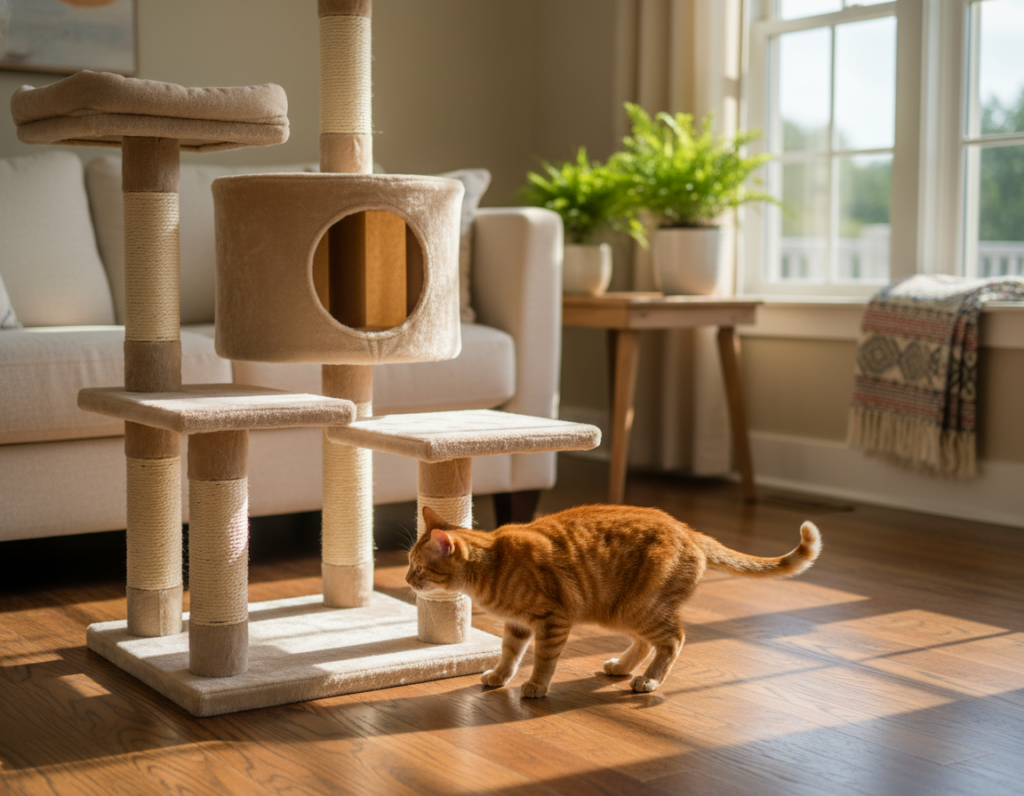
The ideal selection uses sturdy wood frames and sisal-wrapped posts for long-lasting wear. Solid construction prevents wobble when pets leap between platforms.
Multi-level functionality is key. Multiple platforms, perches, and beds let cats jump, climb, and reach the top. This supports play and helps keep indoor cats fit.
- Space-saving footprint with stacked platforms and cubbies
- Durable wood posts and sisal scratching posts for daily use
- Integrated perches, beds, and cozy hideaways on several levels
Style matters too. Choose a piece that complements living space so trees and cat trees feel like part of the room. Proper design keeps multiple pets engaged and reduces destructive scratching.
Evaluating Stability and Material Quality
A properly built climbing system starts with a solid frame and a heavy base that resists tipping. Strong wood or metal framing will outlast thin particle board and keep the structure secure during rough play.
Stability matters. Wobbly designs make cats lose confidence and avoid the piece entirely. A wide, heavy base reduces tipping and keeps jumps safe.
Check connections closely. Make sure scratching posts are firmly attached and that every post is screwed into the base and platform. Loose posts are the first thing to fail under daily use.
- Prefer solid wood or reinforced plywood over cheap board for long life.
- Inspect fabric durability — cats will claw surfaces repeatedly.
- Choose pieces with reinforced joints and metal fasteners when possible.
Investing in well-made trees reduces replacement and keeps pets safe while jumping or lounging. Thoughtful selection of materials and build quality helps furniture stay useful and calm in a busy apartment home.
The Benefits of Tall Cat Condos
Tall condos turn vertical inches into purposeful play and rest areas for indoor pets. They allow owners to free up floor space while giving animals multiple platforms and private levels. A unit that reaches about six feet lets pets climb, jump, and nap without sprawl.
Placement Hacks for Small Rooms
Place a tall tree against a wall or near a sunny window to give views without blocking walkways. Anchoring the piece to the wall or choosing one with a wide base reduces tipping and improves safety.
If someone works from home, a condo in the workspace keeps pets nearby but occupied. For multi-pet homes, tall designs create separate levels so each animal has a private place to rest and observe.
- Use wall-adjacent placement to save floor area and stabilize the structure.
- Choose a model with a large base to withstand active jumps and rough play.
- Look for top platforms and enclosed perches that encourage daytime napping and quiet retreat.
“Vertical designs maximize living space while supporting exercise, rest, and multi-pet harmony.”
Design matters: pick the right size and base so the condo suits the room, matches décor, and keeps pets safe on every level.
Scratching Posts for Every Budget
A reliable scratching post can redirect natural scratching and save living surfaces. Owners should pick posts that fit size, materials, and a pet’s habit so claws stay healthy and rooms stay intact.
Sisal Fabric vs Rope
Sisal fabric grips claws and resists fraying; the Purrfect Post uses real wood wrapped in sisal fabric for long life. Sisal rope can work, but it often loosens and shows wear faster than fabric options.
- Wood core with sisal fabric lasts longer and feels solid under paw.
- Rope is inexpensive but may fray and require replacement sooner.
- Integrated posts on many cat trees give multiple textures and scratching options.
Training Your Cat to Scratch
Place a tall post so the animal can fully stretch while scratching. Use catnip or a wand toy to draw attention to the post and reward use with praise or treats.
“Provide several posts and positions to keep cats engaged and protect other surfaces.”
For more tested options and product guidance, see this helpful guide on best cat trees and scratching posts.
Maximizing Comfort with Compact Cat Beds
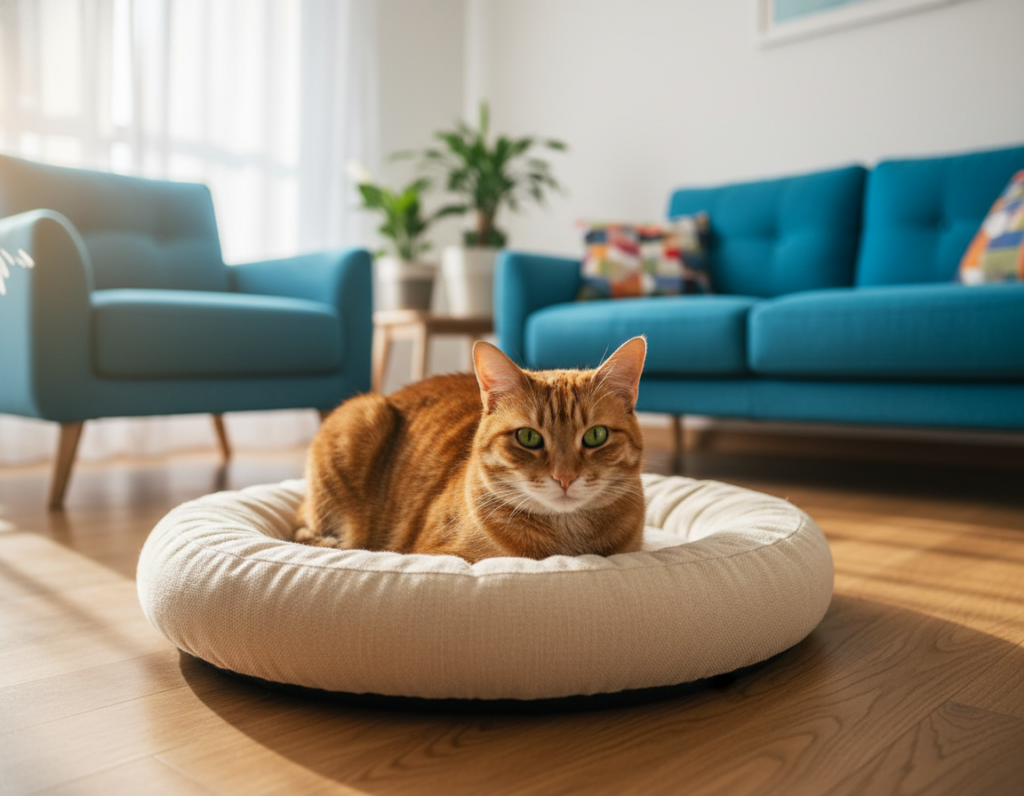
A small, well-placed bed can turn an overlooked shelf or table into a favorite nap spot. Compact beds save floor space and give pets a private retreat in busy rooms.
Stability matters. Cats avoid beds that wobble or slide. Secure a bed to a table or platform and test it with gentle pressure before regular use.
Many cat trees include built-in beds, which is an efficient way to add a cozy spot without adding more floor pieces. Elevated beds often feel safer to cats and encourage longer naps.
Provide several beds around the living area so animals always have a warm place to sleep, whether on a top perch, a windowsill, or a low floor cushion.
- Pick a soft, washable cover to keep the bed fresh.
- Choose a model with a non-slip base for tabletops.
- Consider beds that attach to a tree platform to combine rest and scratching options.
Placement is key: place beds near sunlight, away from high-traffic walkways, and on stable surfaces to increase daily comfort and use.
Versatile Play Options like the Ripple Rug
The Ripple Rug is a compact, foldable play mat that turns simple treats and toys into active hunting sessions. It blends hiding, stalking, and pouncing in one clever piece.
The rug’s ripples create pockets for toys and treats, so cats use natural hunting instincts every day. It folds flat for easy storage, making it ideal in a small apartment where space is tight.
Many owners report that wand toys paired with the Ripple Rug keep pets engaged longer than a typical cat tree. Rotating this piece among other play options prevents boredom and boosts daily activity.
- Versatile play: hide toys, scatter treats, or run a wand around the ripples.
- Space-saving: folds away when not in use.
- Stimulating: offers different textures and hunting challenges than a standard tree.
“The Ripple Rug adds a fresh layer of interaction and keeps indoor lives lively.”
For more toy ideas to use with an activity mat, see this best cat toys guide.
Utilizing Cat Tunnels for Active Play
Cat tunnels offer lively, short bursts of exercise that keep indoor pets engaged. They combine hiding, sprinting, and surprise pounces to mimic natural hunting behaviors.
Storage and Folding Tips
Choose a foldable tunnel if floor space is limited. Many models collapse flat and tuck easily under a table or behind a shelf.
- Look for tunnels about four feet long to give room for full dashes and turns.
- Pick styles with crinkle panels and hanging toys — those things stimulate play and curiosity.
- Place a tunnel next to a cat tree or a bed to create an obstacle course that encourages movement.
- Make sure the tunnel diameter fits your pet so they can run without feeling trapped.
- Always supervise new gear and accessories to prevent snags or accidental entanglement.
Tip: store folded tunnels under a table for fast access and a clutter-free room. This keeps play options available without sacrificing living space.
Window Perches for Indoor Enrichment
A sunny window perch turns an ordinary sill into a high-value lookout that keeps indoor cats curious and calm.
Perches take almost no floor space, so they work well in small living areas. A secure mount gives a pet a stable place to jump, nap, and watch birds from the top.
Many cats prefer a view to a traditional cat tree because the scenery changes all day. A window bed offers sunlight, fresh stimulation, and a quiet retreat while owners are away.
Install carefully: attach the perch to the sill or wall studs and test it under weight before regular use. Good hardware keeps jumps safe and prevents wobble.
- Space efficient: mounts free floor area while adding a top-level resting spot.
- Mental enrichment: daily outdoor views reduce boredom and anxiety.
- Sun-loving nap spot: a well-placed perch often becomes a pet’s favorite.
“A simple window perch can transform an unused ledge into the home’s most popular lookout.”
Creative DIY Solutions for Custom Spaces
Custom-built platforms let owners fit climbing zones exactly to a room’s dimensions and decor.
Using reclaimed wood or sturdy shelving creates a durable cat tree that blends with existing decor. Builders can add perches, cubbies, and scratching faces to match specific climbing habits.
They should make sure every joint is tight and the base is wide enough to prevent tipping. Test load points and fasten posts to studs or a heavy platform before use.
DIY options offer flexible size and style choices. A custom piece can save space, fit odd corners, and become a functional piece of room art.
- Use solid wood or reinforced shelving for long life.
- Anchor exposed posts to studs or weight the base for safety.
- Plan platforms at varying heights to suit different cats and play habits.
“A well-built custom structure is both a playground and a statement piece.”
Comparing Premium Investment Pieces to Budget Finds
Premium pieces usually pair refined design with construction that withstands heavy daily use. Buyers who want long-lived gear will find solid wood, tighter joints, and higher-grade sisal rope in top-tier builds. These choices matter for safety and repeated play.
Durability Expectations
High-end items use thicker posts, reinforced bases, and durable platforms. They resist wobble and handle larger pets without failing.
Lower-cost options can serve kittens well, but they often rely on particle board and faux coverings that show wear faster.
Aesthetic Considerations
Design can elevate a piece into room decor. Sculptural towers blend with modern rooms while simple trees stick out as an afterthought.
Long-Term Value
- Premium builds last years and lower replacement frequency.
- Better materials reduce repairs and retain resale value.
- Stable posts and wide base protect pets and property.
“A well-made tree balances style, safety, and long-term use.”
Conclusion
Prioritizing stability and scale, owners can choose cat furniture that truly improves daily life for their pets.
They should match a cat tree and beds to the animal’s habits and room layout. Durable wood frames and a wide base keep structures safe and long lasting.
The best cat tree is the one the pet uses. Monitor which perches and beds attract attention and adjust placement or style as needed.
With careful design choices, quality materials, and smart placement, people create homes that look good and support happy, active cats for years.