The right climbing setup shapes both style and comfort.
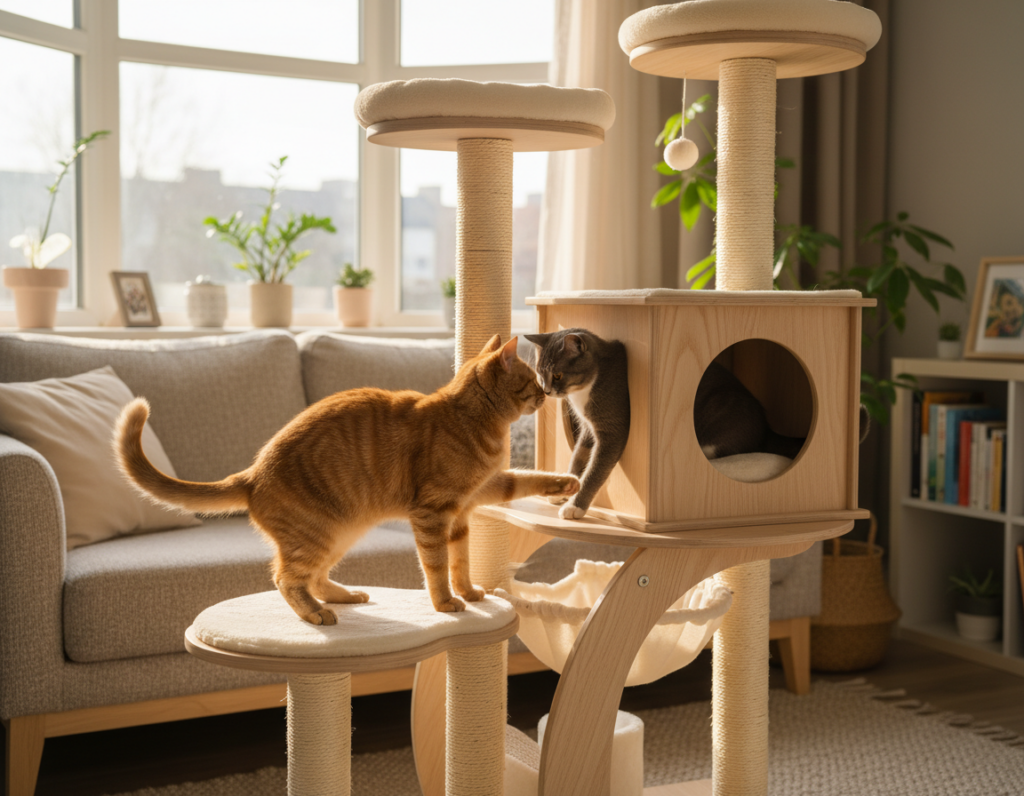
The Lotus Cat Tower reaches 69 inches tall and uses oak veneer for superior stability. This modern wooden cat tree blends furniture-grade build with vertical space. It helps active cats climb, rest, and observe safely.
Choosing climbing furniture affects how well it fits a home and how a feline feels. Many owners find carpeted pieces offer instant softness. Others prefer the clean lines of wooden designs that match refined interiors.
Balance durability, looks, and your pet’s comfort. High-quality towers protect other surfaces and give cats essential exercise. When evaluating options, prioritize stability, materials, and how the piece supports play and rest.
Understanding the Wood vs Carpet Cat Tree Debate
Selecting the right climbing piece starts with how materials handle daily use from active felines. The Refined Feline offers modern designs that balance aesthetics with durability.
- Durability — how long a unit stands up to scratching and jumping.
- Cleaning — ease of removing hair, dust, and odors.
- Aesthetics — whether the piece matures or shows fast wear.
- Safety — secure platforms and stable hardware for lively pets.
- Long-term cost — replacement versus repair over a decade.
Many owners find a plush-covered tower looks great at first but can fray within a few years. In contrast, well-made wooden cat trees tend to age gracefully and can last 10–20 years.
Understanding structural differences helps people pick cat furniture that supports both the household and the animal’s needs. When stress from scratching and leaping is high, material choice becomes the single most important factor in long-term stability and value.
Durability and Structural Integrity
Long-term performance comes down to what lies beneath the covering and how it handles stress. This section compares robust frames with common lightweight cores to show why construction matters for climbing furniture.
Solid Wood Longevity
Solid wood builds—from oak to walnut—stand up to decades of jumping without losing shape. High-quality wooden platforms and a firm base keep towers steady even when a 15-pound cat launches off a shelf.
Solid assemblies resist fraying and won’t sag after years of use. When sisal wraps are added at contact points, scratching behavior is redirected away from key surfaces and the structure stays intact.
Particleboard Limitations
Many carpeted units use particleboard cores that absorb moisture and weaken within 6–12 months. This leads to leaning posts, loose hardware, and compressed platforms.
- Particleboard degrades faster under repeated impact and humidity.
- Cheap towers often sag or need replacement after a short time.
- Investing in a well-made wooden cat tree yields greater long-term quality.
Maintenance and Hygiene Standards
Simple daily care makes a big difference in how fresh a unit looks and how long it stays hygienic. Owners who plan brief, regular maintenance will spot issues early and keep high standards without long chores.
Managing Allergens and Odors
Smooth surfaces clean faster. Cleaning wooden surfaces needs only a damp cloth, while carpet fibers trap dander, oils, and bacteria that are hard to remove. For households with sensitivities, this matters every day.
- Easier upkeep: Smooth platforms do not hold hair or dust like textured fibers, so quick wipes cut cleaning time.
- Odor control: Soft coverings can absorb oils and saliva, leading to persistent smells over the years.
- Allergy-friendly: Homes managing allergens often prefer units without plush fabric because they do not act as reservoirs for debris.
- Removable parts: Modern designs often include detachable platforms so each section can be cleaned or replaced.
Overall, choosing materials and layouts that allow fast cleaning reduces deep steam sessions and keeps towers fresh for longer use.
Aesthetic Integration in Modern Homes
Modern living spaces often treat pet gear as part of the interior rather than an afterthought.
Ashdeco’s handcrafted wooden cat pieces use solid wood to form sculptural designs that function as both practical cat furniture and gallery-worthy accents.
The Metropolitan Cat Condo adds another layer of flexibility with customizable frames and finishes. It allows owners to pick colors and styles that blend into a living room without shouting “pet accessory.”
Design-forward towers let owners display a functional object with pride rather than hide it away in a spare space.
“By choosing a high-quality, intentional piece, homeowners transform a necessity into a cohesive element of the room.”
- Modern wooden designs read like furniture, not a padded plaything.
- Solid wood finishes complement flooring and decor for a polished look.
- Well-crafted units allow pets to use shared living space confidently and stylishly.
Result: A thoughtfully chosen piece adds value to the home and keeps a pet’s needs visible in a tasteful way.
Safety Considerations for Active Felines
A stable base and secure fittings make the difference during high-energy play. Safety starts with how a unit handles sudden movement and repeated impact. Heavier designs reduce tip risk, while clean hardware prevents entanglement.
Stability and Weight
Heavy bases resist tipping. Many quality wooden cat trees weigh 30–50 pounds, which keeps towers steady when multiple cats climb or jump.
The solid base and firm platforms absorb impact better than lightweight models. This lowers the chance of falls and wobble during active sessions.
Claw Safety and Hardware
Secure fittings protect paws. Carpeted units often use staples to attach fabric; those staples can snag claws during vigorous scratching.
Sisal-wrapped scratching posts and bolted joinery reduce exposed loops and sharp points. These elements give cats a safe surface for stretching and maintaining claws.
- Stability: Weight and a wide base prevent tipping.
- Hardware: Bolts and screws are safer than staples.
- Surfaces: Sisal posts avoid loose fibers that catch claws.
- Platforms: Sturdy platforms support jumping without sagging.
“Choose structures with solid joinery and wrapped posts to minimize injury risk during climbing.”
Analyzing Long-Term Cost Effectiveness
Comparing lifetime spending makes clear which options save money and reduce waste over years of use.
Upfront cost versus annual cost: A $300 wooden cat tree used for 15 years averages about $20 per year. By contrast, a $100 carpeted alternative replaced every three years works out to roughly $33 per year.
Durability changes the math. High-quality wooden cat trees often last a decade or more. That longevity cuts replacement costs and lowers the time owners spend shopping and repairing towers.
Maintenance is another factor. Smooth surfaces reduce the need for frequent cleaning supplies and deep washes. Less fabric means fewer hidden odors and less time spent scrubbing.
- One-time investment: A solid wood piece minimizes recurring purchases and repairs.
- Reduced waste: Fewer replacements mean less landfill impact over the life of a unit.
- Better value: Over 15 years, higher quality furniture usually costs less per year than repeatedly buying cheaper models.
“Choosing durable options is both economically smart and kinder to the planet.”
The Role of Modular Design
Modular cat furniture makes upkeep simple by letting owners swap worn parts instead of replacing an entire unit.
The Refined Feline line uses a modular design that allows independent replacement of sisal scratching surfaces. This keeps the main frame intact while worn pads or cushions are refreshed.
Replacing Scratching Surfaces
Replaceable posts and platforms extend a wooden cat tree’s life and reduce long-term cost.
- Modular design lets owners change pads, sisal wraps, or cushions as needed.
- Replaceable components mean towers stay functional while the main structure lasts years.
- Swappable elements offer customization so the unit matches décor and the pet’s preferences.
- Sustainable choice: swap a worn part rather than discard the whole piece.
“Modular systems provide a flexible way to maintain climbing furniture and keep favorite spots in top condition.”
When Carpeted Options Are Practical
Temporary housing or tight budgets often call for lightweight, inexpensive climbing pieces that deliver immediate comfort.
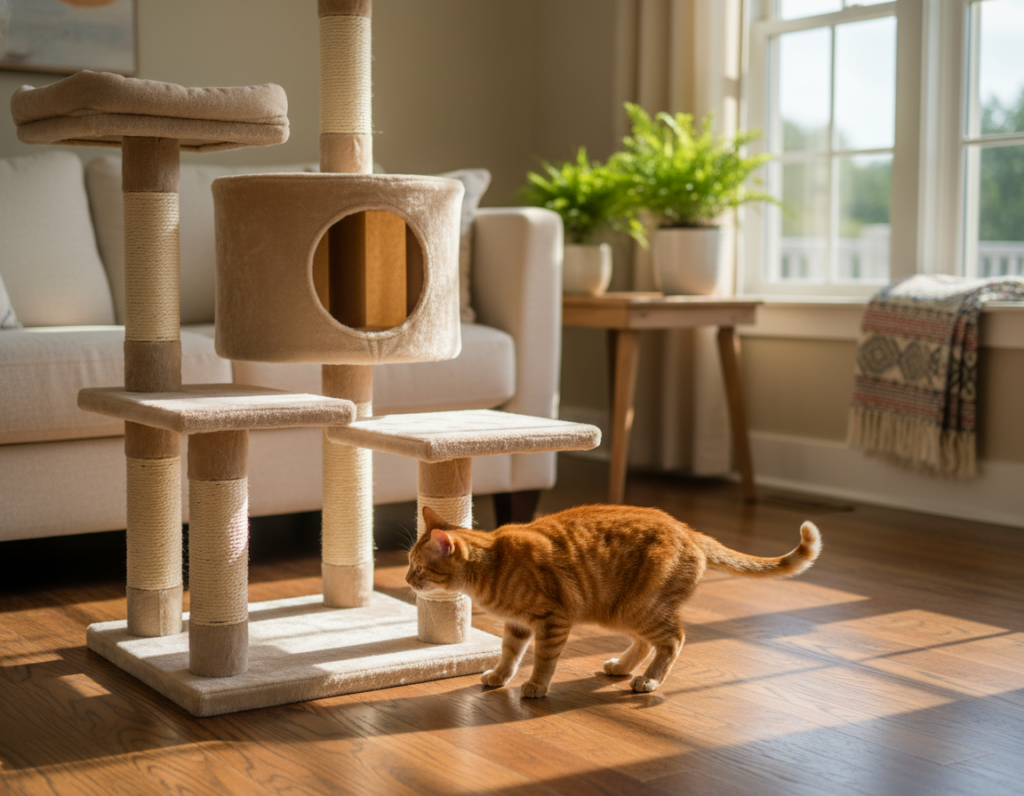
Practical short-term choice: For renters who move often, a soft-covered unit is easy to carry and fits small rooms. It gives a pet vertical space without the challenge of hauling heavy furniture.
Kittens and early stages: Young felines can be frantic scratchers and chewers. An affordable, padded tower provides platforms and a safe spot to play until they calm down or the owner upgrades.
While carpet fibers can trap hair and require more frequent cleaning, many owners prefer the plush feel for short-term comfort. Fast availability and low cost make these options widely accessible.
- Easy to move between rooms during short stays.
- Budget-friendly vertical space when a premium unit isn’t yet affordable.
- Small models suit limited space and still offer scratching outlets.
Tip: Consider a modest investment in replaceable pads or covers so the unit stays hygienic longer. For more guidance on choosing temporary options, see carpet cat trees.
“Carpeted towers serve well as a stopgap, giving pets climbing room now while owners plan for a long-term solution.”
Selecting Quality Wooden Materials
Inspect the species, connections, and mass of a unit to judge whether it will remain stable under daily use.
Identifying Hardwood Species
Choose solid hardwood such as oak, walnut, or maple rather than compressed cores or wood-print veneers. Real timber ages better and resists impact from regular jumping.
Evaluating Joinery
Look for bolt-through construction and reinforced joinery. Bolts and threaded fasteners hold up far longer than staples or glued joints. Proper connections keep platforms aligned and reduce wobble.
Checking Weight
Weight matters for safety. A well-built unit for one adult pet should weigh at least 25 pounds to resist tipping during play.
- Ensure scratching posts are wrapped in quality sisal for the right texture.
- Confirm platforms and base are real timber, not compressed composites.
- Prioritize pieces with clear material lists and solid joinery for long-term quality.
“By checking species, joinery, and mass, owners find wooden cat trees that last and stay safe.”
Enhancing Comfort with Removable Elements
Removable pads and cushions transform a functional perch into a cozy lounge for every season. Owners can add machine-washable covers to a wooden cat piece so softness meets simple cleaning.
Fabric inserts let a feline enjoy plush surfaces while the solid frame stays exposed for easy wiping. These slipcovers mop up hair and odors, making regular cleaning fast and effective.
Combine sisal scratching posts with soft pads to give play and rest equal priority. Removable elements make it easy to switch textures, adjust warmth, or refresh style without replacing the main structure.
- Comfort boost: Detachable fabric cushions create a soft resting spot.
- Hygiene: Machine-washable covers keep favorite surfaces fresh.
- Flexibility: Swappable elements adapt to seasonal needs and design options.
“Removable elements let owners balance durability and softness while keeping upkeep simple.”
Environmental Impact of Furniture Choices
Longevity in pet furniture translates directly into lower environmental cost over time. Durable pieces reduce waste from repeated disposal. Wooden cat trees built to last cut the need for frequent replacements.
Synthetic coverings and particleboard are hard to recycle and often end up in landfills. That short lifecycle increases ecological strain compared with durable options made from solid wood.
- The environmental impact of your cat furniture choice is significant; choose longevity over disposability.
- Carpeted, synthetic units and compressed cores create recycling challenges and more landfill volume.
- Investing in a solid wood wooden cat piece supports sustainable manufacturing and reduces replacements.
- High-quality platforms and robust materials ensure the climbing unit serves a pet for many years, shrinking your ecological footprint.
“Selecting long-life materials is a practical way to align pet care with sustainability.”
Conclusion
A clear priority—durability, aesthetics, or cost—guides the best long-term choice. Owners who favor stability and low upkeep will find a wooden cat tree pays off over time.
Wooden cat designs clean faster, integrate into a living room, and reduce replacements over years. Lighter, plush-covered options can still make sense for short-term needs or tight budgets.
Selecting a quality piece gives a pet a safe perch and saves the owner time and money. Consider available space in the home and how the unit supports play and rest when making the final decision.