Finding a calm climbing solution in a small apartment matters when thin walls turn every jump into a complaint. Tenants need a sturdy, well‑designed perch that keeps noise to a minimum while giving their pet vertical space to climb and rest.
Well-built pieces use dense materials and solid posts to absorb impact. A compact cat tree small enough to fit limited floor space can stop destructive scratching and offer a secure bed near a window.
Buyers should look for space-saving cat designs that prioritize stability and quiet operation. Brands like IKEA and West Elm offer furniture-style options that blend into a home and reduce vibrations against the floor.
This guide highlights the best cat trees for small spaces, focusing on safety, noise dampening, and smart design. It helps readers choose a climbing tower that keeps both residents and neighbors happy.
Why Apartment Living Requires Specialized Cat Furniture
In small homes, specialized climbing furniture gives indoor pets the vertical territory they need to stay active and calm. Vertical pieces reclaim floor space and let a cat exercise without roaming the whole living area.
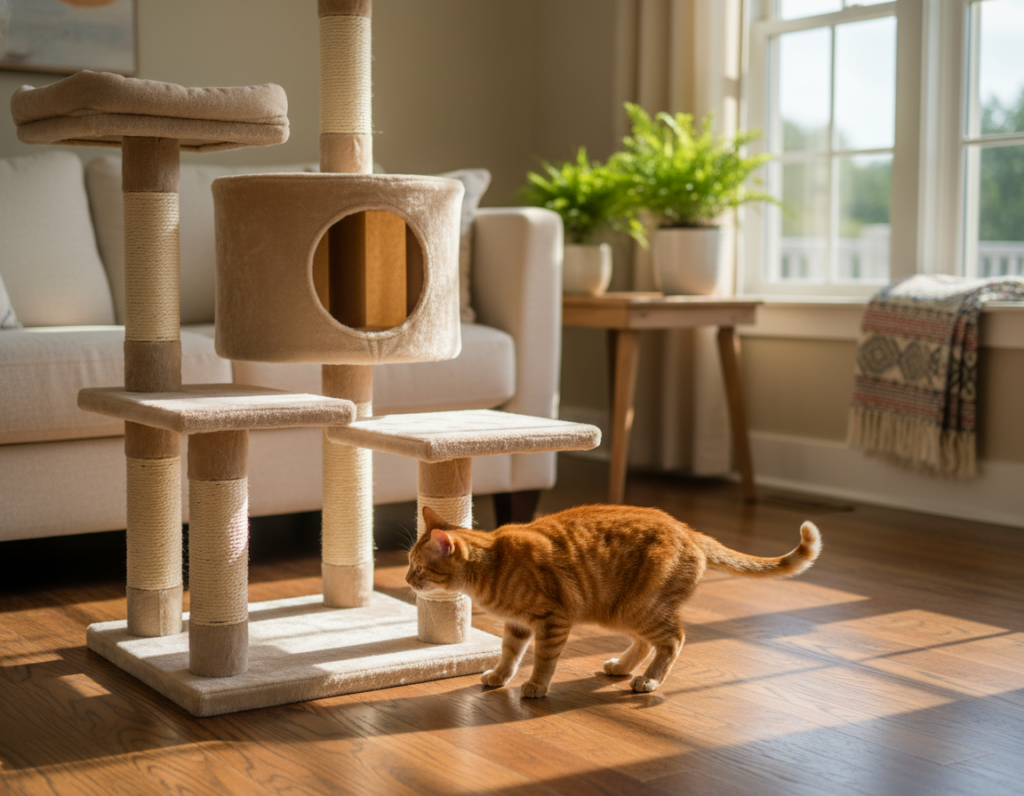
Compact cat trees provide lounging spots, scratching posts, and lookout perches that mimic natural climbing instincts. This reduces destructive behavior and protects sofas and other furniture.
Well‑made cat furniture also blends with modern homes. Brands often use muted tones and sturdy materials so a unit feels like décor, not an appliance.
Proper structures lower stress by offering a safe vantage point where pets can observe the room. Long-term, investing in durable trees saves money by cutting replacement costs on damaged upholstery.
- Save space while adding enrichment.
- Reduce wear on home furnishings.
- Support health and mental well‑being in compact spaces.
Essential Features of a Quiet Cat Tree for Apartments
Selecting the right build and components makes a climbing unit much quieter and safer in tight living spaces. This section outlines the material choices and foundation design that reduce noise and improve longevity.
Material Selection for Sound Dampening
Dense, reinforced wood and plywood absorb impact better than hollow composites. These materials stop thuds and lower vibration transfer to floors and walls.
Plush beds and padded perches also help. Soft surfaces muffle footsteps and claws, which matters in shared buildings.
- Use thick sisal on scratching posts to cut noise and protect furniture.
- Choose reinforced joinery to prevent loose fittings and rattles.
- Look for removable covers that add an extra layer of sound absorption.
The Importance of a Sturdy Base
A wide, weighted base is the single most important stability feature. It prevents tipping when a perch is used or a cat lands after a jump.
Securely attached posts and multiple fixed perches reduce sway. This design keeps movement contained and quieter in compact rooms.
Practical tip: For compact homes, consider corner-friendly units and those with low centers of gravity to maximize safety and minimize disturbance.
Learn more about recommended designs in the best cat trees for small spaces.
Maximizing Vertical Space in Small Living Areas
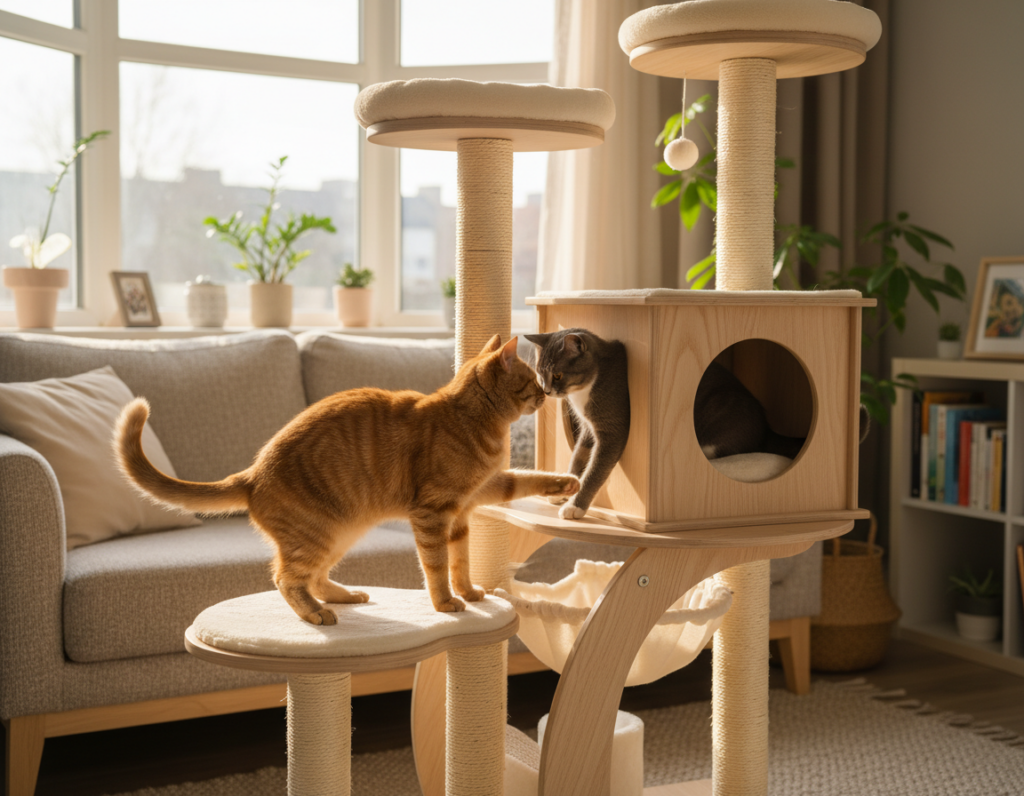
When floor space is limited, vertical solutions turn walls into playgrounds that satisfy climbing instincts. A tall cat tree or a set of mounted shelves gives a pet higher territory without stealing room from daily life.
Use wall-mounted shelves or a narrow, rising unit to double usable play areas. These options make the most of ceiling height and let cats jump between levels safely.
Choose furniture that climbs rather than spreads. A slim, stable tree with multiple perches keeps the floor clear and provides a vantage point to watch the home.
Corner-friendly designs and staggered shelves fit tight spaces and reduce footprint. Strategic placement near a window adds mental stimulation and natural light.
- Vertical shelves and tall towers increase exercise without clutter.
- Weighted bases and secure wall anchors improve safety.
- Layered levels prevent boredom and support daily climbing.
Top Picks for Compact and Stable Climbing Towers
This roundup highlights compact climbing towers that balance stability, style, and minimal floor impact. Each pick focuses on a strong base, smart platforms, and durable posts so pets can climb and rest safely in small spaces.
Best Overall Space-Saving Designs
New Cat Condos 44″ Solid Wood Cat Tree tops the list for stability with a weighted base and solid wood build.
KBSPETS Wooden Modern Cat Tree offers a minimalist design that fits tight rooms while serving as tasteful furniture.
AmazonBasics Cat Activity Tree is a budget-friendly, space-efficient choice that works well in modest rooms.
Multi-Level Towers for Active Cats
Frisco 72-Inch Cat Tree is ideal for active pets thanks to multiple levels and a broad base that reduces sway during play.
Vesper V-High Base delivers compact, multi-level comfort with memory foam beds on key perches.
Go Pet Club 62-Inch Cat Tree includes platforms, hammocks, and ladders to maximize vertical play without losing floor space.
Corner Units for Efficiency
Premier Corner Roost Cat Tree uses unused corner area to provide a secure perch while saving room.
Premier Triple Cat Tunnel and Frond Design Studios Trestle Tree offer space-saving, stylish options that double as furniture pieces.
- Tip: Choose a unit with reinforced joinery and replaceable scratching posts to extend life and cut noise.
- Tip: Match base size to room floor and anchor taller towers near a wall or window for added safety.
Comparing Store-Bought Quality Against DIY Alternatives
Professional units often outpace homemade builds in safety, durability, and tested design. Brands like Catopia Co mix modern cat styling with robust construction. This gives owners a reliable piece of furniture that holds up to daily use.
Store-bought cat tree options use engineered materials and reinforced joinery. That reduces wobble and handles heavier jumps and scratching better than many home projects.
A DIY build can be rewarding and tailored to a room’s layout. However, it usually demands extra time to match the stability and finish of a manufactured product.
- Store units often require minimal assembly and include tested safety features.
- DIY designs can fit odd spaces but may need added reinforcement to be fully secure.
- Professional cat trees tend to offer longer life and consistent performance.
Ultimately, the right choice depends on budget, skill, and the needs of cats in the home. For tenants in a small apartment, a proven store-bought design is often the safest long-term investment.
Strategic Placement for Noise Reduction and Enrichment
Thoughtful placement of a climbing unit can cut noise transfer and boost a pet’s day-to-day enrichment. Placing the piece near activity but not in the busiest path helps the animal observe without causing traffic. A well‑chosen spot also protects neighbors by lowering impact sounds transmitted through floors and walls.
Optimizing Window Access for Mental Stimulation
Window views provide essential stimulation. Position a perch so the pet can watch birds and street life safely from an elevated bed. This reduces roaming and gives the occupant a steady source of entertainment.
Use a corner cat tree small enough to fit the room. Corners add stability by using two walls, which limits wobble and lowers rattles from climbing. Place the unit on carpeted floor sections to absorb landing noise and protect the base.
- Near a window: add a tall perch or high shelves to create an observation post.
- Corner placement: saves space while boosting stability.
- Soft flooring: carpet or a rug under the base dampens impact.
When owners give attention to placement, they create a calmer home and a happy pet. The best cat trees become a central hub that offers a secure bed, a scratching post, and a focused climbing spot—without taking over the room.
Ensuring Long-Term Stability and Safety
Durable construction and routine inspections are the best defenses against wobble and tipping. A multi-level cat tree needs a wide, heavy base that resists movement when a pet leaps between levels.
Proper assembly matters. Follow the manufacturer’s steps, torque bolts to spec, and tighten screws after the first week of use.
Regular checks help catch wear early. Inspect all platforms, posts, and scratching surfaces at least once a month.
- Place the unit on a level floor and add non-slip pads under the base for extra grip.
- For larger cats, choose models with reinforced platforms and thicker posts to support weight.
- Anchor tall towers to a wall when the design allows it to reduce sway.
- Replace worn scratching wraps and loose fittings promptly to keep the structure solid.
Investing in quality cat trees and doing simple maintenance gives pets safe vertical space and extends the life of the furniture. A secure tower lets cats explore multiple levels with confidence and keeps shared living space safe.
Maintenance Tips for Keeping Your Cat Furniture Like New
Regular attention to hardware, fabrics, and posts keeps vertical furniture performing well. Wipe platforms, vacuum the perch, and shake out loose debris weekly to keep the unit fresh and smelling clean.
Inspect the scratching posts every few months. Look for frayed sisal and replace wraps or a worn scratching post to keep pets engaged and to protect other upholstery.
Wash removable covers on a gentle cycle and air dry to preserve fabric life. Tighten bolts and fittings after the first week of use, then check them monthly to maintain a stable base.
- Vacuum platforms and perches to cut dust and allergens.
- Replace sisal or rope on scratching posts before it loosens.
- Repair or remove any loose parts immediately to keep play safe.
Consistent care extends service life and keeps pets happy. Small, routine steps ensure the furniture stays a clean, safe, and engaging space in the home.
Conclusion
Choosing the right unit, makes a real difference in small homes. Smartly designed vertical furniture offers enrichment while preserving valuable floor area in modern homes.
By focusing on space-saving design, owners give pets a vertical playground that fits apartment living. Whether buying a store-made option or building one, the best cat trees prioritize safety, stability, and long-term comfort.
Investing in high-quality pieces supports health and reduces damage to other furnishings. This guide aims to help readers find a cat tree small enough for tight spaces yet big enough to meet active needs. Thank you for prioritizing your pet’s enrichment and comfort when choosing the best cat trees for your home.