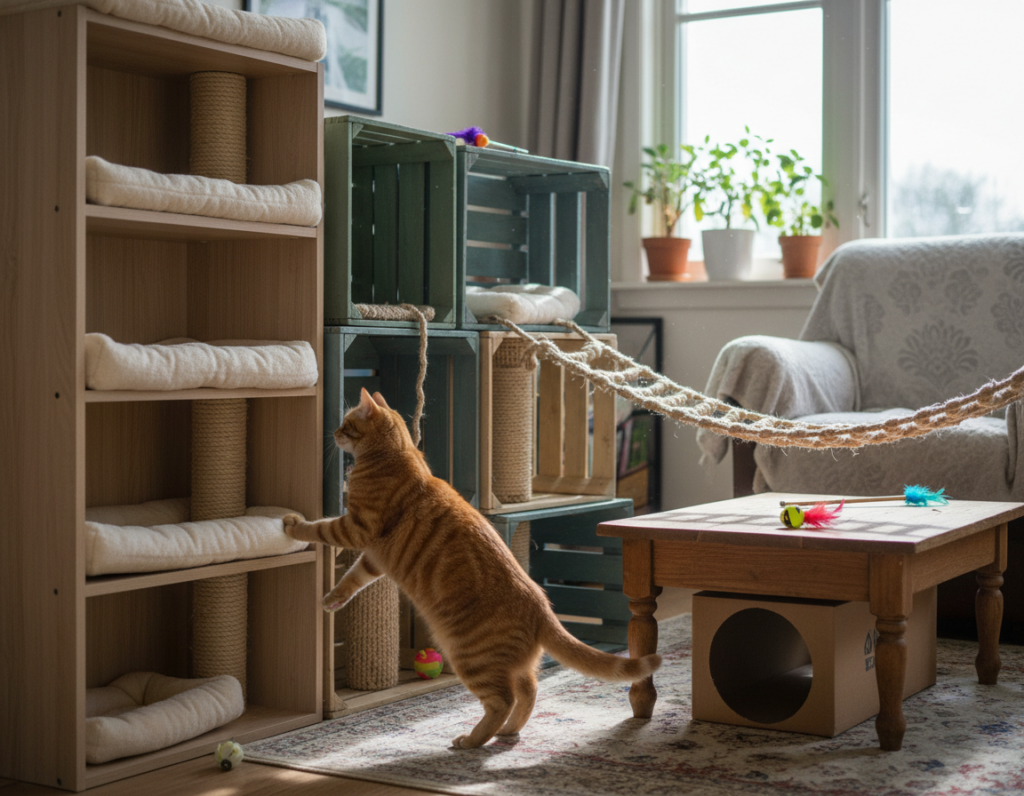
This short introduction outlines a practical way to build a sturdy, elevated bed for larger pets. It highlights Sharon B.’s pattern and clear instructions that help owners create a reinforced design that supports weight and reduces stress for kitties.
The project uses multiple layers of fabric and strong hardware so the base stays secure during naps and play. Readers will find measurements, material lists, and tips to stitch heavy-duty seams. The guide explains how to make cat furniture that saves floor space and fits the home.
Follow each step to make sure the final piece is safe and durable. For the original pattern and full instructions, see the detailed pattern available at Sharon B.’s cat hammock pattern.
Understanding the Benefits of Elevated Cat Lounging
Placing a raised bed in your home taps into a cat’s instinct to climb and observe from above. This simple change gives pets a secure vantage point and a private retreat where they can relax undisturbed.
Natural Instincts for Height
High perches satisfy hunting and safety instincts. Cats prefer elevated spots because they feel protected and can watch their environment. Providing a dedicated resting space reduces the urge to climb unsafe furniture or rails.
Health and Hygiene Advantages
Shelter staff report fewer respiratory infections in cats kept in raised beds versus those on the ground. Elevation helps keep pets away from floor-level allergens and possible messes, improving overall hygiene.
- The breathable fabric of a hammock reduces dampness and fur buildup.
- Elevated beds are lightweight and machine washable, keeping sleep areas clean.
- Many owners share pictures of happy kitties in their new lounging spots, showing both style and function.
Overall, a well-placed elevated bed supports physical comfort, reduces stress, and adds a safe, appealing spot for cats to rest and observe their world.
Essential Supplies for Your DIY Cat Hammock Apartment
Having quality materials on hand makes this build fast and reliable for heavier pets. With the right kit, most owners can complete the assembly in under thirty minutes.
Core materials: 1/2 yard of sturdy cotton (base), 1/4 yard for straps, matching thread, and four 1.25-inch swivel hooks. Choose poplin or duck fabric for extra strength.
- Sewing machine, sharp scissors, a ruler, and an iron to press seams.
- Swivel hooks are the costliest piece—watch for sales at Hobby Lobby or Joann for savings.
- Optional: cooling cotton for warm months and plush fur for colder days to make a reversible bed.
Pro tip: Gather all materials before you cut. Confirm the pattern dimensions against your pet’s size to avoid mistakes.
Why these items matter: Good materials and hardware create durable cat hammocks that stand up to daily use. This project uses small yardages, so it’s an affordable way to make cat hammocks from remnants while following clear instructions.
Preparing Your Workspace and Fabric
A clear, level workspace makes measuring and cutting faster and reduces alignment errors. Gather tools, fabric, and the pattern before you begin so each step flows smoothly. Keep small tools in a tray to avoid interruptions.
Measuring and Cutting Fabric
Start by cutting two 18×18 inch squares for the base. These provide a stable foundation for the bed and suit most cats. Alternatively, use one 18×36 inch piece folded in half to save time and lining fabric.
Cut two 40×3 inch strips for the arms. The 40-inch length gives a bit of wiggle room to adjust fit when attaching to the base.
- Press each piece after cutting; neat edges make sewing easier and stronger.
- Mark mid-points on squares and strips so the pieces align precisely during assembly.
- If using lightweight cotton, add interfacing to reinforce the base for heavier cats.
- Keep measurements consistent; a small error on one side can throw off the entire step.
“Take time to get your measurements right; a tidy prep saves adjustments later.”
Final note: Maintain a clean table and good lighting. This simple prep ensures the pattern and instructions translate into a reliable, long-lasting bed for pets.
Constructing the Base and Support Arms
Begin assembly with the base: sew two opposite edges of the 18×18 squares, then turn the piece right-side out so seams are hidden. Leave the top and bottom edges open to create a neat, finished bed that accepts the arm attachments.
Stitching the Base
Stitch the base with a 1/4-inch seam allowance. Backstitch at the start and end. This creates a durable foundation for heavier cats and helps the pattern hold shape.
Pressing and Topstitching
Press the edges flat before topstitching. A firm press gives a tailored appearance and strengthens seams.
Topstitch the outer edges to lock the layers and give the piece a professional finish.
Attaching Arms to the Base
Fold each 40×3 strip lengthwise and press to form a strong strap that fits the metal swivel hooks. Align mid-points on the base so weight spreads evenly across the sides.
- Sew through six layers at each attachment point — use a strong needle.
- If the machine struggles, add a Hump Jumper or folded scrap for even pressure.
- Take time to catch the hidden side of the arm in the stitching for lasting strength.
- Finish with outer topstitching for extra durability.
“Patience here ensures a balanced design that won’t tilt when pets jump in.”
Reinforcing High Stress Areas for Heavy Cats
Strength at the connection points makes the difference between a temporary perch and a lasting bed. Reinforce the side junctures where the arms meet the base to handle heavier cats safely.
Stitch a small square through six layers of fabric at each attachment point. Then sew an X inside that square. This pattern distributes load and prevents tearing under sudden weight.
Double stitching those squares provides an extra layer of protection. Use matching thread to keep reinforcements subtle while staying strong.
- Most important: reinforce the areas where the straps join the base.
- Sew a 1-inch square through six layers, then add the X for structural integrity.
- Double-stitch each square and re-check periodically for wear.
“Take the time to reinforce these points; peace of mind is worth the few extra stitches.”
Attaching Hardware for Maximum Stability
Installing metal connectors correctly is the key to a level, stable sleeping spot. Use 1.25-inch wide lobster clasp swivel hooks to secure the arms to cage wires or a stand.
Slide each fabric strip through the swivel hook about 1/2 to 1 inch. Fold the raw edge under so it sits neat and hidden before stitching.
If the machine struggles, hand-stitch the hook tab with heavy thread. Hand stitching gives control and avoids skipped seams on thick layers.
- Make sure all hooks face the same way so the bed hangs level.
- Use high-quality metal hardware to prevent slipping or sudden release.
- Consider a walking foot to feed thick fabric evenly when sewing.
- Double-check all stitching at the top of each strap; this is a primary point of failure.
“Secure hardware and neat stitching turn good construction into a safe, lasting product.”
Once hooks are in place, the cat hammock is ready to install. Follow the final step in the instructions and test the assembly before regular use.
Safety Considerations for Your Pet
Start safety checks by simulating the full weight and motion of your pet on the finished base. This step helps reveal weak points before a real animal uses the bed.
Testing Weight Capacity
Make sure to apply steady pressure to the center and each corner of the hammock. Observe seams, straps, and hardware while the load is applied.
- Before use, press down on the base and sides to confirm strength and balance.
- Inspect every seam and hook for secure stitching and no visible fray.
- If hanging in a cage, check that posts and attachment points cannot be dislodged.
- Watch the animal during the first few sessions to ensure comfort and stability.
- Clear the area below and around the bed to avoid falling hazards.
Safety is the top priority. Repair loose threads or weak points immediately to keep the sleeping spot reliable. A well-made diy hammock should be a safe haven, but ongoing checks keep it that way.
“Always observe the first few uses and re-check fastenings; prevention is the best protection.”
Conclusion
When the last stitch is made, the pattern turns into a strong, comfortable resting spot. This final step rewards the maker with a practical cat hammock that fits neatly in the home and stands up to heavier pets.
Follow each step and the instructions to reinforce the base and high-stress layers. Doing so ensures the piece is safe and stable. The guide shows how to repurpose fabric and finish the project in a bit of time.
Testing and routine checks help maintain strength and extend life. The build often costs about half what a store model does and yields charming pictures of happy pets. For questions on materials or tools, consult the editorial policy.