Slinky is a sweet companion who will soon live in a compact home and feel very content with the right approach.
Many owners worry that their apartment is too tight, but felines often thrive when vertical territory and enrichment are prioritized. Creative ideas can make each window a focal point for play and rest.
Practical planning helps maximize usable space while preserving an organized living area for people. Simple shelf perches, secured ledge beds, and a sunny window spot deliver stimulation without large changes.
When people keep cat comfort in mind, they transform limited areas into a cozy refuge that meets instinctive needs. These small spaces can support healthy activity, naps, and lookout time that keep cat companions satisfied.
Debunking the Myth of Small Space Living
A roomy house seems ideal, but felines value territory quality more than total square footage.
They thrive on predictability, vertical options, and clear sightlines. Owners often believe a pet must be rehomed because of limited space, yet that is rarely necessary.
- Many felines adapt well to apartments or dorm rooms when given climbing routes and perches.
- Behavior matters more than raw area; a well-designed spot can serve play, rest, and lookout needs.
- Smaller breeds or cats small in personality often feel safer in cozy, managed environments.
By focusing on enrichment, owners empower themselves to keep pets in varied floor plans. Professional behaviorists note that highly territorial animals can thrive in apartments if their basic needs are met with thoughtful design.
Quality of territory beats quantity of rooms.
Assessing Your Small Apartment Cat Setup
Start by noting where sunlight, quiet corners, and climbing routes naturally occur in the dwelling. This quick survey reveals how the layout will support rest, play, and private retreats.
Evaluating Square Footage
Measure available zones and aim to give each feline at least 20 square feet of dedicated territory. That is a baseline for basic movement, stretching, and short sprints.
Even in compact homes, use vertical surfaces and window ledges to increase usable area without crowding floors.
Identifying Territorial Needs
Observe how individual animals claim rooms and perches. Some require clear separation from other pets to feel secure.
- Provide distinct zones for resting, feeding, and elimination when possible.
- Ensure multiple cats have alternate high points so they can avoid one another if needed.
- Rearrange furniture to create sightlines and private nooks that reduce conflict.
Assessing the living situation helps decide if the current residence can meet behavioral needs without stress. A thoughtful plan prevents problems and supports happier, healthier companions.
Maximizing Vertical Space for Climbing
A vertical network of shelves and trees creates clear escape paths and observation posts for cats. Vertical space is non-negotiable for indoor felines that need to climb, run, and feel secure.
Installing Secure Cat Shelves
Start by mapping wall zones that get light and view. Install staggered shelves so a cat can leap from one platform to the next without long gaps.
Choose shelves and towers that anchor to studs. Make sure shelves and cat trees are sturdy to avoid falls and injuries.
- Maximize vertical space to keep floor space clear and usable.
- Pick tall cat trees with a small footprint to save living space.
- Every platform or hammock increases usable areas for cats without cluttering furniture zones.
- If mounting feels uncertain, ask a professional or a handy friend to secure the pieces.
Creating a vertical highway encourages activity and reduces stress. Properly planned vertical systems let pets explore, perch, and rest while preserving human-use areas on the floor.
Utilizing Window Perches for Entertainment
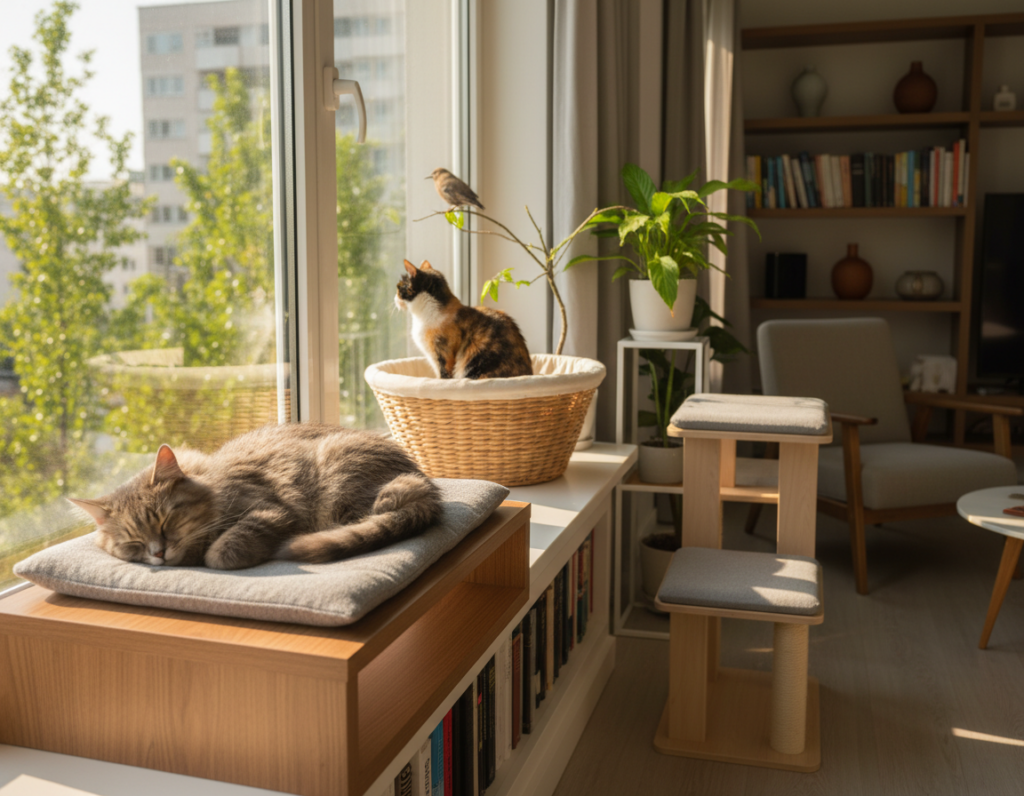
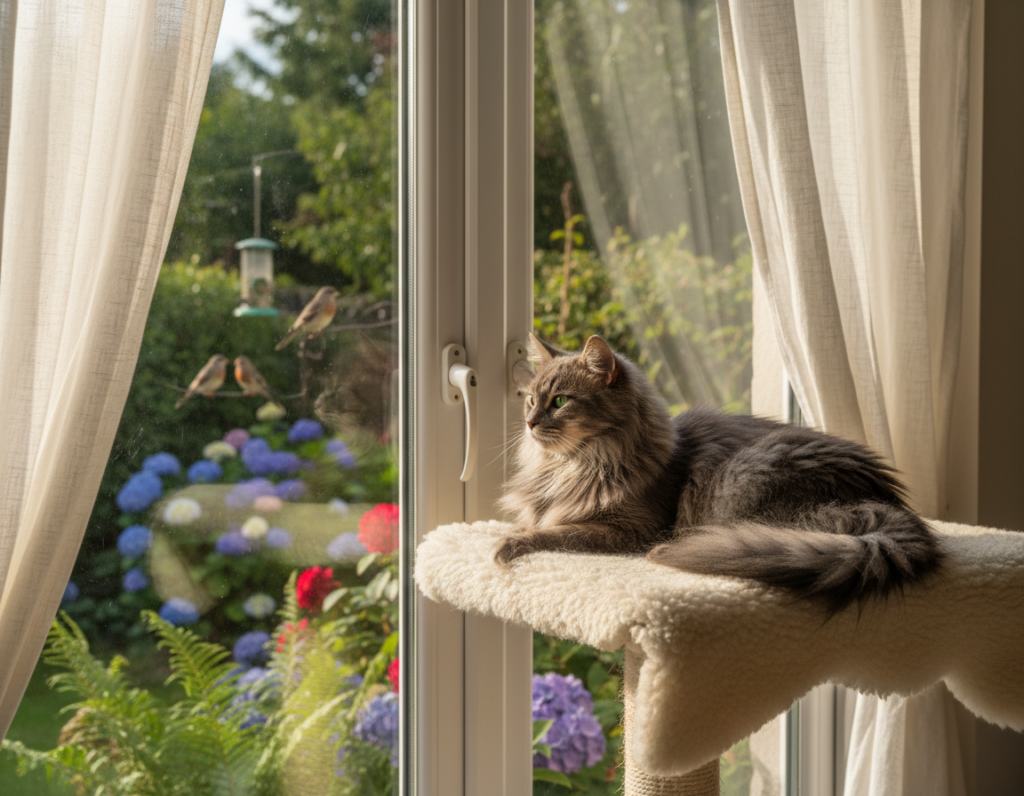
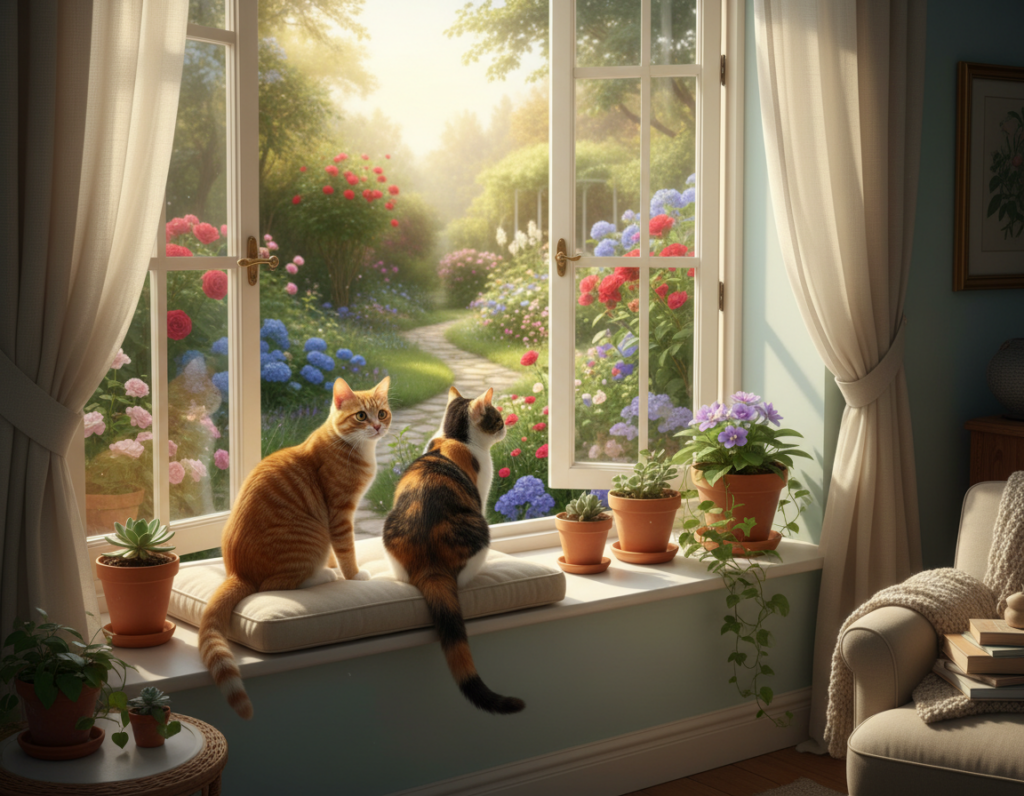
A dedicated resting spot at eye level with the outdoors becomes a daily source of curiosity and comfort. A secure perch turns a plain glass pane into a lively scene for observation and play.
Perches save floor space and add useful vertical space where a pet can lounge without disturbing human living areas. Even a view of a nearby building offers movement that holds attention for long periods.
Measure the sill and choose a model that locks in place. A stable base prevents slips and gives confidence to timid pets. Many felines will sun-nap for hours, which aids warmth and relaxation.
- Entertainment all day: Birds, people, and neighborhood motion keep minds active.
- Easy install: Most perches mount quickly and free up floor zones.
- Adds territory: A window perch effectively extends usable vertical territory.
By placing a perch near the glass, owners convert ordinary views into constant mental stimulation and a peaceful lounging spot.
Creative Furniture Hacks for Cats
Clever furniture edits can turn ordinary pieces into climbing routes and cozy perches for indoor felines. These ideas boost vertical territory while keeping living areas tidy.
Repurposing Console Tables
Console tables make great multi-level furniture. Place a soft cat bed or perch on a lower shelf so a pet can rest beneath everyday surfaces.
Add a small scratching post beside the leg to protect upholstery and encourage healthy claws.
Using Over-the-Door Towers
The K&H Pet Products over-the-door tower is an excellent, space-saving option. It uses vertical areas behind doors to give cats new lookout points without taking up floor space.
Desk-Mounted Nests
A Desk Nest clamps to a work surface and keeps a companion close while preserving usable desk area. This solution is ideal for people who want a nearby napping spot without crowding their workspace.
“Creative furniture hacks let owners blend enrichment with refined decor.”
- Place a cat bed on shelves to offer more nap choices.
- Integrate cat trees and scratching posts so they match home decor.
- Choose dual-purpose furniture like cabinets that double as perches.
Strategic Placement of Litter Boxes
A thoughtfully sited litter box helps preserve hygiene and prevents unwanted accidents on the floor. Choose a quiet, low-traffic spot so the cat feels safe using its bathroom. Privacy reduces stress and encourages consistent use.
Keep litter clean daily. A brief scoop each day stops odors from spreading through the home. Deep-clean the box and surrounding area weekly to maintain a sanitary space and fresh air.
Never put the box near food or water; animals avoid eating close to waste. Place a box beside the couch or in a tucked corner if that gives the pet more privacy.
- If you have several cats, provide enough boxes so each animal has its own option.
- Well-placed litter boxes cut down on accidents and keep living areas smelling pleasant all day.
- Check traffic patterns and choose locations that stay quiet during busy times.
Routine and location matter as much as the litter itself. A good spot and regular maintenance make waste areas hygienic and reduce behavior problems over time.
Managing Food and Water Stations
Eating and drinking zones should feel safe and distinct from toileting spots to support healthy behavior.
Separating Resources from Waste
Keep food and water completely apart from any litter box area. This prevents contamination and reduces stress for the pet.
When space is tight, create a visual barrier between bowls and the litter box. A low shelf, screen, or tall plant helps signal separate zones.
Use stainless steel or ceramic bowls for food and water; they stay cleaner than plastic. Never place a food dish on top of a covered litter box — it is unsanitary and stressful.
- Clean dishes daily to stop bacteria from building up.
- Place a food-grade silicone mat under bowls to catch spills and protect floors.
- Provide fresh water and high-quality food in a quiet, consistent location.
By managing food and water stations well, owners ensure their cats feel comfortable eating and drinking in their territory.
Incorporating Mental Stimulation and Play
Structured play sessions turn idle windows into active hunting grounds and keep indoor felines engaged. Short daily games mimic natural chase cycles and help burn energy.
Use interactive wand toys to encourage jumping and climbing. These toys prompt pounces, which recreate a full hunt and deliver strong mental stimulation.
An exercise wheel can be useful for pets that enjoy running. If space and budget allow, a wheel offers sustained movement and reduces restless time.
Simple items also work well. Cardboard boxes, paper bags, and hidden treats create curiosity and reward exploration without expensive gear.
- Hide food or treats around the living area to encourage searching and problem solving.
- Grow cat grass for safe munching and added sensory interest.
- Leave on curated videos or audio for passive entertainment when people are away.
By dedicating focused time to play, owners strengthen the bond and lower the chance of unwanted behaviors. With a few toys and routine, even limited space can provide rich entertainment and stimulation for cats.
Training Techniques for Indoor Enrichment
Short, regular lessons transform idle time into engaging mental exercises that cats enjoy. Training is a predictable way to provide mental stimulation and give cat clear ways to earn rewards.
Begin with simple cues like sit, come, or touch. Use high-value treats and brief sessions of two to five minutes to keep interest high.
Mix play and lessons by pairing wand toys with commands. This approach adds fun and teaches useful behaviors that reduce unwanted activity in shared space.
For structured progress, consider a training kit or professional help. Resources can speed learning and teach gentle, effective techniques tailored to each feline personality.
- Keep sessions short and positive to avoid frustration.
- Be consistent so cats learn to repeat good behavior.
- Rotate toys to maintain novelty and enrichment.
Training is enrichment that helps companions feel confident and engaged, especially in tight living areas.
For practical tips on exercise and play, see how to keep a cat exercised and mentally.
DIY Projects for Budget-Friendly Enrichment
Simple craft projects can turn household scraps into hours of curiosity and play for indoor felines. These builds are low-cost and easy to adapt to any living area.
Building Cardboard Hideaways
Boxes make instant dens and climbing tunnels. Cut entry holes and stack a few layers to create a modular hideout that fits near a window or behind a sofa.
Cats love the texture and security of cardboard. Use non-toxic tape and avoid loose staples or sharp edges.
Crafting Catnip Toys
Make simple toys with felt, thread, and organic catnip. Sew small pouches and stuff them lightly so the toy stays soft and safe.
Toilet paper and paper towel rolls are perfect for creating food puzzles or wand toys. Insert treats or hide kibble for brief treasure hunts that reward natural hunting instincts.
- Build cardboard hideaways from extra boxes to increase vertical spots.
- Craft catnip toys with felt and organic catnip for reliable interest.
- Use toilet paper rolls as inexpensive food-puzzle options for mental stimulation.
“Homemade items often become the most prized toys in the house.”
Always choose non-toxic materials and avoid strong adhesives. Custom projects let owners tailor enrichment and furniture arrangements to fit their cat’s tastes and space constraints.
Maintaining a Clean and Odor-Free Environment
Keeping odors under control starts with a simple, consistent routine around the litter area. Owners should scoop the litter box at least once a day to prevent smells and encourage use.
Add a small amount of activated charcoal to the litter as a natural odor absorber. This helps neutralize unpleasant smells without strong chemicals.
It is important to keep the floor and nearby surfaces clean, since cats live close to ground level and are sensitive to dust and bacteria. Spend a little time each week deep-cleaning the box and surrounding area.
- Use a quiet air purifier to improve air quality, but ensure it is not too loud for the pet.
- Choose pet-safe cleaners — many common products irritate feline breathing or skin.
- Maintain a consistent cleaning schedule to keep apartment odors under control over time.
When choosing equipment, consider both function and comfort. For guidance on compact options, see the best litter box for tight spaces.
Selecting Safe and Durable Cat Supplies
Choose supplies that last: durable gear keeps climbing routes and resting spots safe for years.
Prioritize safety and materials. Look for non-toxic fabrics, solid anchors, and sturdy hardware when buying cat trees, perches, or a cat bed. This reduces replacements and prevents accidents near a window or on higher platforms.
Make sure scratching posts and posts on towers are wrapped in reliable fibers. Cats like textured surfaces for claws, so pick posts that resist shredding while remaining gentle on paws.
- Choose furniture that maximizes vertical space and saves floor space.
- Match products to the cat’s size and activity level to avoid tipping or breaks.
- Prefer reputable brands or handmade options from trusted sellers for durable enrichment.
- Keep food and litter areas separate from climbing zones to maintain hygiene and calm.
“Durable choices make cats happy and help keep apartment life stress-free.”
Conclusion
Intentional choices make living with pets rewarding. A few targeted upgrades to vertical territory, playtime, and resting spots help keep a cat calm and engaged.
Owners can make the most of small spaces by prioritizing enrichment and safety. When they focus on vertical routes and varied perches, their companions feel secure and content.
Cats small in size or personality adapt well with consistent routines and the right supplies. There is no need to rehome because of limited living area; love, planning, and quality gear will give cat what it needs to thrive.