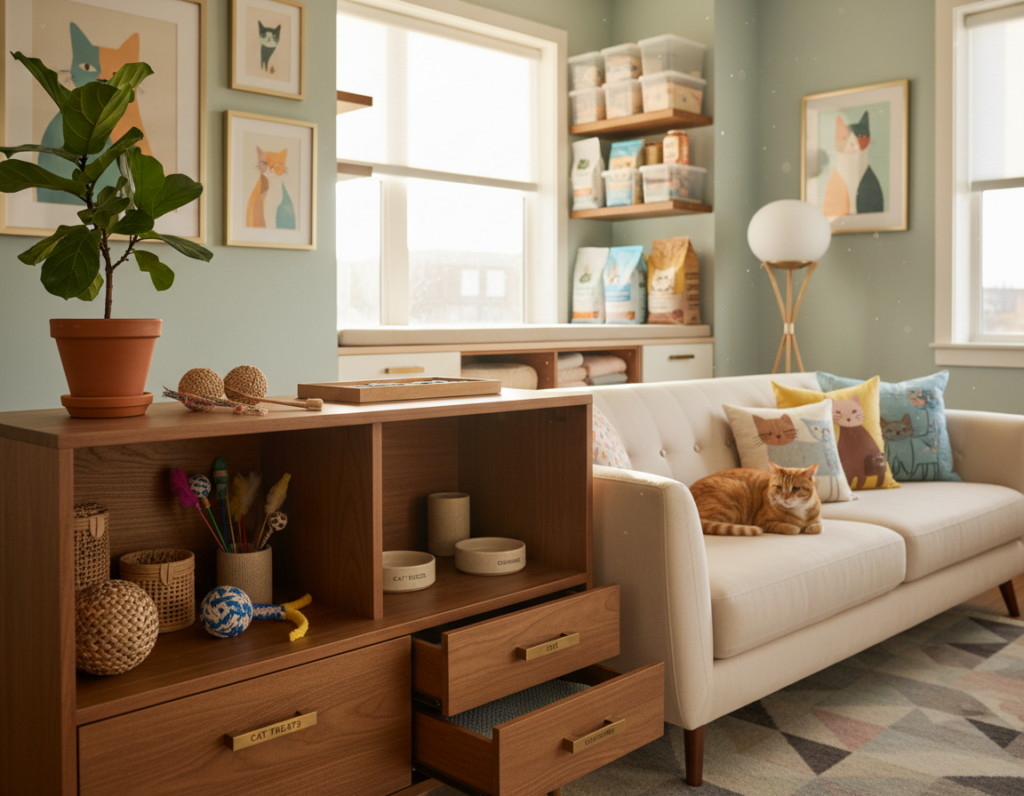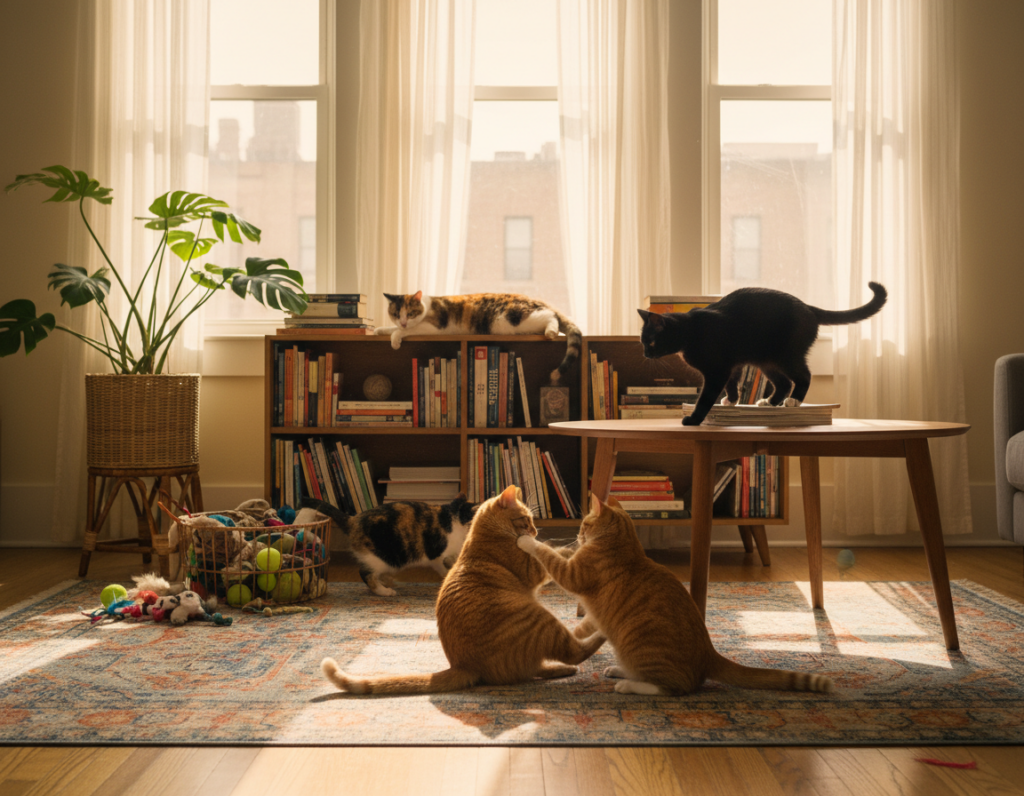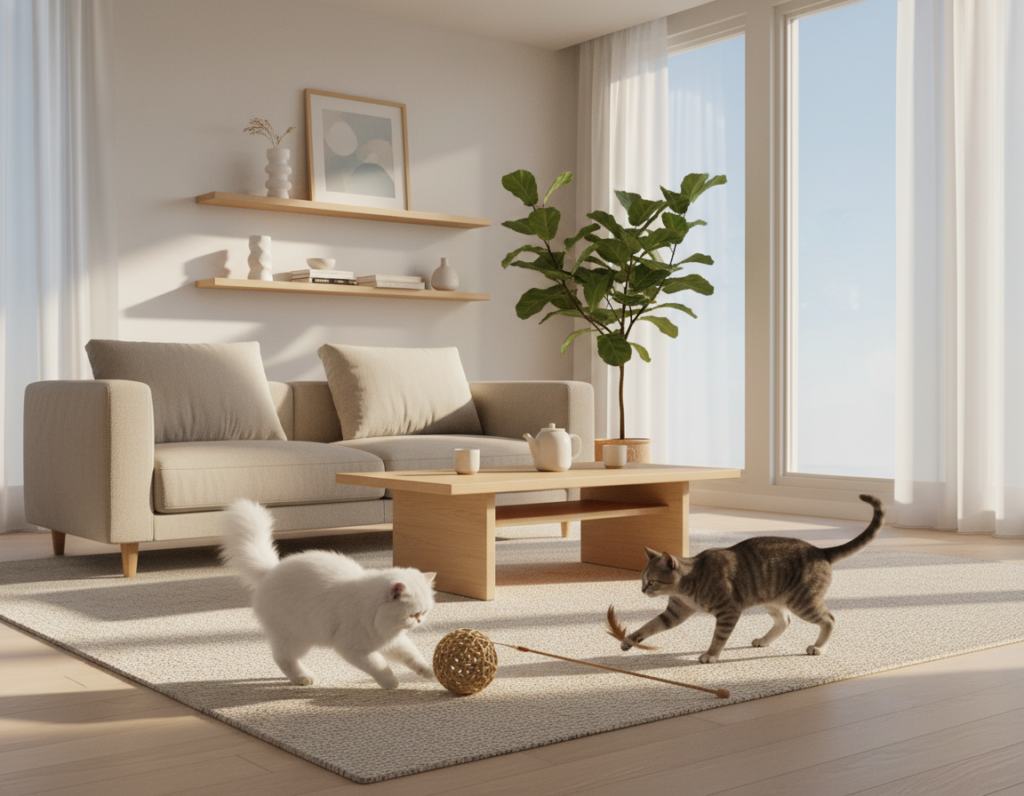
Adding vertical space for indoor cats turned a cramped apartment into a lively, stress-reducing home for every pet. Owners noticed an immediate change: a shy cat gained confidence and spent more time exploring high perches. This gave animals a sense of control over their territory.
The shift also boosted activity. With elevated paths and shelves, felines climbed, jumped, and rested on new levels. That movement reduced boredom and made the whole household calmer.
Oakland Veterinary Referral Services highlights that control and choice matter to a cat’s health. They recommend designs that let pets observe the home from above. For consultations, call (248) 334-6877.
Modern design blends these routes into living areas without cluttering floors. In small apartments, using height effectively doubles usable room for pets while keeping the space pleasant for people.
Understanding the Evolutionary Need for Verticality
Many domestic felines still act on instincts shaped by tree-climbing ancestors. Dr. Sharon Crowell-Davis notes that a cat seeks height as a basic safety strategy. This instinct echoes how wild relatives avoided predators and claimed territory.
Height gives a clear vantage. Dr. John Bradshaw explains that a raised perch becomes part of a cat’s territory. From above, a pet can monitor activity and feel secure without direct contact.
- As agile creatures, felines keep ties to their wild roots and the African wildcat.
- Using raised routes lets a cat observe its living environment and reduce stress.
- Providing vertical spaces satisfies the innate need to climb and survey a home.
“Height provides a sense of security,” — Dr. John Bradshaw.
Understanding these behaviors helps owners design a home that respects natural instincts while maximizing usable space and peace among multiple pets.
Benefits of Vertical Space for Indoor Cats
Introducing raised perches increased movement and made indoor life more engaging. Owners see clear gains in both body and mind when they add climbing routes and cat trees.
Physical Health Benefits
Exercise matters. The AVMA reports about 60% of domestic cats face obesity. Regular climbing and jumping help burn calories and strengthen muscles.
Dr. Susan Nelson notes that jumps to a perch keep joints limber and core muscles strong. This is especially important as pets age.
Psychological Well-being
Mental stimulation reduces stress. A three-dimensional environment gives a cat escape routes and reduces conflict in multi-pet homes.
- Dr. Tony Buffington: raised territory lowers anxiety and inappropriate elimination.
- Dr. Mikel Delgado: individual perches prevent fights by giving each cat their own area.
- Dr. Kelly Ballantyne: added routes fight boredom and satisfy hunting instincts.
“Giving pets vertical territory promotes calm and healthier interactions.”
Assessing Your Apartment for Vertical Potential
A careful survey makes smart use of height and unused areas.
A systematic wall check helps reveal where shelves and platforms will do the most good. Look above existing furniture and near a window to preserve valuable floor space. Note any spot where a cat already likes to climb — those areas are prime targets.
Measure the height and depth of each wall before buying anchors or units. Confirm that a chosen piece of furniture will fit without blocking doors or heating vents. This avoids surprises during installation.
Create a simple plan that links shelves into a path along the wall. A mix of low platforms, mid-level steps, and higher perches gives natural routes for movement. Sturdy mounts and tested brackets keep each section safe during active play.
- Prioritize walls above sofas and cabinets to free floor space.
- Choose locations that let multiple cats use different levels.
- Verify load ratings and fasten into studs when possible.
“Thoughtful mapping turns blank walls into enriching routes without sacrificing living areas.”
Designing a Functional Vertical Highway
Design a connected route that links a launch zone on the floor to mid-level shelves and a high perch near a window. This clear path prevents dead ends and keeps a cat moving with confidence.
The Launch Zone
Create a safe launch area at floor level with a stable base like a low platform or a wide ottoman. A soft bed and a scratch pad here invite play and signal the start of the route.
Mid-level Shelving
Use wall-mounted shelves to build stepping points that save floor space while linking the run. Mix textured ledges and short jumps so older pets and active ones both can use the path.
High Perch Placement
Place the final perch near a window to give visual stimulation and a commanding point to observe the home. Giving cat a lookout reduces stress by offering a retreat when they want distance.
- Continuity: connect shelves so each segment flows to the next.
- Variety: include low, mid, and high perches suited to different needs.
- Safety: avoid sudden drops and test brackets into studs when possible.
“An uninterrupted chain of perches turns blank walls into an enriching route that cats love.”
Selecting Appropriate Furniture and Materials
Pick items that balance sturdiness with style to create a usable route that complements the home.
The Refined Feline offers modular pieces like the Lotus Branch Cat Shelf and the Metropolitan Cat Condo. These options blend clean design with solid build quality.
Avoid cheap, carpet-wrapped cat trees. They wear quickly and often clash with modern decor. Instead, choose solid wood or metal constructions that last.
Integrated scratching posts inside a cat tree protect upholstery and give pets a proper place to groom. Durable materials mean fewer replacements and a steady environment your pet trusts.
- Modular shelves let owners adapt layouts to fit wall measurements and traffic flow.
- Choose units with stable platforms so a cat uses the route with confidence.
- Prioritize reputable furniture makers to get tested brackets and clear weight ratings.
“Well-built trees and shelves encourage regular use and reduce destructive behavior.”
Installation Tips for Maximum Stability
Secure mounting is the single most important step when adding climbing routes to walls. Making sure mounts are anchored into studs gives each shelf the support it needs.
Securing Mounts into Studs
Make sure the fasteners go directly into wooden studs rather than drywall alone. This one action prevents wobble and keeps a cat safe during jumps.
Use the correct hardware rated for the load. Lag bolts or heavy-duty anchors work best when paired with tested brackets.
- Check each shelf level with a spirit level before tightening.
- Test brackets by applying pressure before allowing pets to use them.
- Consult a pro if wall integrity is uncertain or if studs are hard to locate.
Proper installation builds confidence in feline users and reduces accidents. Good mounts mean pets will explore without hesitation and owners avoid emergency repairs.
“A stable route is the foundation of a safe, active home.”
Encouraging Your Cat to Use New Paths
Gentle encouragement makes a new climbing route feel like a familiar trail to a cautious cat. Start by placing small treats or a beloved toy on lower shelves to reward initial exploration.
Use positive reinforcement and short play sessions to link the furniture to fun and exercise. Move a familiar bed or perch onto a mid-level ledge to make the wall feel welcoming.
Patience matters. Some pets need days or weeks to trust a new perch. Owners should offer calm praise and repeat gentle encouragement without forcing interaction.
Consistent tips include keeping a clear path from the floor to high perches and rotating toys so each shelf offers fresh stimulation. Over time, the cat will connect the route with reward and begin regular use.
“Small rewards and steady routine turn a new set of shelves into a favorite hangout.”
- Place treats on successive levels to teach the route.
- Use short sessions of play to build confidence.
- Keep perches and toys familiar to speed exploration.
Mitigating Risks and Ensuring Safety
Design choices should balance enrichment with clear safety measures. Owners must plan so a cat can enjoy new routes without exposure to preventable danger.
Preventing high-rise falls. Dr. Gordon Robinson first described “high-rise syndrome” in 1976. He warned that falls from significant heights cause serious injury.
Make sure all windows have secure screens and locks. A screened window reduces the risk when a perch sits nearby.
Preventing High-rise Syndrome
- Always fit sturdy screens on windows used with perches.
- Anchor shelves and a cat tree to studs so units do not tip.
- Test each ledge and bracket before allowing a pet to explore.
“Falls from height can be prevented with simple, reliable safeguards.”
Accommodating Senior Cats
Seniors need gentle routes. Offer ramps and low platforms so aging joints can still access favorite high points.
Balance the thrill of climbing with safe transitions. Add nearby scratching posts and familiar bedding to reduce stress and boredom.
- Use window perches at reachable heights for older cats.
- Keep floor areas clear so ramps and steps sit securely.
- Regularly inspect furniture and perches to protect pet health.
Conclusion
Intentional design brings movement and calm together, improving both pet and owner living. Thoughtful additions turn unused wall areas into active zones that enrich a small home without clutter.
A well-planned route delivers essential exercise and mental stimulation that supports overall health. Prioritizing stability and safe transitions helps a pet explore with confidence and reduces injury risk.
When owners watch a companion enjoy new paths, the benefits to daily living become clear: less boredom and better behavior. Learn more about why these features matter at why cats need vertical space, and consider how a dedicated cat space can be a lasting investment in well-being.