Creating calm, stylish homes while accommodating an energetic pet is possible. The approach balances aesthetic goals and practical needs so an apartment cat can thrive.
Carole Wilbourn, known as The Cat Therapist, notes many cats seek small crevices in New York City living spaces to feel safe. This insight guides smart choices in compact homes.
Choosing the right furniture and planning vertical space helps preserve a clean look and gives cats room to climb and hide. A well-planned small apartment can feel intentional, not crowded.
Simple design moves—like multiuse shelves, tucked beds, and clear sightlines—support both human style and a feline friend’s comfort. When designers account for a pet’s habits, the result suits people and kitty alike.
Understanding the Needs of a Minimalist Apartment with Cats
Cats adapt well when their environment offers quiet, predictable spots to rest. Research shows a cat needs roughly 20 square feet of personal space to meet basic needs. In small spaces, that area can be a clustered zone rather than a single open floor plan.
“Provide a quiet place away from high-traffic areas,” advises Carole Wilbourn.
Key priorities are privacy, vertical options, and consistent routines. These elements help make cat happy and reduce stress-related behaviors in compact living.
- Create a dedicated nook that totals about 20 square feet for sleeping and hiding.
- Choose a few quality items rather than many things; this preserves living space and keeps the home orderly.
- Plan vertical routes so cats can climb and observe without taking up much floor space.
With planning, even a studio apartment can be a supportive home for many cats or a single pet. For design inspiration that balances neutral tones and pet needs, see neutral color art and pet-friendly design.
Maximizing Vertical Space for Feline Enrichment
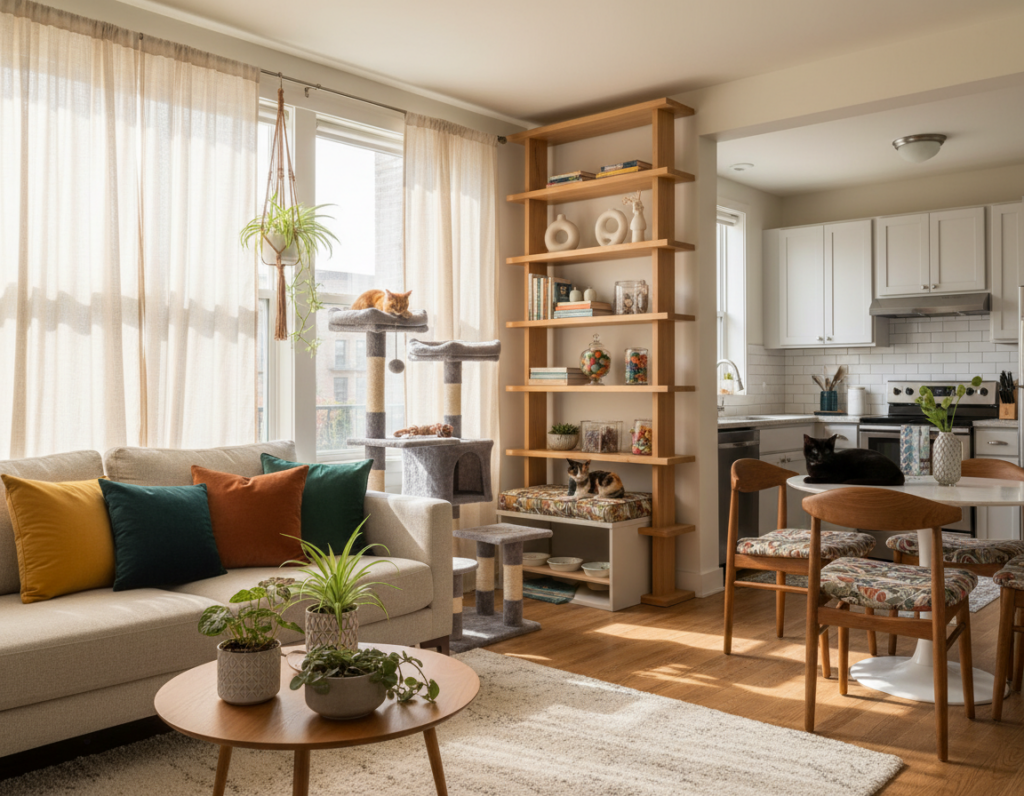
Stacked perches and wall routes turn vertical space into a playground for an energetic cat. In tight homes, raising activity zones keeps floor space open while giving a pet room to climb and rest.
Installing Wall Shelves
Mount narrow shelves to form stepping stones up a wall. A series of staggered shelves makes a safe trail so a cat can travel high without running on the floor.
Tip: Add a mounted Katris Mix & Match scratcher to one panel for scratching that saves floor space and protects other furniture.
Utilizing Tall Cat Trees
Choose a sturdy, tall cat tree to create a central tower. Carole Wilbourn notes a cat tree satisfies the natural desire to climb, which is key in a studio apartment.
- Use a K&H Pet Products EZ Window Mount to add a sunny seat that faces the window.
- Secure tall towers to the wall to prevent tipping and keep small spaces safe for energetic pets.
- Pick cat furniture with integrated scratching surfaces to cut clutter and protect carpets.
“Provide high, quiet routes so a feline can observe and retreat,”
Strategic Placement of Litter Boxes and Odor Control
Keeping litter zones discreet helps preserve living space while giving a cat the privacy it needs. Thoughtful placement reduces odors and protects the home’s look.
Camouflaging Litter Boxes
Camouflaging a litter box gives a pet a quiet place to go and keeps shared rooms tidy. The New Age Pet ecoFLEX litter loo hides the box inside an end table so the box is out of sight and the bathroom stays clear.
“Cats love privacy,”
Odor Control and Daily Care
Use systems that trap smell and simplify cleanup. A Litter Genie works like a diaper pail to contain odors until trash day. For small bathrooms, Tidy Cats Breeze uses a grate and absorbent pad to separate liquid waste and reduce mess.
- Place boxes away from food and water bowls.
- Scoop litter once a day to prevent smells.
- Choose enclosed solutions or hide boxes in cabinets for added privacy.
Selecting Multifunctional Furniture for Small Spaces
Smartly chosen furniture can do double duty as play and rest spots for a lively cat. In compact homes, pieces that combine storage, perches, and scratch surfaces keep floor space open and give pets clear routes to climb.
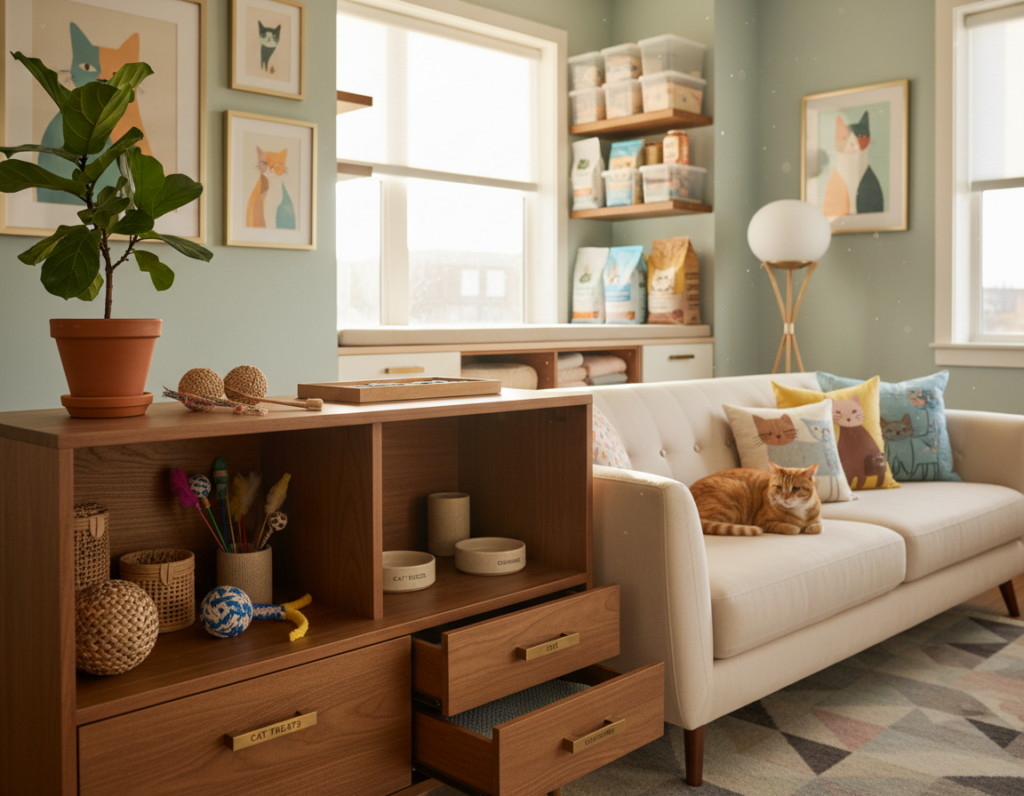
Console tables make great low climbing platforms. Placing a sturdy bed or cushion on one creates a daytime nap zone off the floor. Modify adjacent shelves to form a stepping route up a wall and protect the sofa with an over-the-arm scratcher.
Console Tables as Climbing Spots
Use a console as a launching ledge between furniture. Secure it and add a non-slip mat so energetic animals can jump safely.
Desk Nests for Sleeping
A Desk Nest clamps to the desk to give a warm bed above work areas. This keeps keyboards clear of fur and lets the pet sleep nearby without taking floor space.
Over-the-Door Perches
K&H Pet Products offers an over-the-door tower that adds vertical space without using any floor area. It’s an efficient way to expand routes and resting spots.
- Choose stable pieces and anchor tall items.
- Place a litter box and food station apart from sleep zones.
- Pick dual-purpose cat furniture to reduce clutter and protect surfaces from scratching.
Creating Engaging Playtime in Limited Areas
Even in a tiny space, deliberate play options let a cat burn energy and stay curious all day. Short sessions that mimic a hunt cycle give a feline physical and mental exercise without needing much running room.
Choose foldable gear like Frisco’s Crinkle Play Tunnel so a toy can be stored when not used. The tunnel folds flat, freeing floor and vertical space while keeping playtime easy to set up.
Use interactive tools—a wand toy completes a full hunt cycle in minutes. Food puzzles and trick training also help cat stay stimulated and reduce restless behavior in small spaces.
Frisco’s Igloo Bed Cave doubles as a private bed and a tucked-away hide that flattens for storage. A simple paper bag or a cardboard box can become a favorite toy, proving one does not need many toys to keep a kitty amused.
“Cats love to run through tunnels,”
- Rotate toys to keep interest high.
- Use a window perch so a cat can watch outside for long periods.
- Include scratching options near play zones to protect furniture.
Incorporating Natural Light and Window Access
A bright sill can become a daily stage for a curious cat to watch the world unfold. Natural light and a clear view keep a pet mentally engaged and calm.
Provide easy window access by keeping nearby surfaces clear. A tidy ledge or narrow shelf gives a cat an inviting place to perch without taking up valuable floor space.
Install a secure window perch to maximize the view. Perches that attach to glass or mount to the frame create a dedicated spot for napping and bird-watching.
Sunlight offers more than warmth: it stimulates natural rhythms and makes a small apartment feel larger and airier for both people and animals.
Safety matters: always check that screens and mounts are sturdy so a cat can enjoy fresh air without risk. A clear, comfortable window routine boosts wellbeing and reduces restless behavior.
“A sunny window spot is a favorite place for many cats to nap.”
- Keep the window area decluttered for easy access.
- Use a stable perch to create a reliable viewing spot.
- Verify screens and anchors are secure before allowing outdoor access.
Managing Multiple Cats in Compact Living Quarters
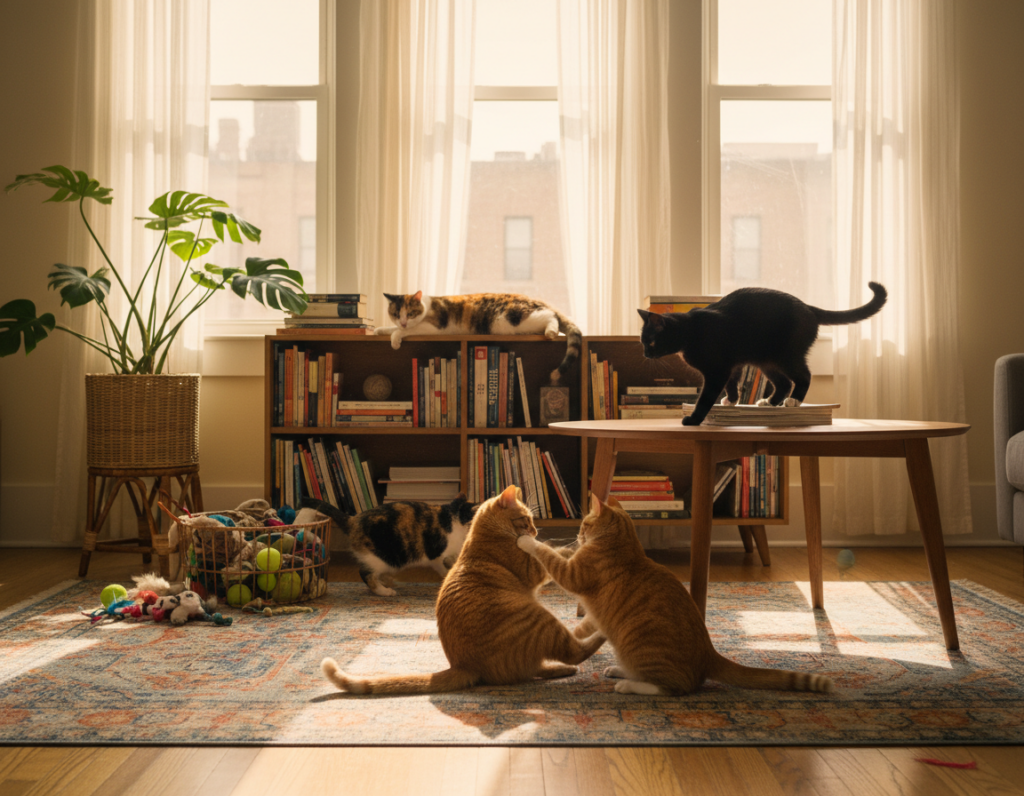
When multiple cats share limited living quarters, resource layout becomes the primary defense against stress.
Separate litter box locations reduce territorial fights. Carole Wilbourn recommends placing boxes in distinct spots so each feline can go in private.
“Provide separate litter box locations to prevent territorial disputes between your feline friends.”
Feed animals in different areas or at different heights to ease competition. Small changes in routine and placement go a long way.
Use vertical cat furniture to expand usable space without crowding the floor. Wall perches and tall towers give roaming routes and quiet retreats.
Monitor interactions daily. If one cat bullies another, add visual barriers and extra resting nooks so each kitty can find solitude.
- Scoop every litter box at least once a day to keep litter fresh.
- Place food, water, and boxes apart to cut tension.
- Introduce new pets slowly and supervise early visits.
Conclusion
Smart design makes it simple to keep a stylish home and meet an energetic pet’s needs. Use vertical routes and multifunctional furniture to expand usable space without crowding floors.
Place litter stations thoughtfully and commit to daily maintenance to control odor and preserve a clean feel. Add a secure window perch and short interactive sessions to keep an animal mentally engaged and active.
With careful planning and small adjustments, one or more cats can live happily in any sized apartment while the home stays calm and intentional.