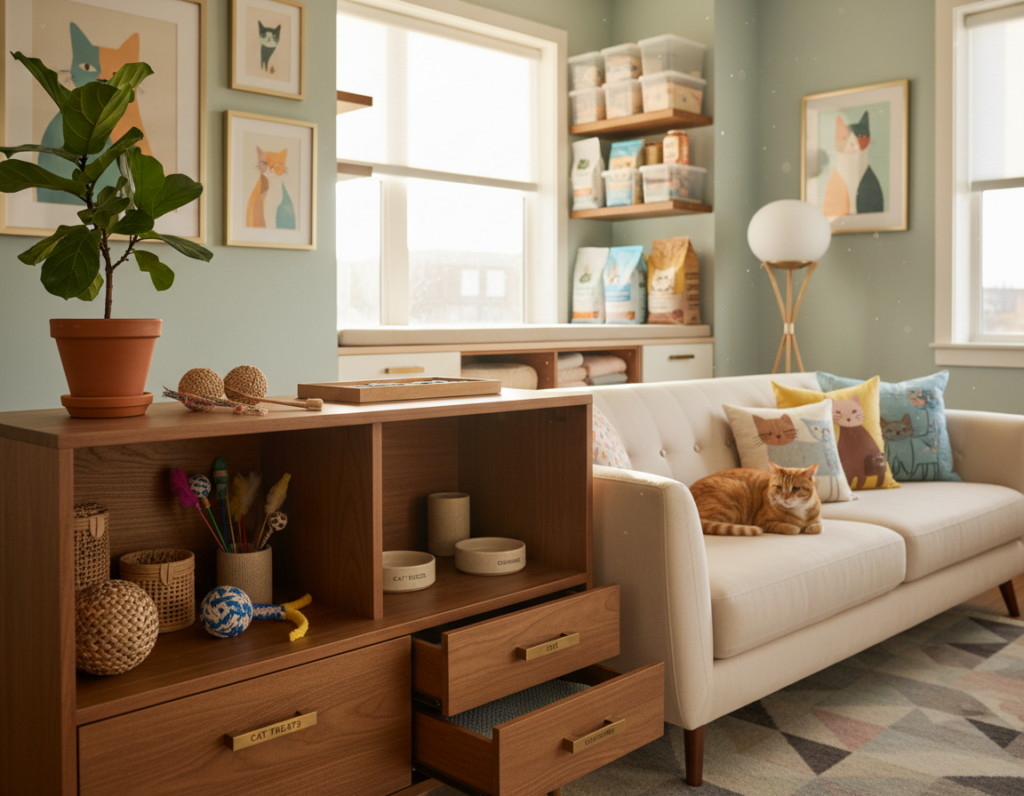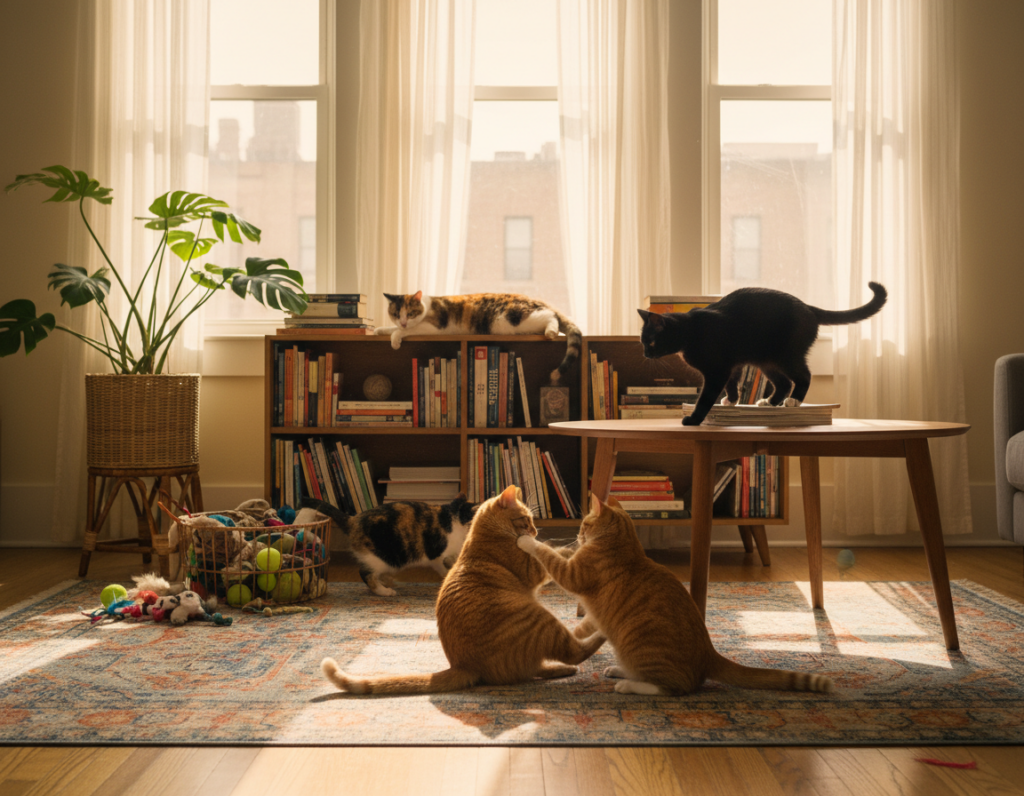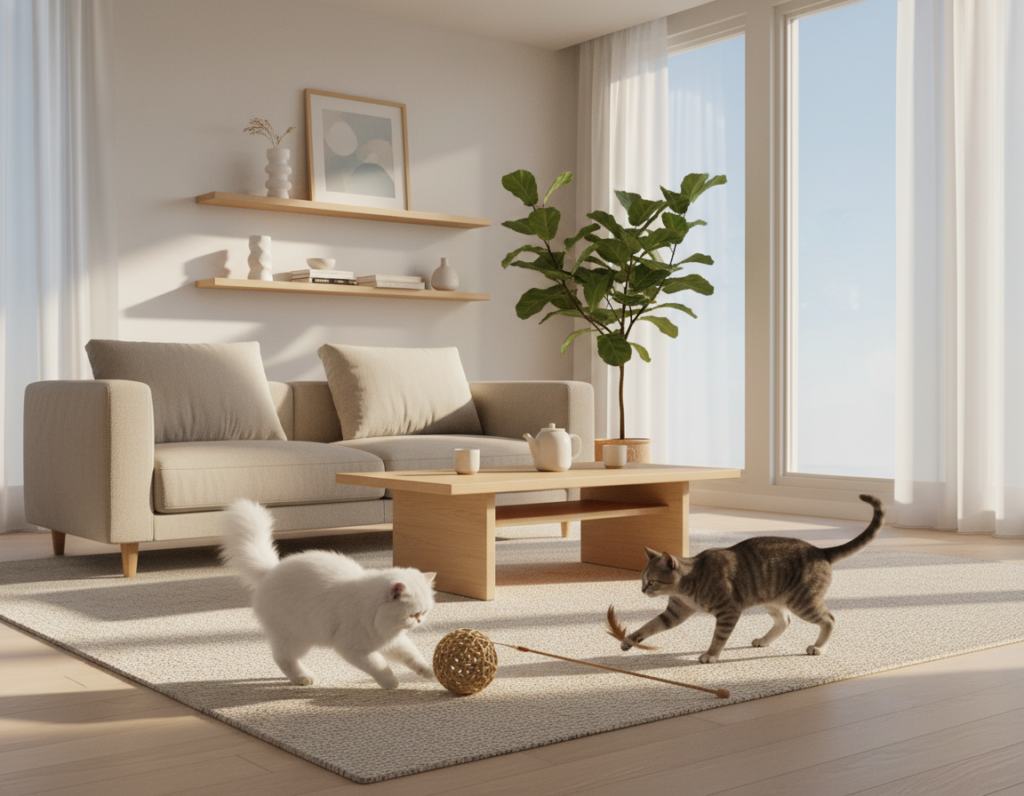
Creating a calm, engaging space for indoor cats matters for both pet health and lease compliance. VCA Hospitals notes that over 60% of indoor felines in the United States are overweight, so enrichment and movement are vital.
This page outlines practical, renter friendly cat apartment ideas that use vertical play, safe scratching zones, and smart litter box placement. It shows how to add cat furniture and perches without harming the wall or fixtures.
Many people worry about losing a security deposit, but simple repair techniques make it easy to restore surfaces. The guide covers ways to use a balcony safely, manage limited space, and keep the home fresh while giving cats the stimulation they need.
Follow these steps to balance feline welfare and property care, so both pets and people thrive in small living spaces.
The Importance of Catification in Small Apartments
Small living spaces need intentional design to keep indoor felines healthy and engaged. Limited square footage does not mean a lack of enrichment. Thoughtful changes to a room can encourage movement and curiosity.
VCA Hospitals reports over 60% of indoor cats in the U.S. are overweight. Active play, climbing, and hunting-style enrichment help reduce obesity risk and support a longer life.
Keeping felines indoors also protects wildlife. Free-roaming pets can harm local bird populations, so a stimulating home is safer for both the pet and the environment.
Simple steps make a big difference:
- Use vertical perches and window spots to let many cats explore without taking floor space.
- Create safe scratching and play stations so a kitty can express natural behaviors.
- Rotate toys and puzzles to keep life varied and prevent boredom-linked issues.
For practical installation tips and low-damage solutions, see this guide on how to catify your apartment. Prioritizing catification helps ensure a happy, active feline even in a small home.
Utilizing Vertical Space for Renter Friendly Cat Apartment Ideas
Making the most of walls and windows gives pets room to climb and rest without crowding living areas.
Installing Wall-Mounted Shelves
Wall-mounted shelves let a small feline survey the room from a high spot. A well-placed shelf provides security and a private nap area.
Tip: Choose sturdy brackets and test weight limits before use. A shelf with a soft cat bed on top becomes a prized retreat.
Choosing Collapsible Furniture
Collapsible options, like a foldable cat bed or portable perch, save floor space when not in use.
- Window mounts: The K&H Pet Products EZ Window Mount keeps a pet safe while watching street activity.
- Cat tree: A stable tree gives climbing chances; many affordable trees appear on Facebook Marketplace.
- Vertical network: Combine shelves, perches, and a tree to let cats move without touching the floor.
This page shows how to pick cat furniture that fits a layout and removes cleanly when moving out.
Managing Litter Box Placement and Odor Control
Choosing the right litter setup makes daily care easier and keeps odors at bay. Vets advise one extra litter box per number of cats, so two cats need three boxes for optimal hygiene.
To keep the home fresh, make sure to scoop the litter box every day. High-quality litter cuts smell and clumps faster, reducing time spent cleaning.
Hidden options like litter box furniture or a converted closet provide privacy and hide the box in a small room. Add a door bracket for ventilation and access.
- Odor tools: Use a Litter Genie to trap waste and a wall-mounted purifier such as the QAIS-air-04 to save floor space.
- Track control: Place a litter mat outside each box to catch tracked litter and protect the floor.
- Many cats: Spread boxes across different spaces so every feline friend has an easy place to go.
“Daily cleaning and smart placement are the simplest ways to keep litter areas pleasant.”
Providing Appropriate Scratching Outlets
Designated scratching outlets protect your furnishings and satisfy natural clawing behavior. Offering proper posts and mounted options keeps claws off upholstery and carpet. A well-placed outlet also gives a cat a clear place to stretch and mark territory.
People often choose sisal scratching posts because they last longer than cardboard and resist shredding. A wall-mounted scratching post or slanted scratcher uses vertical wall space and saves valuable floor space in a small home.
Products with strong reviews—like wall-mounted climbing poles and floating steps—show cats accept vertical solutions. Rotate sisal wraps to extend life and keep the texture new. A compact cat tree with a built-in post can be an all-in-one solution when space is limited.
- Protects furniture: Proper posts direct clawing away from chairs and sofas.
- Uses vertical space: Shelves and poles encourage climbing without crowding the floor.
- Training tip: Offer praise and treats when a kitty uses the post to reinforce the behavior.
“A sturdy scratching outlet gives a cat an outlet for natural behaviors while preserving the home.”
Enhancing Playtime and Exercise
Structured games and puzzle feeding turn small rooms into lively, enriching spaces. Short, daily sessions raise heart rate, reduce boredom, and deepen the bond between owner and pet.
Interactive Wand Toys
Engaging a cat with a wand toy for ten minutes each day is a proven way to keep them active and alert.
Tip: Vary speed and direction to mimic hunting. This encourages jumps and sprinting without needing extra furniture.
Food Puzzles for Mental Stimulation
Food puzzles, like the Petstages-style feeders, turn meals into a challenge that sharpens problem-solving skills.
They slow intake and provide enrichment while the owner is away. Microchip-enabled feeders are a good option for homes with multiple cats to prevent food theft.
Scheduled Feeding Routines
Feeding at set times — for example, 7 am and 7 pm — helps manage weight and cuts down begging.
Combine schedule, short play sessions, and a collapsible play tunnel to give the kitty a safe place to hide and sprint in a tight space.
- Daily play: 10 minutes of wand play to boost activity.
- Mental work: Puzzle feeders to keep the mind busy.
- Routine: Two scheduled feedings to control calories.
“Playing with a pet is the most important way to maintain your connection; you are their primary link to the outside world.”
Creating Safe Window and Balcony Access
A well-designed window perch or enclosed balcony transforms limited space into a safe exploration zone.
Ensuring balcony safety is critical. Even on a second-story unit, a slipping pet can fall. Installing a full pet screen is a reliable option to enclose the balcony and prevent accidents.
Tip: If a sliding door opens to the balcony, adding a pet door gives a kitty controlled access to fresh air without leaving the home unsupervised.
- Enclosed balcony: Build a small “catio” with a secure mesh to let cats enjoy sunlight and sounds safely.
- Window access: Mount a window perch for quiet observation and mental stimulation.
- Compliance: Always check local building rules before permanent changes to maintain legal and lease compliance.
“A secure balcony environment lets pets soak up sun and fresh air, boosting their quality of life.”
For step-by-step assembly tips and compact enclosure plans, see this balcony catio guide.
Maintaining Security Deposits Through Proper Wall Care
Keeping walls intact pays off: careful installation and tidy repairs protect security deposits and help maintain a positive relationship with building management.
Repairing Drywall Holes After Moving
Small holes from shelves or climbing poles are easy to fix. A putty knife, joint compound, and a damp cloth are often all that is needed.
Quick repair steps:
- Clean the hole and remove loose debris with a damp cloth.
- Apply a bit of joint compound with a putty knife and smooth the surface.
- Let it dry, then feather the edges so the patch blends with the wall.
- Ask the office for a pint of matching paint for touch-ups to ensure a perfect finish.
Installation tips: make sure to drill during reasonable hours to avoid disturbing neighbors. Using proper anchors makes mounting cat furniture as safe for the wall as a TV.
“By taking the time to properly repair walls, people can get their full security deposit back.”
Final note: keeping walls in good condition saves time, protects deposits, and keeps the space ready for the next occupant.
Conclusion
Practical steps make a big impact. With careful planning and simple mounts, an ordinary unit becomes a safe, engaging home for pets.
Using vertical perches, short play sessions each day, and reliable litter routines keeps pets active and calm. Proper scratching outlets and easy drywall repairs protect furnishings and the security deposit.
This page supplies the tools and strategies needed to balance enrichment and upkeep. With a bit of creativity and steady care, owners can give their cats a healthy life without costly changes to the apartment.