Many owners wonder if a simple change in layout can calm competing felines in the same home. Recent surveys show that nearly a quarter of UK households own a cat, and studies find that households with more than one pet are common across Europe.
The article explores practical ways to ease conflict through environmental shifts. By moving furniture, adding elevated routes and increasing access to resources like food and litter trays, owners can lower aggression and health problems linked to poor spatial design.
This guide outlines clear steps to assess space, add scratching surfaces, and manage interactions when dogs or other animals are present. It aims to help humans create a calmer household where cats can live together with less fighting and fewer behaviour issues.
Understanding the Social Needs of Indoor Cats
Indoor felines show a wide range of social needs that shape how they live with others in a shared home. Owners must match the environment to each animal’s personality to avoid behaviour problems.
Social Flexibility
Domestic cats can live alone or in groups depending on history and temperament. Some seek company from other cats, dogs, or humans, while others prefer solitude.
Key point: forcing interaction can worsen behaviour and lead to conflict in a multi-cat household.
Territorial Instincts
Cats form territories and use scent, posture, and routes to signal rights to space. In free-living settings, groups often form around food, but outsiders may be excluded.
Providing multiple access points and clear boundaries helps each pet keep control of its space and reduces confrontations.
“Observe interactions to identify which groups have formed and ensure every cat has the resources it needs.”
- Offer several resting sites and water stations.
- Keep litter trays and feeding areas separated by room or level.
- Watch for friendly or avoidant behaviours to guide changes.
Recognizing Signs of Multi Cat Apartment Stress
Behavioral and physical changes can reveal when household felines struggle to get along.
Watch for health clues: over-grooming, hair loss, vomiting, diarrhea, and house-soiling often appear when animals feel unsafe. These issues can lead to urinary or bladder problems if ignored.
Clinical tension shows up in body language. Freezing, cowering, hissing, or blocking access to litter trays and food bowls are clear signs of conflict.
- Owners may notice staring, avoidance of shared rooms, or a cat suddenly becoming clingy or hiding.
- Increased levels of anxiety often cause excessive scratching or urinating outside designated trays.
- Low body posture, flattened ears, or raised hackles indicate a lack of safety and possible aggression.
- Presence of dogs or other animals can worsen problems and raise tension levels.
“Even tolerant groups may only be avoiding fights — early detection helps prevent long-term health and behavior issues.”
For practical steps on managing households with more than one pet, see this multi-cat household guide.
Assessing Your Current Home Layout
Start by sketching a simple floor plan to reveal where each pet spends most of their time. This map helps spot shared routes and likely conflict zones.
Mapping Your Home
Map rooms and mark resources: note food, litter, resting spots, and windows. Seeing these items on paper highlights bottlenecks where cats must cross paths to reach essentials.
Observe at different times of day to record movement patterns. Watching who uses which area shows where territorial behaviour is most likely to erupt.
- Visualize how each cat uses the house to identify high-traffic areas.
- Rearrange furniture so every cat has clear access to preferred resting spots.
- Place a tall perch or tree in a quiet corner for any cat that avoids busy rooms.
“A clear layout reduces competition by giving every animal safe routes and easier access to resources.”
The Importance of Resource Distribution
How resources are spread around a home largely determines whether cats compete or coexist.
The golden rule is simple: provide one resource per cat plus one extra. This applies to food, water, litter trays, and resting sites. Placing items in different rooms gives each feline clear choices and reduces direct encounters.
- One plus one: if three cats live together, offer four of each resource in separate locations as an example.
- Remember that many cats are solitary feeders; grouped feeding can cause feeding avoidance and health problems.
- Spread water and litter away from feeding areas so each animal has private access.
- Keep resources for cats separate from those used by dogs or other pets to lower conflict.
When owners follow this layout, behaviour problems often fall. Abundant, well-placed resources reduce chronic stress and long-term aggression.
“Provide plenty of access and watch how competition fades.”
For evidence supporting resource access and group living, review the resource distribution formula discussed by researchers.
Creating Private Retreats and High Resting Places
Designing quiet hideaways and tall resting spots helps reduce tension among household cats. These elements give each animal the option to withdraw and observe the home from a safe distance.
Safe Hiding Spots
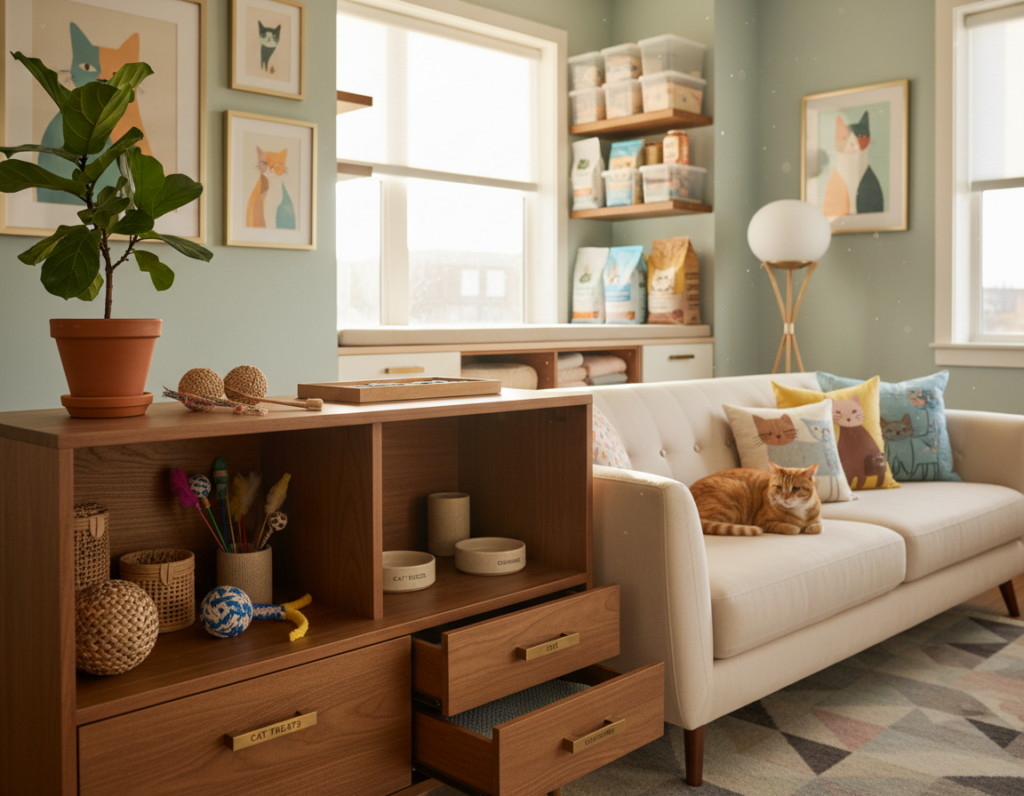
Provide covered beds, cardboard boxes, or a tucked-away wardrobe shelf so a cat can take time away from people and other pets. A dark, warm place often becomes a designated safe zone.
Owners should not disturb a resting cat; this spot is their refuge and must remain predictable.
Elevated Perches
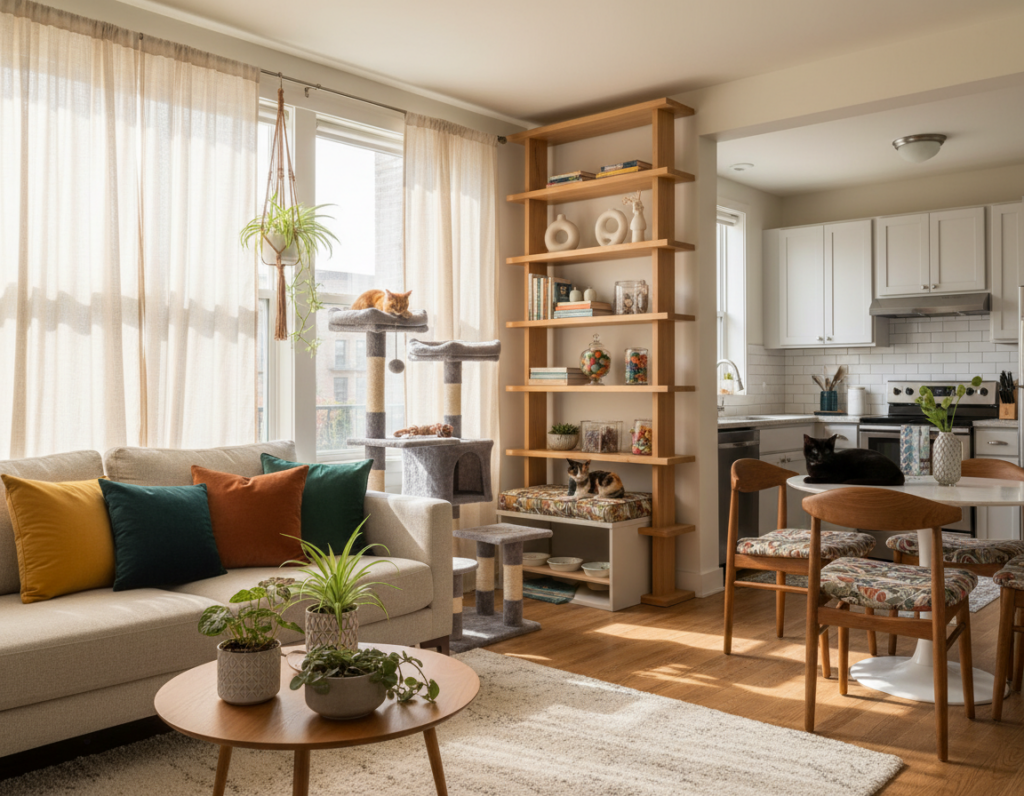
Tall modular towers, shelves, and cat trees let cats monitor rooms without feeling trapped. When cats feel threatened, they seek height to assess surroundings.
Place several scratching posts near these perches to encourage natural marking. This adds scent and visual cues that help each cat claim space without direct confrontation.
“Ensure every cat has access to at least one high perch to reduce tension and support confident behaviour.”
Optimizing Feeding and Water Stations
Feeding and hydration setups shape how cats interact at mealtimes and can cut down on rivalry.
Position bowls to reduce conflict. Place food bowls in separate areas so each cat can eat without being approached by others. Avoid corners so an animal can face any direction and stay alert while it eats.
Water and food belong apart. Cats often refuse to drink near their food. Offer water bowls in different rooms to encourage hydration and support long-term health.
- Use microchip feeders where available to guarantee that each cat receives its portion.
- Choose large ceramic or glass bowls filled near the brim so the animal can monitor the area while drinking.
- Set stations in quiet, low-traffic spots to improve access and reduce avoidance.
“If a cat stops eating or drinking, another animal may be blocking access—inspect placement and adjust.”
Clean stations regularly and provide multiple feeding areas. These steps lower tension in a multi-cat household and protect behaviour and health.
Managing Litter Tray Placement for Harmony
Careful placement of litter trays can prevent many common toileting issues and reduce tense encounters. Proper layout makes it easier for cats to go when they need to and lowers the chance of guarding or aggression.
Keep trays away from noisy appliances, busy hallways, and high-traffic areas. Place them in quiet rooms where an animal can feel safe and maintain privacy.
Avoiding Bottlenecks
Open trays with a clear line of sight help cats feel secure. Avoid small passages where one animal can block another’s access.
- One plus one: provide one tray per cat plus one extra, and spread them across separate areas of the house.
- Scoop at least twice a day and use fine, sand-like clumping litter most cats prefer.
- Do not use scented liners or perfumes that may discourage use and create behaviour problems.
“If you see guarding or snarling near a tray, add more stations and change locations to restore safe access.”
Clean, well-placed trays protect house hygiene and give each pet the space they need to perform a natural function without fear.
Utilizing Vertical Space and Scratching Posts
Expanding usable height in the home gives each pet more choices and safer observation points.
Vertical space such as tall trees, shelving, and ramps lets cats escape conflict and watch their surroundings. This reduces face-to-face encounters and supports calmer behaviour.
Scratching posts provide visual and scent markers that help animals claim territory without fighting. Posts should be tall enough for a full stretch and set near doors or windows where marking naturally occurs.
- Use shelves and trees to turn one room into several usable areas and increase safe routes.
- Place a scratching post by an entry or a sunny window so cats can signal presence to the outside world.
- Offer multiple surfaces and stable posts made from preferred materials to protect furniture and encourage use.
“High vantage points and ample scratching surfaces let cats choose distance and reduce direct competition.”
Tip: combine elevated perches with nearby litter access so each animal can move freely between resting, marking, and toileting areas.
Introducing New Furniture and Environmental Changes
Gradual changes to the home let each feline form new routes and claim fresh spots safely. Owners should add items a little at a time and let the animals explore on their own schedule.
Place new pieces in neutral areas so no single animal feels invaded. For example, set a new cat tree where traffic is low and let cats approach it over several days.
Keep the feeding routine and trays where they are to preserve stability. Maintaining regular food times and familiar locations reduces the chance of behaviour problems.
- Monitor interactions closely and watch for signs of anxiety or avoidance.
- Use pheromone products such as Feliway Friends to ease adjustment periods.
- Consider how each item changes the flow of the house and adds enrichment.
“Introduce changes slowly and observe each animal’s response to protect group bonds.”
Small, steady updates to the environment lower the risk of stress and help cats accept new furniture without conflict.
When to Seek Professional Behavioral Advice
If worrying signs appear — such as repeated fighting, guarding of resources, or sudden avoidance — a qualified behaviourist should be contacted. Keep any animals showing aggression separated while a plan is arranged.
Owners should first consult a veterinarian to rule out medical causes for changed behaviour. Illness, pain, or urinary problems linked to litter trays can make a cat act out and worsen conflict in the household.
A certified clinical animal behaviourist or a veterinary behaviourist can assess the root causes and create a tailored modification plan. This may include environmental changes, training, pheromone support, or, in some cases, medication.
- If cats are not getting along and show signs of aggression, seek professional advice promptly.
- Qualified bodies such as the ABTC and FAB list accredited behaviourists who work with households and groups of pets.
- Early referral protects long‑term health and gives owners practical steps to help their animals get along.
“Never ignore persistent conflict — early help is the best way to restore calm and protect animal health.”
Conclusion
In short, creating harmony requires patience, steady observation, and a commitment to each pet’s needs.
Owners who rearrange furniture and spread resources thoughtfully often see calmer behaviour and fewer clashes. Small changes — extra perches, more feeding spots, and clear routes — give every animal safer choices.
Remember: every cat is an individual. What soothes one may not suit another, so monitor reactions and adjust slowly.
Prioritize health and wellbeing: check for illness, keep routines stable, and seek professional help if problems persist. With thoughtful design and care, cats can share a peaceful, comfortable home.