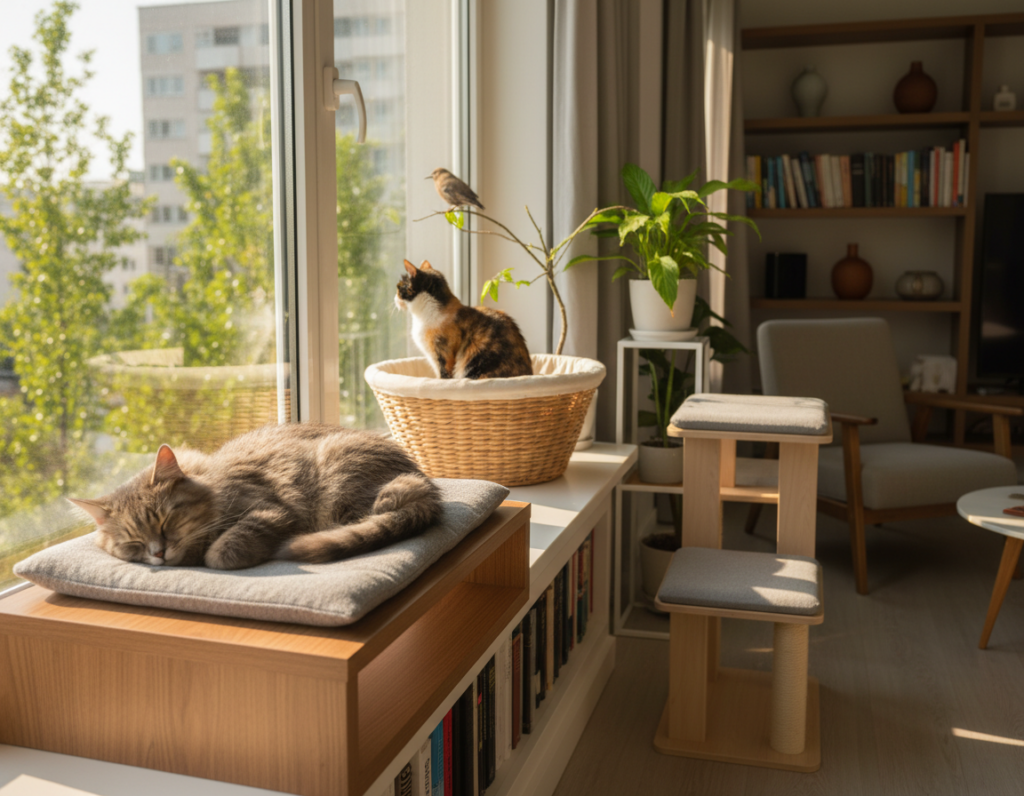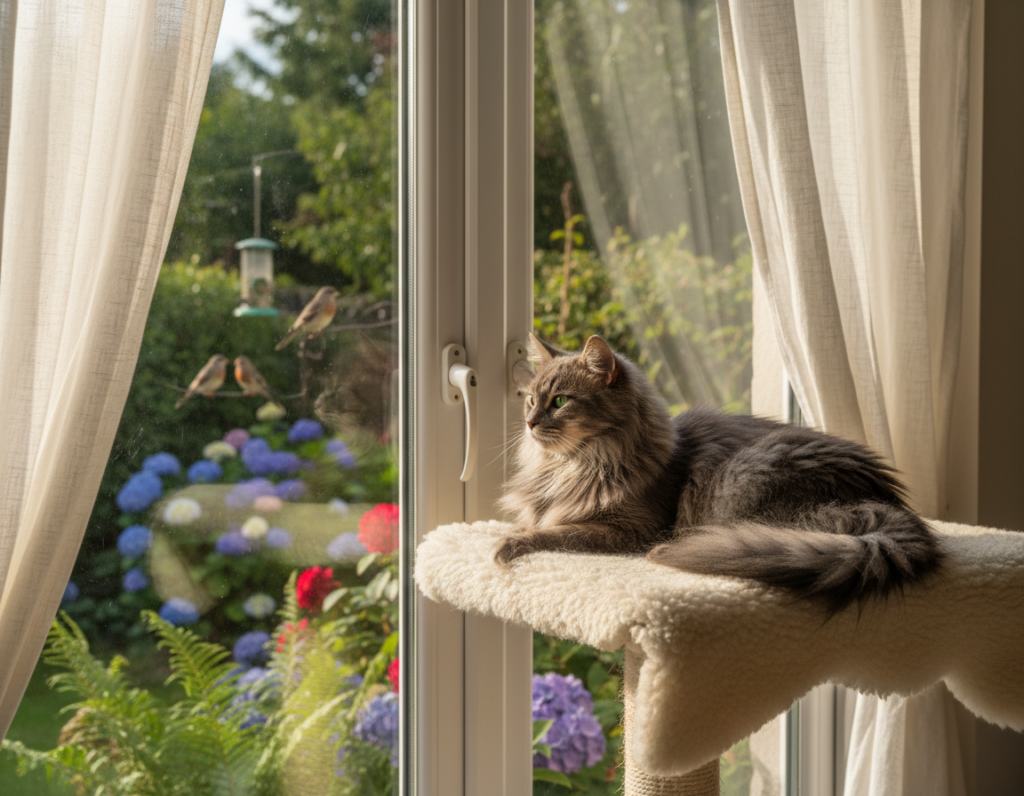
Creating a bird watching setup for indoor cats gives a cat healthy mental stimulation while keeping local wildlife safe. Recent reports note that North American bird populations have fallen sharply over the last 50 years, so it is wise to balance enrichment with caution.
One practical approach is to place bird feeders in a garden area visible from a window. This lets pets enjoy observing birds in the yard without any physical access to them.
Keep feeders away from trees and structures that permit climbing. Preventing access reduces stress on wildlife and lowers predator risk.
These simple tips help craft a safe, enriching environment that satisfies natural instincts. The result is a happier cat and a calmer, protected outdoor area.
The Benefits of a Bird Watching Setup for Indoor Cats
Creating a visible outdoor focal point turns idle hours into active mental play for a cat. This small change gives steady stimulation and reduces stress-related problems.
Mental Stimulation and Enrichment
Watching birds is a low-risk way to deliver constant enrichment. Short sessions of focused attention help prevent boredom and destructive behavior.
Research shows that visual engagement calms many pets and lowers anxiety that can trigger health issues like urinary trouble.
Physical Exercise and Natural Instincts
A visible feeder encourages short bursts of movement as a cat darts, climbs, or shifts position to view prey. Those bursts add healthy activity without outdoor exposure.
- Visual cues give a steady source of entertainment and alertness.
- Bird feeders act as a form of exercise and natural behavior support.
- Regular viewing helps structure hours of busy and calm periods through the day.
- According to Kristiina Wilson, feeders are a practical tool for cat enrichment.
“Bird feeders are a great tool for cat enrichment, encouraging natural behaviors that are vital for a cat’s well-being.”
Selecting the Right Feeder and Food Varieties
The right combination of feeder style and seed encourages a healthy mix of local species. This helps wildlife and gives a cat safe visual enrichment without direct access to birds.
Choosing Feeder Types That Attract Natives
Tube and platform feeders suit small song species and limit wasted food. Choose sturdy designs with metal ports to resist squirrels and other animals.
Matching Food to Target Species
Offer sunflower, thistle, or suet based on the guests you want. Sunflower-seed tube feeders appeal to chickadees, titmice, nuthatches and finches.
- Use suet mixes in cold weather to boost calories.
- Thistle attracts finches that prefer small seeds.
- Rotate food to avoid mold and spoilage over days and hours.
Providing Fresh, Accessible Water
Provide a shallow water source near window viewing at about 5–6 feet away so the birds feel safe. Replace water daily in warm weather and prevent freezing on cold days.
February is National Bird Feeding Month; refer to this guide to winter bird feeders for seasonal tips and feeder maintenance.
Strategic Placement for Optimal Viewing
Positioning a feeder correctly changes a simple window into a daily source of safe stimulation. A well placed feeder keeps the motion of birds visible while reducing risk to wildlife.
They should choose a spot that lines up with a cat’s favorite perch. The window view must be clear, steady, and free of nearby climbable furniture.
- Place the bird feeder in an area clearly visible from the perch.
- Set the feeder at least 10 feet above the ground to deter predation.
- Keep feeders in open space so cats cannot ambush from nearby structures.
- A well-placed feeder gives daily visual interest and gentle stimulation.
- Verify that feeders never allow accidental contact between the cat and the birds.
Regular checks of placement help maintain safety. Small adjustments to the window view or feeder height keep both cats and birds comfortable and secure.
Essential Safety Precautions for Your Feline
A safe viewing area begins with reinforced windows and snugly fit screens. These simple steps prevent slips and falls while a cat enjoys the view.
Securing Windows and Screens
Check locks and screen fit on every window used for viewing. Replace loose screens and install childproof locks if needed.
When using a window bird feeder, place a perch a few feet away. This distance helps the birds feel safe and lowers stress on wildlife.
- Always secure screens to prevent escape or falls while the cat watches.
- Set the cat’s perch several feet from the feeder to keep birds comfortable.
- Keep the feeder at least 10 feet above the ground to protect visiting birds and reduce access by other animals.
- Keep the cat indoors; indoor life often means longer, healthier years.
- Follow these practical tips to create safe enrichment and reduce injury risk.
Regular checks are essential. Inspect windows, feeders, and perches weekly to maintain safe access and lasting enrichment.
Deterring Unwanted Wildlife from Your Yard
A few careful changes to ground cover and placement can reduce predators and nuisance animals near the feeder. These steps protect target species and lower risky encounters with a curious cat.
Practical ways to keep unwanted animals at bay include simple, low-cost measures that do not harm wildlife.
- Rub a small amount of cooking grease on the feeder post weekly to make climbing difficult for squirrels and other climbers.
- Install a motion-activated sprinkler near the garden to gently scare off animals and discourage cats from approaching the food area.
- Make the ground under the feeder uncomfortable by spreading pine cones, prickly trimmings, or coarse stone mulch to deter digging and stalking.
- Use scent deterrents—citrus peels, lavender sachets, or rosemary—to keep local animals away while allowing birds like cardinals and jays to visit.
- If squirrels are tolerated, offer a separate platform of peanuts away from the main bird feeders to divert them from seed and suet meant for native species.
Regular checks of these measures and minor adjustments in type and timing keep the area safe and the enrichment reliable for both wildlife and the household cat.
Maintaining Hygiene and Cleanliness
Regular cleaning keeps feeders healthy and reduces disease risk for nearby wildlife and pets. Schedule a full scrub of each feeder a few times during the winter to remove decaying food and mold.
They should rinse and disinfect parts with a mild bleach solution (one part bleach to nine parts water), then air-dry before refilling. This prevents bacteria that harm birds and other animals.
Water sources need equal attention. Dirty water attracts unwanted visitors like squirrels or rats and can spread illness.
- Clean bowls and replace water every few days in cold weather and daily on warm days.
- On mild days, add a shallow heated water bowl so birds always have access to fresh water.
- Rotate and discard old food to avoid spoilage and pests.
Maintaining a clean feeding area ensures that a cat can safely enjoy the view without exposure to harmful bacteria. A tidy routine keeps wildlife healthy and the yard safer for everyone.
Digital Alternatives for Indoor Entertainment
Digital videos can recreate lively yard views that keep a cat mentally active when a feeder is not an option. This approach offers a simple way to add visual stimulation without altering the yard.
Set a tablet or smart TV near a favorite window to mimic movement and song. In apartments or homes without a clear outdoor view, streamed clips provide steady entertainment and quiet activity.
Many owners report that this type of virtual enrichment keeps their pets engaged and calm. It is a low-risk, low-cost option and a safe alternative when an outdoor feeder cannot be used.
- Use short, varied clips to hold attention.
- Place the screen near the perch but not directly in the sun.
- Mix sessions across the day to avoid overstimulation.
For ready-made options, try curated videos like the birds on screen collections to simulate a natural view and support indoor play.
Conclusion
Key takeaway, the goal is simple: create safe daily routines that give a pet gentle stimulation and lasting enrichment. Small, consistent steps help a cat stay engaged while keeping local wildlife calm.
Follow the practical, research-backed tips in this guide to avoid common problems and preserve habitat. Whether using a visible feeder or digital entertainment, owners will see steady benefits from movement and visual interest without risking nearby birds.
Prioritize safety by securing windows and setting feeders at a measured height. Do this and the household will enjoy a healthier pet, a protected environment, and years of peaceful watching.