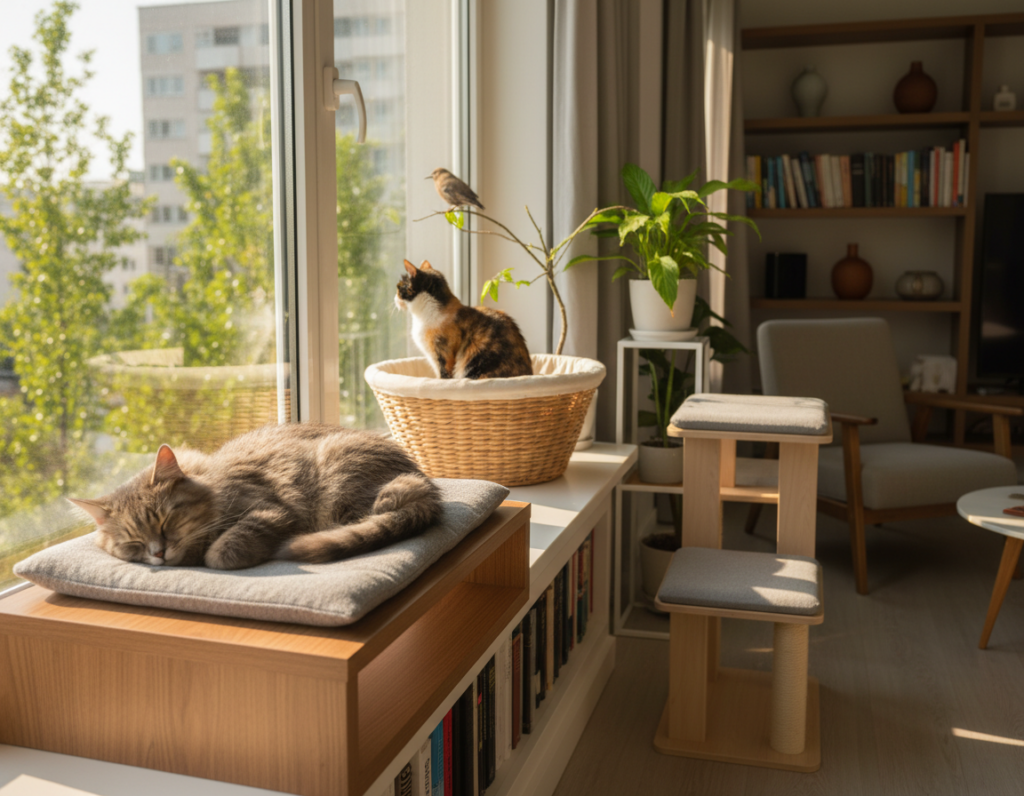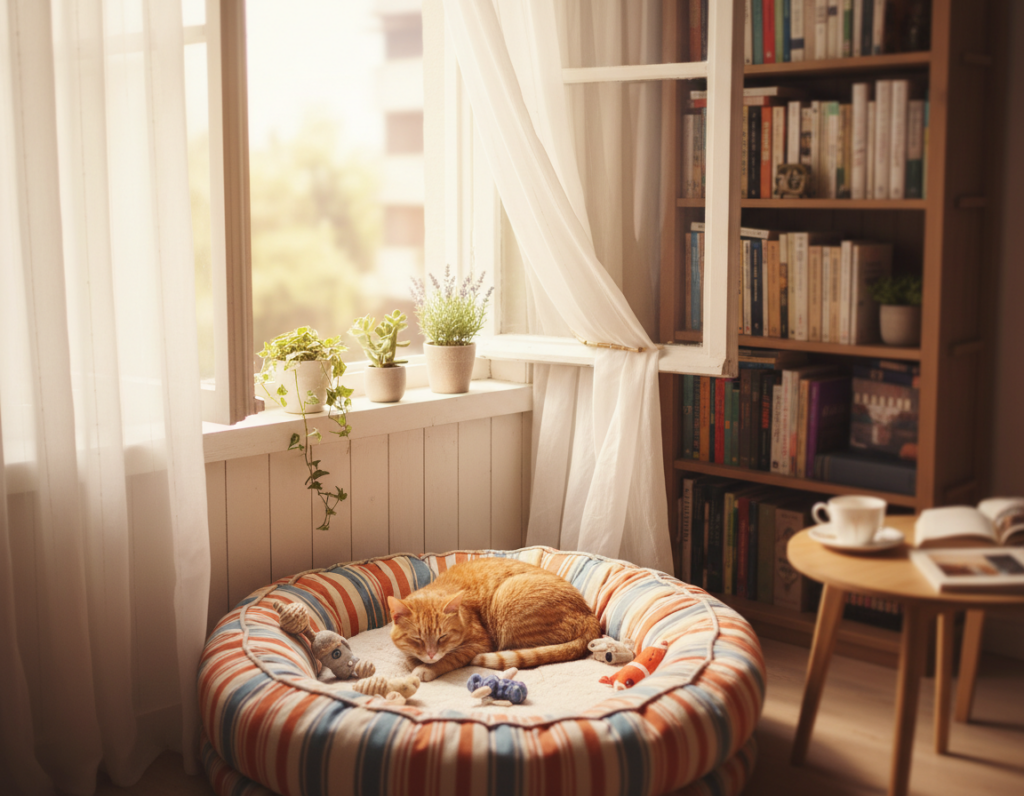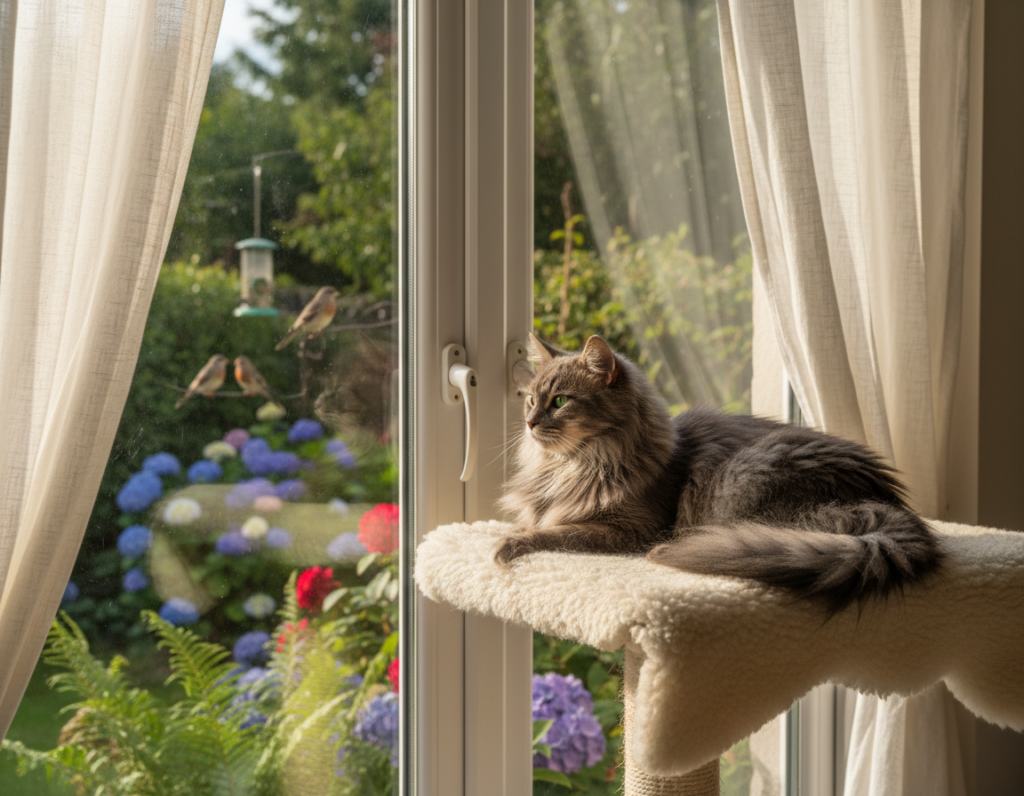
Many city dwellers notice their cat seeking high ledges to watch the world. In tight living spaces, these spots become a daily stage where a pet can enjoy fresh air and neighborhood motion.
The ideal perch gives a safe view of birds, passersby, and sunlight. Owners should fit sturdy screens and check them often to prevent falls. They must also avoid placing furniture within seven feet of the opening to reduce risk.
When pets have a secure spot, they stay engaged while people handle work or chores. A stable ledge or shelf transforms a plain corner into a restful lookout that helps reduce boredom and stress.
Simple precautions—secure screens, stable perches, and clear space—let cats enjoy long hours of safe observation. That calm entertainment helps pets stay content during a busy day.
Understanding the Risks of High-Rise Syndrome
A single misstep near an open ledge can have life-changing consequences for a feline. High-rise syndrome describes injuries that occur when indoor cats fall from elevated places, and the name came after a dramatic cluster of cases at a New York City vet clinic in the 1980s.
The Righting Reflex
The feline righting reflex helps a cat twist its body mid-air so it often lands on its feet. This reflex acts a bit like a mini parachute, giving the animal time to orient. Yet reflexes need a short span of time to work.
Common Traumatic Injuries
Paradoxically, falls from two to seven stories can cause worse harm than falls from much higher levels. Cats falling from these heights may not have enough time to right themselves, increasing the risk of severe trauma.
- Historical note: The term high-rise syndrome followed 132 cases treated at the Animal Medical Center over five months.
- Typical injuries include lung contusions, broken teeth, and internal organ ruptures that may appear 48–72 hours later.
- Even when a cat lands on its feet, internal damage can be significant; observation and vet care are vital.
Prevention is simple but critical: keep access to open balconies and unsecured screens restricted, especially in warm months when more windows are left open and emergency clinics see a spike in cases.
Selecting the Best Apartment Window for Cats
Not every screen keeps a nimble hunter safely inside; careful selection matters. Standard fly screens are made to stop insects, not a 10-pound cat that can push or claw its way through.
Install a secure grill or fixed mesh that cannot be dislodged by a curious jumper. In high-rise apartments, a flimsy screen can give way when a cat lunges at a bird.
- Choose professional, cat-proof grills for balcony openings and sills.
- Assess each window: fit, frame strength, and how it integrates with home style.
- Proper screening keeps air flowing while reducing the risk of high-rise syndrome.
Owners should keep in mind that the right setup prevents tragic falls and preserves décor. A secure opening is the practical way to let a pet enjoy sun and breeze without danger.
Upgrading Window Screens for Maximum Security
Strong mesh and a reinforced frame make a busy sill a safe spot for a lounging feline. Owners should choose durable materials and secure the assembly so a curious cat cannot dislodge it.
Pet-Proof Mesh Options
Vinyl-coated polyester mesh is seven times stronger than standard fiberglass and resists damage from cat claws. This material is a practical choice when replacing a worn screen.
For very heavy or aggressive climbers, stainless steel mesh provides near-indestructible protection, though installation often needs professional tools.
Reinforcing the Frame
Reinforce the screen frame with screws or metal clips so it can support the weight of a jumping pet. If the frame is aluminum, ensure it is fastened to the sill to prevent popping out.
- Replace fiberglass with pet-proof mesh on frequently visited windows.
- Inspect screens annually for rot or separation from the frame.
- Use high-quality materials to stop tearing from cat claws.
Regular checks and solid installation deliver long-term safety and peace of mind when a cat enjoys a sunlit perch.
Protecting Your Decor from Claw Damage
Loose cords and thin slats invite investigation, and that curiosity often ends in torn fabric or bent metal.
Cordless window treatments remove dangling lines that attract a cat and lower entanglement risk. They also preserve the room’s look while keeping pets safe.
Thin aluminum blinds bend easily when a cat pokes through. This creates permanent damage to the frame and spoils the finish of a room.
Choosing Cordless Window Treatments
Consider fabrics with a high thread count; they resist snagging from claws and hold up to daily use. Roller shades give a flat surface that resists pulling and looks clean with modern style.
- Avoid thin aluminum blinds that can be bent or broken by a curious head or paw.
- Choose cordless solutions to remove dangling cords that often tempt a cat to play.
- Pick durable fabric or reinforced materials so the treatment endures regular activity without visible damage.
- Inspect curtains regularly for early signs of claw damage and repair before problems spread.
Simple choices protect decor and keep pets safe. Durable materials and cordless fittings deliver a practical solution that fits a modern home and reduces the chance of costly damage.
Managing Air Conditioner Gaps
Gaps around a cooling unit can become a quiet exit route if not reinforced. Many apartments use window air conditioner units that leave spaces where a cat might try to squeeze through.
Clear plexiglass can be cut to fit over the accordion-style side panels. This creates a hard, claw-proof barrier while the unit lets cool air into the room.
It is a common way for a cat to escape if the plastic side panels are not properly reinforced. Owners should also ensure the AC is bolted to the frame so it cannot fall if a pet jumps on it.
Securing the area around the unit prevents access to the ledge or balcony and reduces the risk of a fall in high-rise apartments.
- Block gaps with plexiglass where panels meet the sill.
- Double-check fasteners and bolt the unit to the window frame.
- Inspect seals often so a curious cat cannot get to the outside ledge.
Creating a Stimulating Catio Experience
Designing a cat-friendly space gives a pet safe access to fresh air and daily sights. Practical choices help reduce restless behavior and limit risky exploration of frames and sills.
Installing Sturdy Window Perches
Choose a perch that mounts securely. A model that uses suction cups must list weight capacity, or choose one bolted to the sill for long-term stability.
The Rule of Three
The Rule of Three suggests that when there are three windows, at least one should be fully cat-centric and free of blinds or curtains. That one clear view reduces damage to treatments and prevents the pet from finding unsafe routes to the balcony.
Utilizing Vertical Space
Layered shelves and a screened enclosure expand usable territory upward. Building a catio with durable mesh materials keeps claws from tearing through and creates a safe way to enjoy the air.
- Build a screened catio or enclosure as a secure outdoor option.
- Always verify perch weight limits before installation.
- Use strong mesh and fasten the frame so the space stays cat safe.
“A well-designed catio provides a safe environment where a pet can watch birds without the risk of falling.”
Essential Safety Measures for Balconies
Even a small gap in a railing can turn a sunny perch into a major risk for an adventurous pet.
Secure the perimeter first. Install strong netting along the railing to block jumps. Use clear Perspex or toughened glass panels where gaps exist, and make sure there are no openings at the sides or bottom.
Supervision remains vital. Netting and screens reduce hazards but do not remove the need to watch a cat while it explores outdoors.
- Check screens and mesh for rips; claws can widen small tears into escape routes.
- Keep furniture and tall plants away from the rail so a cat cannot climb up to higher edges.
- Assess the full boundary—bars, panes, and fastenings—to ensure a truly cat safe balcony.
- Remember: a secured balcony lowers the chance of a fall but does not eliminate risk; keep a watchful mind.
“A well-fitted barrier and regular checks give pets safe access to fresh air without risking a dangerous fall.”
Emergency Protocols for Potential Falls
When a fall happens from a high ledge, seconds count and a calm, immediate response can change the outcome.
If a cat suffers a fall from a balcony or an open window, seek emergency veterinary care right away. Internal injuries such as lung contusions may not show signs for 48–72 hours.
Do not assume the animal is fine even if it moves after a fall. A veterinary exam and imaging help detect hidden trauma that could become life threatening with time.
- Immediate steps: transport to a hospital; keep the feline warm and avoid handling that may worsen injuries.
- Avoid giving human medication or pain relievers; this can harm an injured pet.
- If the cat escapes and gets stuck in a tree, contact a professional rescue service rather than relying on the fire department. The site www.catinatreerescue.com lists experienced responders.
- Maintain balcony railings and screens in good repair to lower the risk of a future fall.
“High-rise syndrome is a serious medical condition, and professional treatment is the only way to ensure recovery.”
Preparation saves lives. Have a vet’s phone number ready, know the route to the nearest emergency clinic, and plan how to secure exits so the same risk does not repeat.
Conclusion
Small changes to fittings and furnishings can sharply reduce the chance of a fall from a high ledge. Reinforced frames and pet-proof mesh make openings safer than standard insect screens, which are not built to hold weight.
Choose cordless treatments and durable materials to protect decor and remove tempting cords. Add vertical shelves and a secure perch so a curious feline has a safe place to watch the world.
If a fall occurs, seek immediate veterinary care; internal injuries may not show right away. Regular inspections and simple upgrades keep pets safe while letting them enjoy fresh air and sunlight.