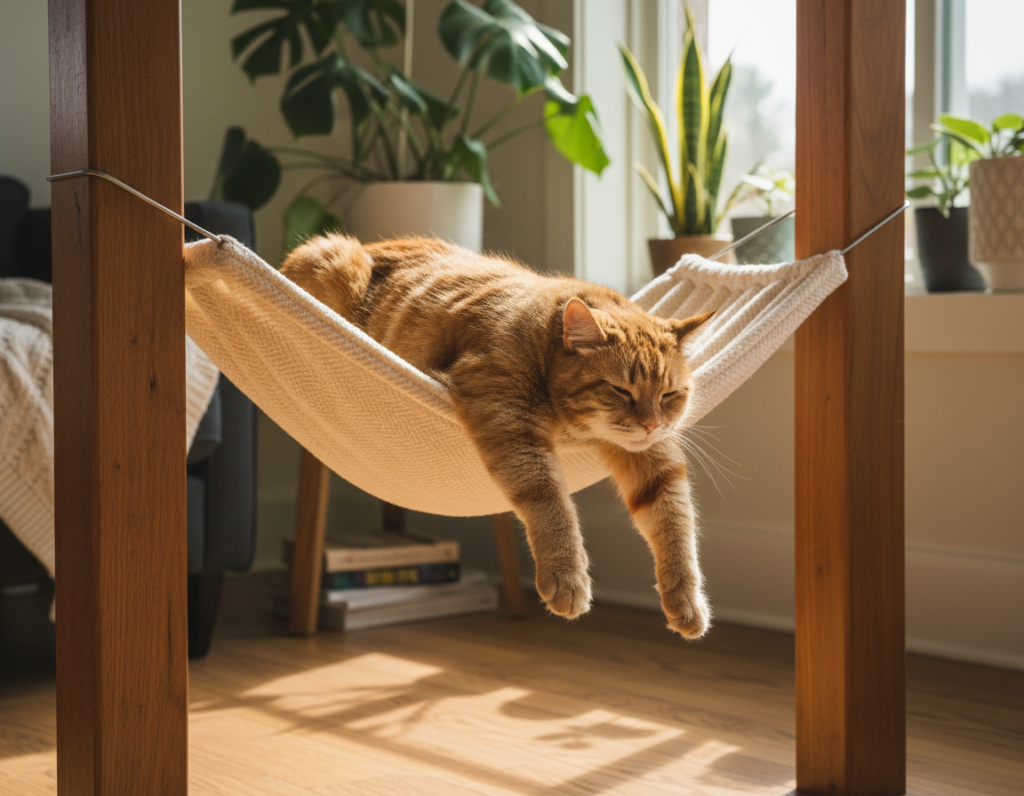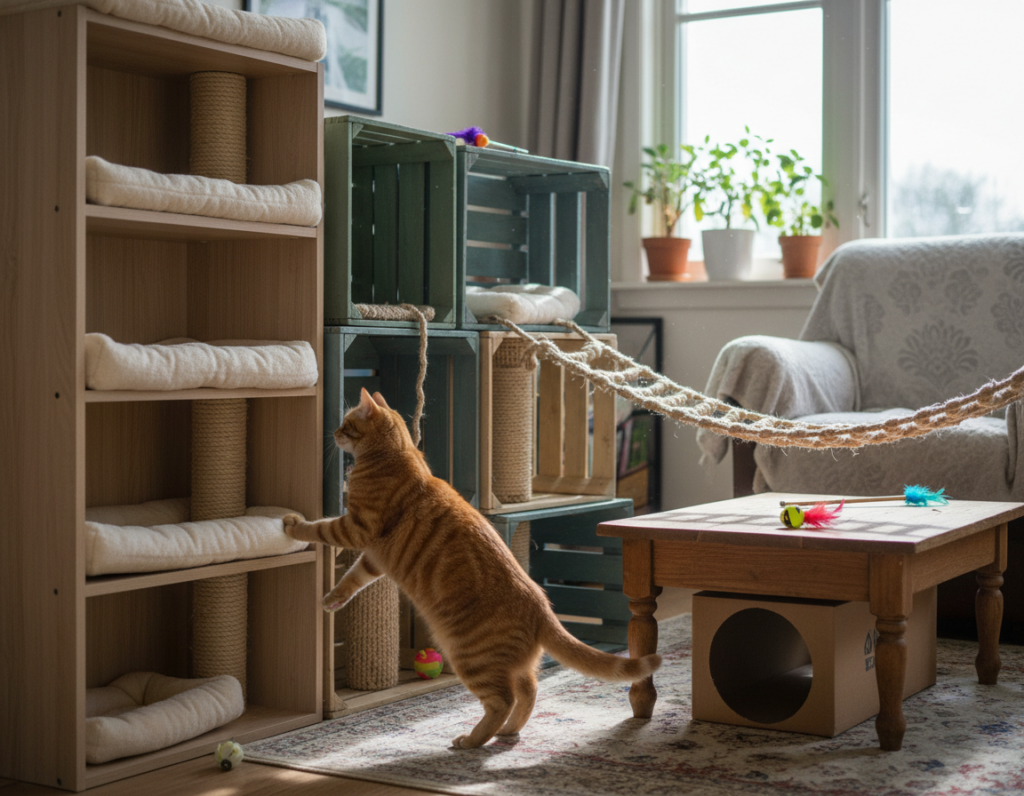
Small homes can feel larger when they rise up. Dr. Sharon Crowell-Davis notes that domestic felines keep a strong drive to seek height as a safety strategy. That instinct guides many design choices in compact living.
Providing vertical space helps indoor cats stay active and calm. Wall shelves, cat trees, and high perches turn tight rooms into a three-dimensional world. These options give a safe window vantage and reduce pressure on the floor.
Smart layout choices protect furniture and support natural behaviors like climbing and scratching. Integrating vertical scratching surfaces and secure climbing furniture keeps the home peaceful and the feline healthy.
In short: even in a small home, simple adjustments create more play places, calmer pets, and clear benefits for pet and owner. The following tips show practical ways to build a safer, engaging environment.
The Importance of Vertical Enrichment for Cats
Access to elevated places satisfies a cat’s instinct to survey and stay safe. Height acts as a form of territory and a secure vantage where a feline can watch its environment without direct contact.
Evolutionary instincts
Arboreal behavior is built into many domestic breeds. Dr. Sharon Crowell-Davis notes that cats use higher spots to scout for prey and threats. Dr. John Bradshaw adds that height serves as a safe zone and a way to claim territory.
Physical and mental health benefits
Climbing and jumping provide vital exercise that helps counter obesity, a condition affecting about 60% of U.S. domestic cats, according to the American Veterinary Medical Association.
- Mental stimulation: Elevated shelves, posts, and trees engage hunting instincts and cut down on furniture scratching.
- Stress reduction: Perches and cat trees give a private retreat, lowering aggression and improper elimination.
- Better coexistence: Multiple high places let each cat hold its own territory and avoid conflict.
For practical installation ideas and product examples, see this guide on creating more vertical space in a small home.
Recognizing When Your Cat Needs More Vertical Space
A cat that repeatedly seeks high spots is signaling a need that the home doesn’t yet meet. Dr. Tony Buffington says a three-dimensional environment helps a feline feel in control. Owners should watch actions, not just mood.
Common warning signs include frequent falling from non-cat furniture and constant attempts to climb curtains or countertops. These behaviors show a drive to climb and claim territory.
Boredom or restlessness can appear as pacing, excessive sleep, or destructive scratching of furniture. Dr. Lauren Demos notes cats hide discomfort, so subtle changes matter.
- Conflict reduction: Adding wall shelves and perches can ease tension when multiple cats chase or block one another.
- Safe retreat: Elevated perches offer access to quiet spaces away from noise and stress.
- Prevent damage: A dedicated scratching post and climbing areas reduce furniture damage and frustration.
Observation is the best tool. If a pet shows these signals, an addition of safe climbing routes and shelf access brings clear benefits to behavior and wellbeing.
Creative Ways to Maximize Vertical Space in Small Homes
Small living rooms get a new dimension when perches and climbing paths move activity off the floor. Smart planning turns walls and windows into safe play spots that protect furniture and ease conflicts in multi-pet homes.
Utilizing Window Perches
Window perches give a prime sunbathing and bird-watching seat. Many owners place a cat tree or perch near the window to create a natural lookout.
These perches are popular because they satisfy curiosity and provide long, restful naps in warm light.
Installing Wall Shelves
Wall-mounted shelves allow crafted climbing routes across a wall. They save floor space and can be arranged as a pathway between perches and beds.
“Wall-mounted systems let owners design personalized play routes that fit tight rooms.”
DIY floating shelves work well on a budget and can be staggered to create jumping challenges.
Selecting Multi-Level Cat Trees
Choose multi-level trees that include a vertical scratching post to protect furniture and satisfy instincts.
The Juggernaut indoor playground has 183 reviews, showing real popularity. Agile Designs’ 51” pine tree at $219 is a sturdy option with multiple levels and posts.
- Tips: Anchor tall pieces and avoid unstable walls.
- Options: Mix shelves, perches, and a tree to create varied spots and climbing paths.
Safety Considerations for Your Climbing Companion
Diligent planning keeps a climbing setup useful and safe. Owners should prioritize secure mounts, soft landings, and appropriate placement to reduce risk.
Ensuring Stability and Proper Placement
Anchor every shelf and post to studs or use proper wall anchors so each unit is weight-tested and stable. Dr. Gordon Robinson’s work on “high-rise syndrome” reminds owners that falls can cause serious internal injury.
Check placement: never put furniture above radiators or fireplaces where heat can make a spot dangerous or uncomfortable.
“Consult a veterinarian to assess mobility before encouraging climbing, especially in senior pets.”
- Provide soft landings beneath wall routes — rugs or cushions reduce impact during exercise.
- Add ramps or lower steps to help older cats gain the same benefits without overexertion.
- Choose a sturdy cat tree with multiple levels to offer a secure retreat and reduce stress.
Regularly inspect posts, scratching surfaces, and fasteners. Replace worn sisal and tighten loose brackets to maintain a safe environment.
For guidance on product safety and selection, see this review on are cat trees safe.
Conclusion
strong. Designing upward with shelves, a tall tree, or a chain of perches gives a cat safe places to climb, rest, and observe. These choices make small homes feel larger and richer in activity.
Veterinary guidance supports adding elevated perches, scratching posts, and stable mounts to improve health and mood. Properly placed window seats and wall units create a calmer environment for indoor cats while protecting furniture and reducing conflict.
By meeting this need, owners raise quality of life and lower stress. Simple additions let pets express instinctive behavior and keep their world full of choice—exactly the kind of spaces that cats love.