Liberty Veterinary Clinic at 8919 Ridge Avenue, Philadelphia, PA 19128 reminds owners that a simple routine keeps pets calm when storms limit outdoor time.
A steady plan helps a pet burn off energy and avoid destructive behaviors. Short play sessions with toys, balls, and boxes provide movement and climbing opportunities.
Mix food puzzles, tunnels, and treat training to boost mental stimulation and enrichment. These games sharpen the mind and satisfy natural instincts for both cats and dogs.
Quiet windowside play and interactive training create bonding time. With creativity and a few household items like paper and boxes, homeowners can make fun, safe routines at home.
Consistency matters: regular play, exercise, and feeding times keep behavior steady and reduce stress on stormy days.
Understanding the Need for Indoor Cat Rainy Day Activities
When storms keep pets inside, owners often see more restless or vocal behavior. Many Philadelphia households report that a cat or dog becomes more mischievous when normal outdoor exercise stops.
Recognizing signs early helps prevent stress and weight gain. Restlessness, destructive chewing, and extra meowing or barking are common signals that a pet needs more engagement.
Short play sessions and puzzle feeders fill both physical and mental needs. Indoor activities are essential to keep cats and dogs fit and calm on wet days.
- Pacing by the door or appearing lethargic often means boredom.
- Excessive vocalizing or chewing can indicate anxiety.
- Understanding each animal’s needs lets owners tailor enrichment and avoid problem behaviors.
Tip: Observe which games reduce unwanted behaviors and repeat those routines. Consistent, targeted engagement keeps pets healthier and households quieter during stormy days.
Interactive Play Sessions to Burn Energy
Short, focused play bursts help pets release pent-up energy and reset their mood quickly.
Wand toys like the Da Bird Feather Teaser let a cat mimic hunting motions while owners control speed and direction. These sessions tap into natural instincts and promote healthy movement without a lot of space.
Wand Toys for Predator Instincts
Use wand toys for 5–10 minutes, two or three times per day. Short sessions prevent fatigue and keep the animal eager to play.
Laser Pointer Safety and Catching
Laser pointers encourage fast movement, but they can frustrate a cat if no catchable prize follows. Always end a laser session by letting the pet catch a real toy or ball so they feel rewarded.
- Tip: Pair play with brief training cues to build a stronger bond and add mental challenge.
- Keep sessions varied—wand play, small balls, and brief tug or chase games work for dogs and cats alike.
- For more ideas about keeping pets engaged during storms, see rainy-day enrichment ideas.
Utilizing Food Puzzles for Mental Stimulation
Feeding time offers an easy way to add mental challenge to a pet’s routine. Food-based puzzles turn a regular meal into a rewarding hunt that taps natural foraging instincts.
Scatter feeding involves tossing kibble on the floor or hiding small piles around the home. This method encourages a cat or dog to sniff, search, and move, providing both physical motion and mental stimulation.
Foraging and Scatter Feeding Techniques
Place kibble in cardboard tubes, under paper bags, or inside simple puzzle toys so each bite requires effort. Small, frequent sessions keep interest high without overfeeding.
- Use puzzle toys to slow eating and create a fun challenge.
- Hide treats around a room to build a short scavenger hunt.
- Rotate food puzzles and hiding spots to maintain novelty and enrichment.
Tip: These approaches are simple to set up and work well on longer days at home. They reduce boredom, sharpen the mind, and strengthen the bond between owner and pet.
Creating Vertical Space for Climbing and Exploration
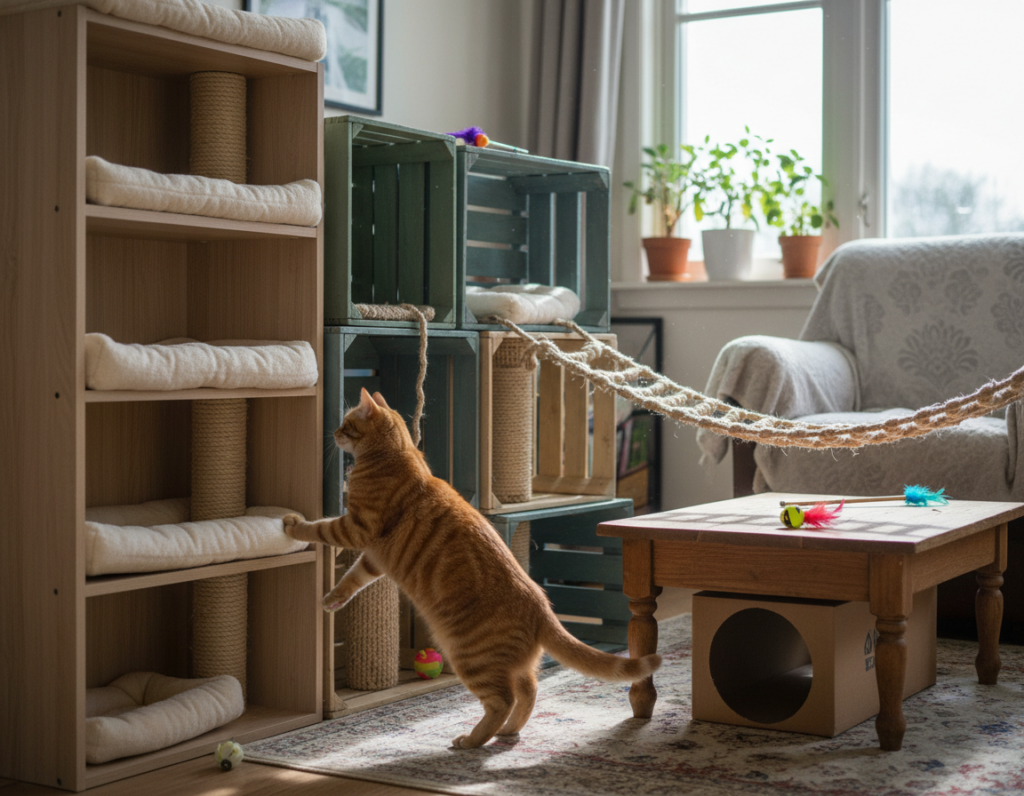
Adding height and perches transforms a small home into a lively exploration zone for pets. Vertical setups let a cat climb, rest, and observe without needing extra floor space.
Use sturdy furniture and shelves to build routes for climbing. A good cat tree or wall perch encourages movement and supports daily exercise needs.
Place the ZL Forest Cozy Cactus Cat Hut near a window to give a cozy, cave-like spot for long watches outside. The Outward Hound Easy Life Hammock Scratch and Sleep adds a lounge plus a scratch surface to protect other furniture.
- Vertical enrichment offers a dedicated place for climbing and observation.
- Elevated perches help manage energy across wet days and keep pets calmer.
- Even dogs can benefit from raised resting areas that change their viewpoint.
Tip: Rotate perches and add soft bedding to keep interest high while supporting natural movement and scratching behaviors.
DIY Enrichment Projects Using Household Items
A few cardboard boxes and a bit of creativity can become a safe playground that keeps pets busy. These projects cost little and deliver big benefits for mental and physical stimulation.
Cardboard Box Forts
Stack and cut boxes to make rooms, peek-holes, and climbing routes. Add soft bedding and rotate openings to keep the space novel.
Paper Bag Tunnels
Paper bags taped end-to-end form quick tunnels that encourage exploration. Supervise play and remove tape or small pieces after use to keep it safe.
Ping Pong Ball Chasers
Ping pong balls are perfect for fast chase play and cost very little. Roll them under low furniture or inside a shallow box to spark hunting instincts and burn energy.
- DIY puzzle toys: Use toilet paper rolls or folded paper to hide treats and create a simple puzzle.
- Rotate toys weekly to maintain interest and sharpen problem-solving.
- Tip: Combine a puzzle with a small food reward so the pet learns to work for treats.
For more ideas on enriching play, see best indoor enrichment ideas.
Establishing Calm Comfort Zones for Relaxation
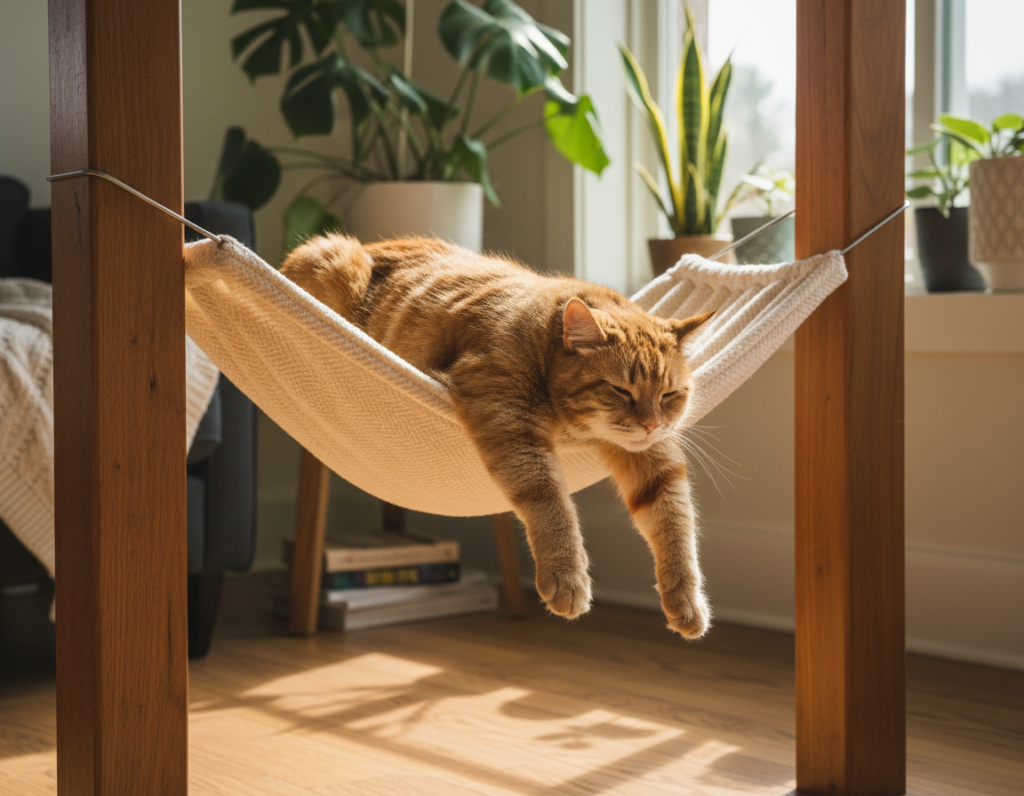
Providing a safe, comfortable nook reduces stress and supports healthy behaviors in pets. A well-placed refuge helps a pet recover after play and keeps behavior steady through busy times.
Create the space: place a soft bed or blanket in a closet, under furniture, or in a quiet room. A dedicated spot near a window offers gentle stimulation while still allowing rest.
Use calming aids: products like a Feliway diffuser or a NurtureCALM collar can lower anxiety for a cat and make the space more soothing. These tools often complement regular training and consistent routines.
Keep short, predictable routines so pets learn that the comfort zone is for downtime. Offer a favorite toy or a small treat and end play sessions near the resting spot to reinforce that it is a safe place.
“A calm refuge gives animals a clear cue to relax and recharge.”
- Provide soft bedding and a quiet corner.
- Use scent or a calming product to reduce stress.
- Pair rest time with simple training so pets accept the routine.
Conclusion
Turning small moments into planned play and training boosts a pet’s happiness and health. Short, regular sessions with toys, food puzzles, and simple training keep the mind active and prevent boredom.
Owners can mix wand play, puzzle feeders, and soft rest corners to create a balanced routine for cats and dogs. These steps offer both physical movement and mental stimulation.
Liberty Veterinary Clinic recommends keeping times consistent and rotating toys and puzzles to sustain interest. With a little planning, each wet day becomes a chance to bond and enrich a furry family member’s life.