This concise guide shows a practical way to keep a healthy life for an indoor cat in limited space. It draws on VCA Hospitals’ finding that over 60% of indoor cats in the US are overweight, so enrichment and safety matter more than ever.
The Busy Pet Parent team stresses that careful planning in a smaller home makes a big difference. This step-by-step guide helps owners carve distinct feeding, sleeping, and play areas while keeping the home clean and calm.
Readers will get clear tips to boost mental and physical enrichment, reduce stress, and maximize every square foot. The approach balances safety and comfort so the feline companion thrives during apartment living.
The Importance of Vertical Territory in Apartment Living
Vertical territory gives a feline safe vantage points and mental stimulation when floor space is tight. Using walls and stacked perches helps pets remain active and less stressed.
Utilizing Wall Space
Mount shelves, ledges, or a series of stepped platforms to create paths that climb the room. Walls offer a simple way to add over 20 square feet of usable territory without losing living area on the floor.
Selecting Cat-Friendly Furniture
Choose modular pieces that customize height and layout to fit the rental or condo. Quality materials like canvas or microfiber resist claws better than leather and preserve the home’s finish for the end of a lease.
- Consider modular units from established makers such as My Pet Cages for small-space designs.
- Pick built-in shelves that can be patched and painted if required by the lease.
- Add scratching outlets to protect sofas and maintain claw health.
- Favor vertical designs over bulky trees to save floor space and keep comfort high.
Designing an Effective Cat Zone Setup Apartment
Thoughtful design turns limited floor plans into layered, functional living areas for pets. Planning ensures feeding, sleeping, and play spaces stay distinct so animals feel secure.
Vertical furniture and wall solutions add feet of usable territory without losing floor space. For single cats in studios under 400 square feet, choose towers with two to three levels and built-in scratching surfaces.
Wall-mounted condos create floating highways that free the floor and boost safety. Place perches and beds near a window to give visual stimulation and reduce boredom.
Remove toxic plants like lilies and test modular options that let owners add blocks as needs change. Each step should follow a simple guide: think like the animal, prioritize climbing and observation, and give clear scratching outlets.
- Keep feeding and litter away from high-traffic play areas.
- Choose durable materials for furniture that survive claws.
- Start small with a base unit and expand vertically over time.
Creating Dedicated Feeding Stations for Multiple Cats
Creating separate feeding spots prevents stress and keeps multiple pets healthy in tight living spaces. Owners should plan clear meal locations so each animal can eat without pressure. Vets recommend feeding twice daily—commonly at 7 am and 7 pm—to track intake and limit overeating.
Managing Food Competition
Separate bowls and timing help. Place food in different rooms or at different times so shy animals get a calm meal.
- Use a microchip feeder like the SureFeed Microchip Pet Feeder to restrict access by identity.
- Install a wall feeder to keep food off the floor and away from more aggressive pets.
- Try room separation during meals; releasing each animal after it finishes reduces rivalry.
- Consider a pantry bracket to create a private feeding room, though it may reduce storage space.
- Keep a consistent schedule to cut down on begging and to make calorie counts easier to manage.
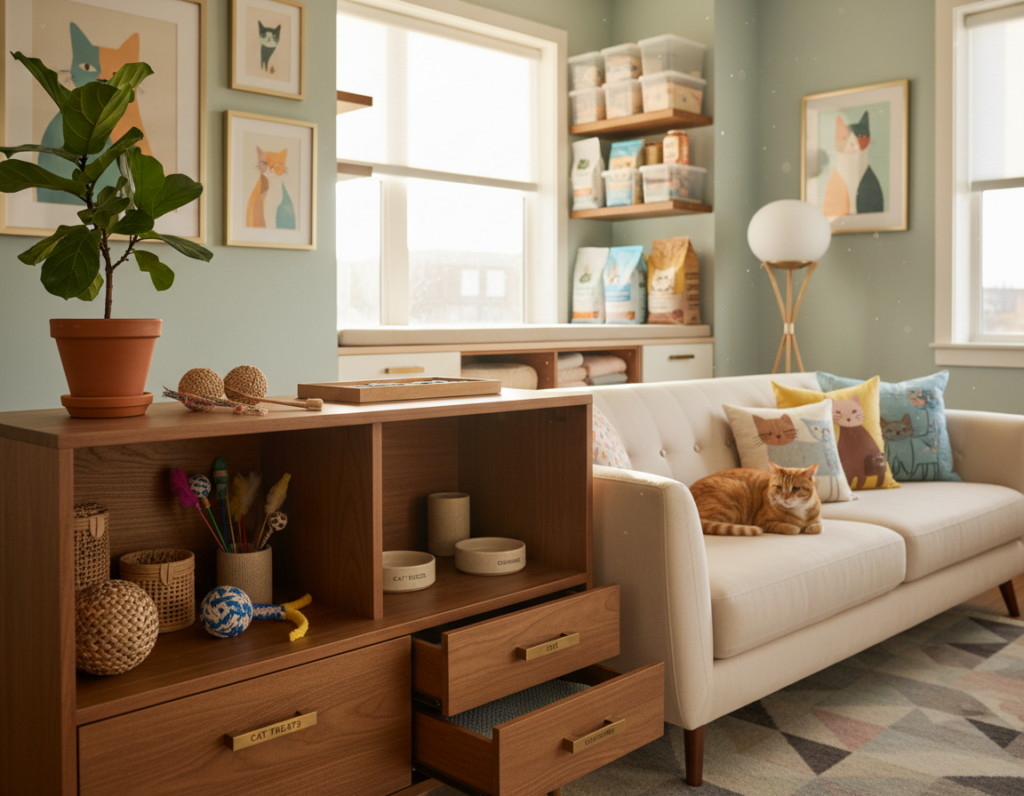
Extra practical tip: follow the one-more-than rule for boxes—two cats need three litter boxes—to keep feeding and elimination areas stress-free. For creative storage and feeding furniture ideas, check clever cubbies and drawers for compact solutions.
Strategies for Restful Sleeping Areas
Create a calm, private sleeping area so each pet can retreat and recharge without interruption. A hammock or a soft bed offers a reliable personal spot that blocks noise and activity.
For one to two cats in a one-bedroom apartment, choose multi-level furniture that separates feeding and sleeping. Stacked or side-by-side condos give each animal its own territory and reduce disputes.
Many modern kitty condos include enclosed sleeping boxes that provide a secure, den-like feel. Select options with soft, durable materials that stand up to daily use and washing.
Place sleeping areas away from high-traffic zones. Quiet corners near windows work well because they combine view and safety. Stable frames and noise-dampening construction stop rattles during midnight play.
- Private spot: hammock or covered bed for uninterrupted rest.
- Multi-level options: separate feeding and sleeping on different tiers.
- Durability: choose washable, tough fabrics for long-term comfort.
- Placement: keep boxes and beds out of busy walkways.
Maximizing Play and Exercise Opportunities
Short, focused play sessions and purpose-built climbing paths help pets burn energy and stay engaged.
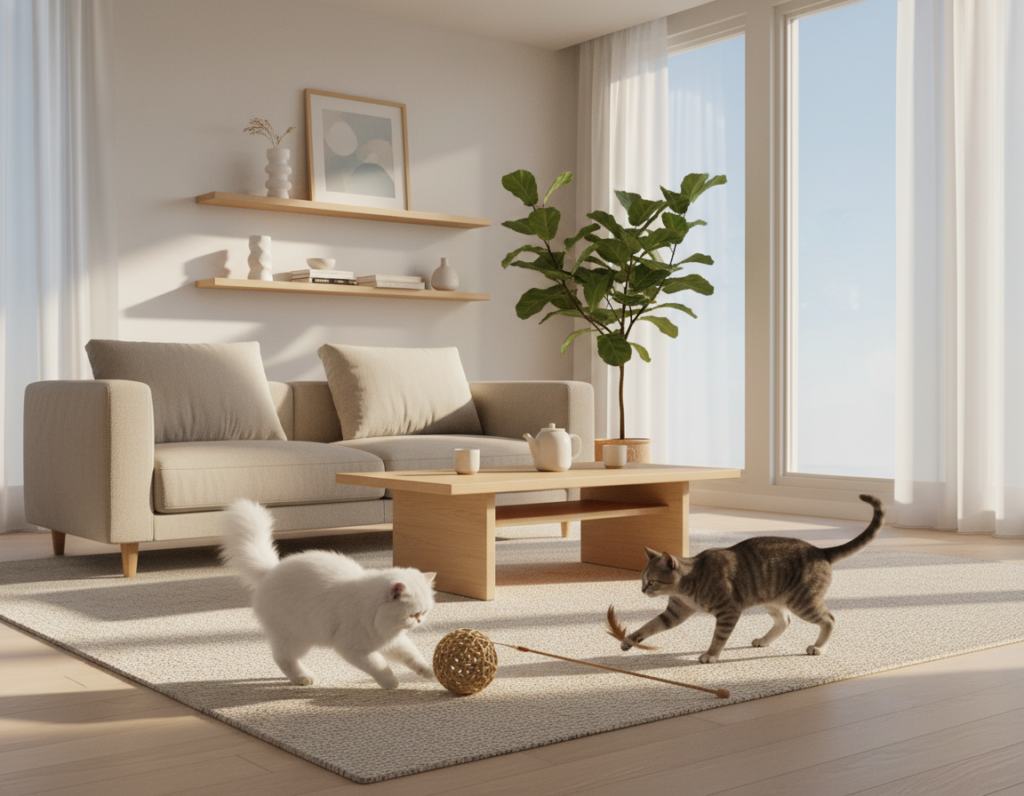
Daily movement matters: vets recommend at least ten minutes of active play each day to raise heart rate and strengthen the human–pet bond.
Interactive Toy Selection
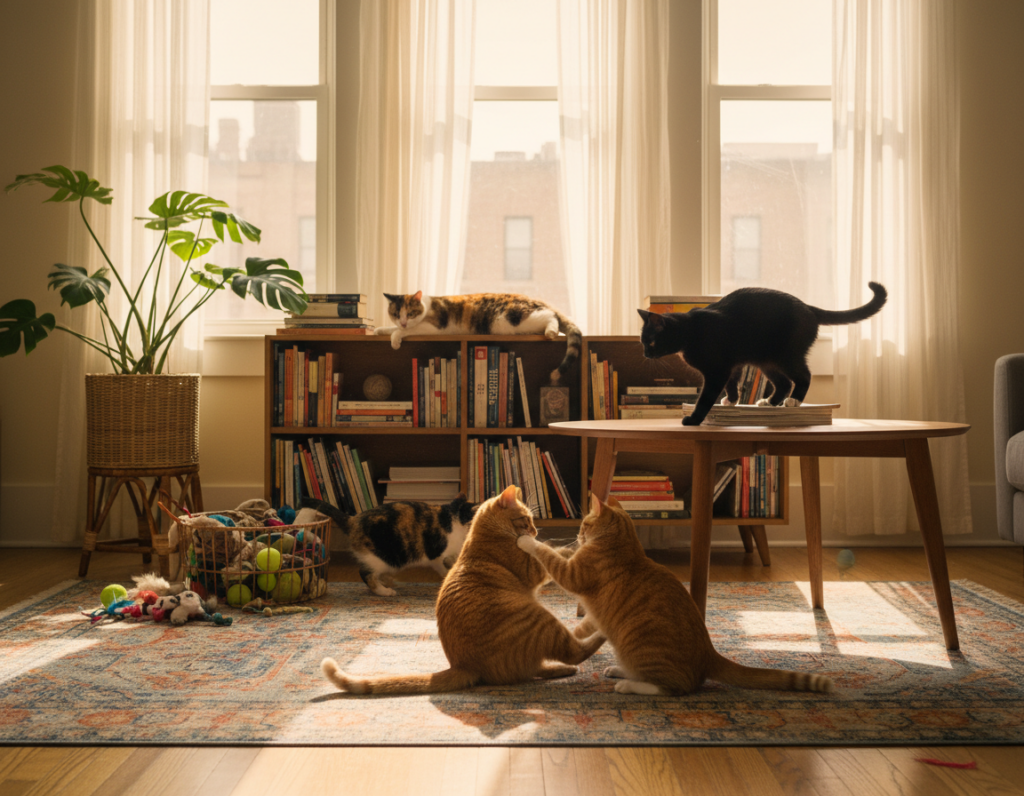
Choose wand toys, puzzle feeders, and motorized balls to stimulate hunting instincts in small spaces. Wand toys are especially effective because they mimic prey and invite shared play.
Rotate toys weekly to keep interest high and avoid boredom.
Incorporating Cat Walls
Adding a modular wall gives climbing, scratching, and perch options that mimic outdoor behavior.
Use high-quality materials and anchor shelves into wall studs to support weight safely. Integrated scratching panels protect furniture and extend life of other pieces.
Balcony Enrichment
A secured balcony can become prime territory for sun and fresh air. Install pet screen or netting to prevent falls and add cat-safe plants like cat grass or catnip for scent enrichment.
Place bird feeders outside windows to create a natural view that keeps animals mentally active. Use stairs or short tosses of dental treats for extra exercise, and stop if panting appears.
- Play at least 10 minutes daily to boost fitness and bonding.
- Anchor wall elements into studs and choose durable materials.
- Secure balcony with netting and add safe plants and window views.
Essential Safety Measures for Indoor Felines
Proactive checks and small fixes greatly reduce the risk of falls, poisoning, and accidental escapes for indoor pets. High-Rise Syndrome is a real veterinary concern; any balcony gap wider than four inches poses a serious fall risk.
Start with the obvious hazards: remove toxic plants such as lilies, geraniums, and morning glory. Keep loose cords, small objects, and chewable materials out of reach.
- Always use secure netting or mesh on open windows and balconies; never rely on a pet’s common sense near an open ledge.
- Install a door pinch guard or place a wooden dowel in sliding-door tracks to stop doors from opening wide enough for an escape.
- Check the lease before adding permanent wall fixtures or heavy mounts, and work during reasonable hours to keep neighbors in mind.
- Microchip every animal and keep an emergency plan that lists contact info, vet details, and evacuation steps.
- Inspect wall-mounted furniture and shelves for secure anchors and test stability before daily use.
These steps protect both pets and owners. A quick safety walk-through once a month helps catch new hazards and keeps the living space reliable and calm.
Managing Litter Box Placement and Odor Control
Smart placement of elimination boxes keeps odors down and preserves living space in tight floor plans.
Vets recommend one extra box per pet so each animal has room to eliminate without stress. Cleaning the box daily is the most effective way to limit smells and keep the home pleasant.
For small homes, consider a closet or pantry as a discreet option. Keep the door propped open for access and ensure the box is tall enough so the cat does not feel cramped.
- Use a mat outside the box to catch tracked litter and run a Roomba daily to remove stray granules.
- Install a wall-mounted air purifier like the QAIS-air-04 to improve air quality without filter swaps.
- Place boxes away from dining and living areas to protect mealtime comfort and reduce cross-traffic.
Thoughtful design and placement are simple steps that keep floors cleaner, protect furniture, and make daily care faster.
Conclusion: Creating a Harmonious Home for Your Cat
With targeted changes and vertical choices, even tight quarters can deliver separate places for meals, naps, and play. Small homes do not mean sacrificing comfort or safety.
Safety and enrichment form the foundation of a happy life for any feline. The Busy Pet Parent team urges owners to match furniture and placement to natural instincts and to favor durable, dual-purpose pieces.
Thoughtful planning lets owners turn limited space into layered territory that fits both people and pets. For design ideas that blend style and function, see how to create a cat-friendly house.