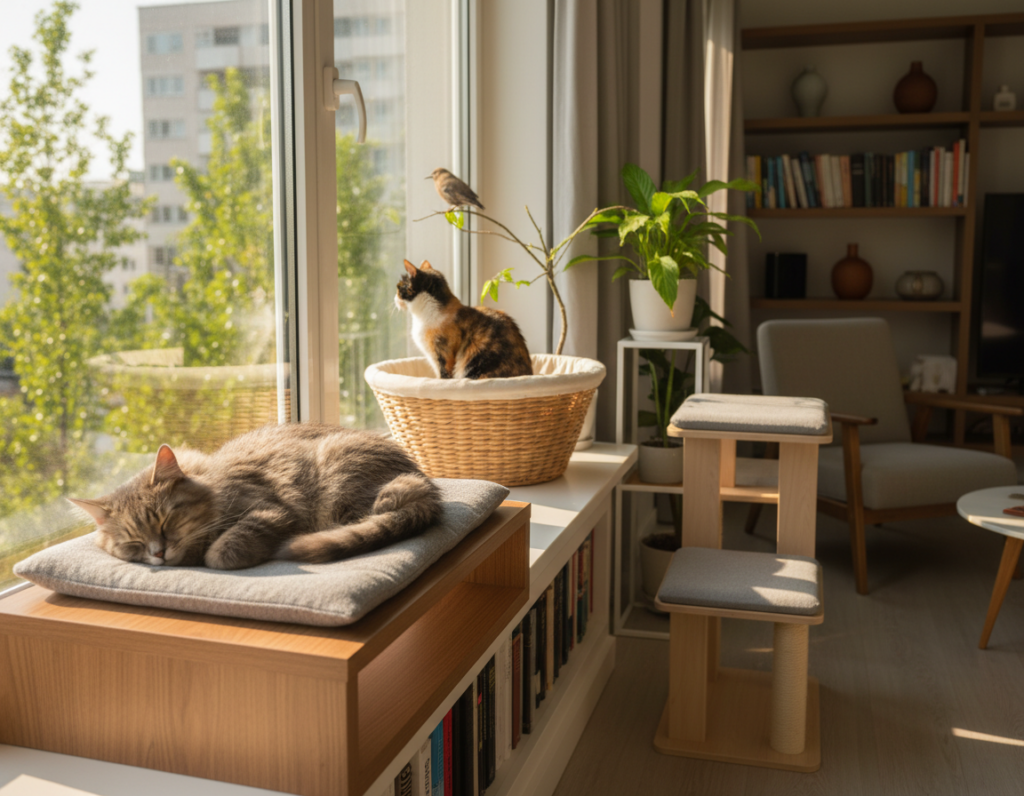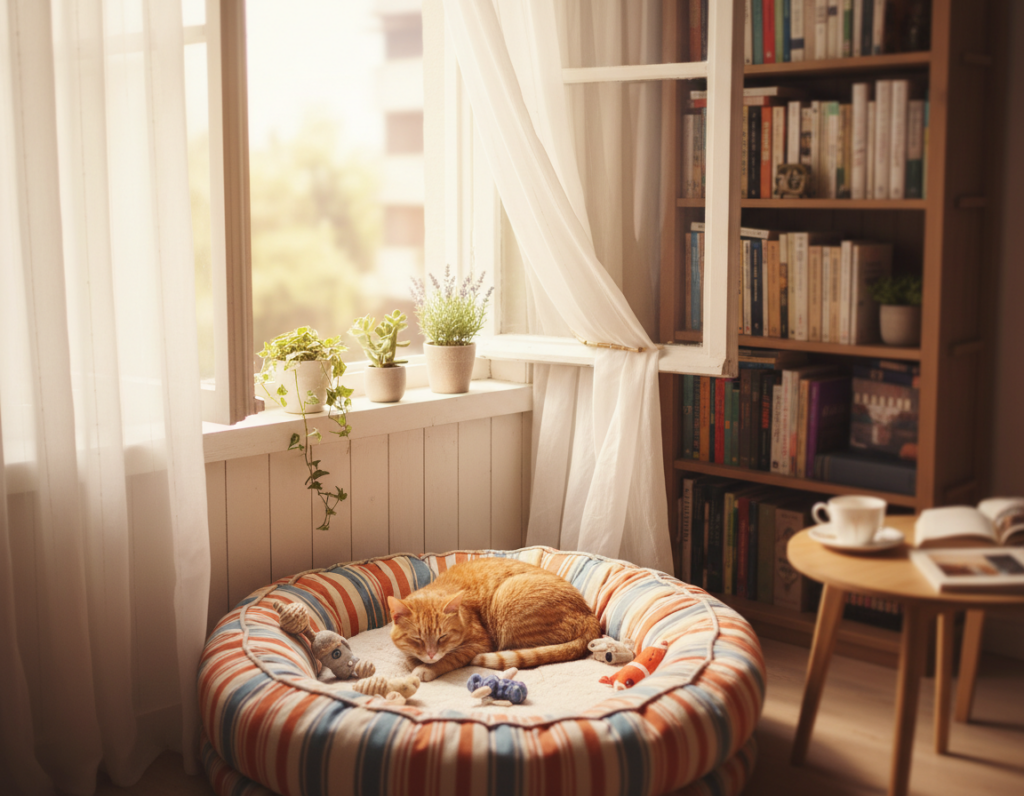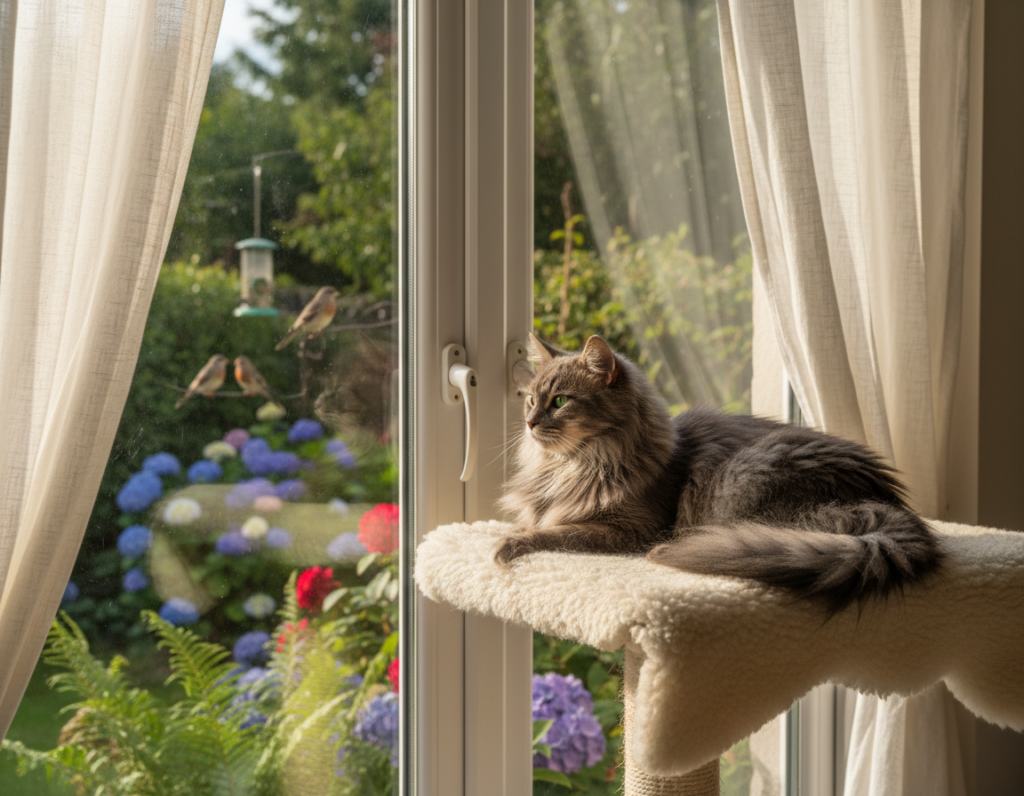
The Refined Feline offers modular systems that turn a busy viewing spot into calm activity zones. By designing smart perches and platforms, the brand helps each cat find its own place to watch the outdoors.
Conflict often starts when pets lack options. Providing a dedicated litter box for each companion and adding extra perches reduces stress and prevents fights.
Careful placement matters: vertical solutions free up floor space and give every cat a choice to climb, rest, or observe without feeling crowded.
Practical changes—a second box, a secure perch, or a well-placed cat tree—can turn a tense room into a peaceful home. Small upgrades to space design make a big difference for feline harmony.
Understanding Feline Territorial Dynamics
“Cats rely on subtle cues and high perches to sort social ranks.”
Cats use visual signals more than force. They often lean on elevated perches to claim a view and show status.
Natural Instincts
Dr. Meghan Herron notes that visual hunting and mental stimulation are vital for feline health. A secure perch provides both observation and enrichment.
Territorial Negotiation
Negotiation is ongoing. Each animal stakes a small area, checks another’s signal, then moves on if it feels unsafe.
- Owners should give a private litter box and a clean box for each household member.
- Providing enough vertical space and a dedicated perch helps reduce stress over time.
- A secure environment lets each cat retreat, lowering the chance of fights and protecting long-term health.
“A clean litter box for every animal prevents marking and improves household harmony.”
Why Multi Cat Window Territory Causes Conflict
A single prized viewing spot can turn calm roommates into daily rivals. When one perch or ledge becomes the main source of stimulation, it creates a bottleneck that fuels repeated fights in many households.
One cat blocking access to that view often forces others into close, unwanted contact. That forced proximity can spark vocalization, redirected aggression, and avoidance of the litter box. Over time, these behaviors become persistent issues.
- Limited access creates competition for sleeping and lookout areas.
- Without an escape route, a frustrated cat will lash out to protect its space.
- Adding a separate litter box for each animal lowers stress and reduces fights.
“Competition for a single lookout is the most common trigger of conflict in multi-cat households.”
Solution focus: identify bottlenecks, add a second perch, and provide clear escape routes. Small changes restore balance and stop most disputes over the view.
The Role of Vertical Space in Reducing Stress
Expanding upward grants each resident a personal retreat and reduces daily friction. Vertical solutions let an animal observe without engaging and withdraw without confrontation.
The Importance of Choice
Choice matters. When pets can pick a high perch or a lower hideaway, they control their interactions. That control lowers anxiety and prevents fights.
- Provide a high perch for each cat so they can retreat from household stress.
- Add varied levels so shy cats get low spaces and confident cats get higher viewpoints.
- Combine a private litter box with a perch to reduce stress-related behavior.
- Give every animal clear options for retreat; a multi-level system supports peaceful coexistence.
Takeaway: Increasing vertical space and offering distinct perches and retreats gives each feline a level to claim. This simple design reduces competition and keeps multiple cats calmer, safer, and more consistent with litter use.
Designing a Shared Viewing Environment
A thoughtfully planned viewing area gives each resident clear options and cuts conflict.
Platform variety keeps personalities satisfied. Offer a mix of high perches, low beds, and short shelves so every cat finds a preferred spot.
Platform Variety
Successful systems include activity zones for play, rest, and observation. A modular perch lets owners add shelves as needs change.
Access Routes
Provide multiple paths to the view. If one cat blocks a single route, others should still reach the perch without confrontation.
Hiding Spots
Include tucked boxes and tall shelves for quick retreats. A quiet room with a private litter box reduces stress and lowers fight risk.
- Ensure each cat has a window perch and a private box in a low-traffic room.
- Use wall shelves to create distinct zones so shy cats can avoid crowded spots.
- Design routes that offer several access points to the perch and high shelves.
Essential Features for Peaceful Coexistence
Durable, wobble-free furniture stops one sudden jump from upsetting the whole household. Stability is a behavioral requirement; if a tree or perch shakes, others will avoid it or guard it aggressively.
Choose products built from reinforced material so a perch holds several animals without tipping. A sturdy product reduces stress and invites relaxed use of space.
- Durable material: reinforced frames and heavy-duty fasteners for safe jumping.
- Stable perch design: wide platforms and anti-tip bases keep levels steady.
- Separate litter box: provide one box per pet to cut competition and litter conflicts.
- Generous zones: make platforms large enough so each animal can rest without crowding.
“A stable perch is the key to preventing fighting and lowering household stress.”
Investing in quality design and materials gives every resident a secure spot. That stability, paired with enough boxes and space, helps households stay calm and consistent in litter use.
Strategic Placement of Perches and Furniture
Positioning furniture to maximize visibility helps residents see each other and avoid conflict. A short introduction sets the goal: reduce surprises and create clear routes to favored spots.
Optimizing Sightlines
Place perches so each cat gets an unobstructed view. Platforms should sit 12–18 inches apart to prevent bottlenecks. Each platform should measure at least 8×12 inches for comfort.
The Lotus Cat Tower (69 inches) and the Metropolitan Cat Condo (62 inches) provide strong vertical space for two to three cats. Their heights create distinct levels so shy animals can avoid busy zones.
- Put a perch near a window so a cat can observe without feeling trapped in a small room.
- Use wall shelves to build a vertical space system with separate levels for rest and play.
- Place a litter box in a quiet area to give each animal privacy and reduce stress.
- Choose sturdy material for perches so the perch supports multiple cats safely.
Good placement considers natural movement and provides clear access. Thoughtful design turns a crowded area into zoned, peaceful areas where every resident feels secure.
Incorporating Sensory Enrichment for Indoor Cats
Adding sights and sounds to a room eases boredom and reduces tension among residents.
Visual stimulation supports mental health. Dr. Meghan Herron notes that a perch with an outdoor view offers important enrichment for a feline’s daily routine.
Provide varied toys and short play sessions to lower stress and redirect energy. Place a private litter box in a quiet room so each pet has privacy and fewer reasons to compete.
- Offer bird feeders outside to create natural hunting cues.
- Create zones for play, rest, and observation so each animal gets its own time and space.
- Use perches and low shelves to spread interest across the environment.
“A mentally stimulated pet is less likely to fight, because attention shifts to enrichment.”
Benefits include improved health, reduced litter problems, and calmer interactions. Sensory enrichment keeps residents busy, happy, and more likely to share a peaceful home.
Managing Seasonal Changes in Window Access
Rotating access around the home lets each pet enjoy fresh views and comfort throughout the year. A simple seasonal plan prevents one favorite spot from becoming a source of repeated conflict.
Summer Heat Management
Keep perches shaded. During hot months, move favorite spots away from direct sun and add breathable pads so a cat can rest without overheating.
Try reflective film on bright panes and provide shaded levels to keep the space cool while preserving access to view spots.
Winter Comfort
In cold weather, shift perches to sunnier panes and use low-profile heated pads for short rests. Warm spots reduce time spent chasing the same sunny ledge.
Keep the litter box placement consistent even when you change perch access. Reliable placement helps lower stress and prevents marking or avoidance.
- Rotate perches to create new levels of stimulation and lower competition.
- Adjust furniture placement seasonally to spread access across areas and offer fresh options.
- Small changes deliver big benefits: less fighting, more calm, and happier cats.
“A well-managed access plan helps prevent the competition that leads to fighting.”
Safety Considerations for Elevated Viewing Spots
Secure perches cut the risk of accidents and lower stress during energetic play.
When installing elevated window perches, attach them firmly to the wall. Use heavy-duty anchors so the perch holds during jumps and active play.
Keep screens locked and add window stops to limit opening. These simple steps give a pet safe access without the danger of falling or pushing the pane wide open.
Remove dangling blind cords and stray toys. Cords can act like a dangerous plaything, and loose items increase the chance of injury.
- Provide a quiet place for hiding so each animal can retreat without confrontation.
- Inspect perches regularly for wear, loose screws, or frayed fabric.
- Prioritize placement that allows free movement so every resident can jump or descend safely.
“A safe perch helps pets relax, which reduces fights and improves household calm.”
For more on vertical access and social balance, see vertical territory matters. Regular checks and smart placement make the room both fun and safe.
Conclusion
,Prioritizing safe, stable perches gives each animal real choice and reduces tension in the home.
Provide a dedicated litter box for every resident and enough perches so no one must wait for a favored view. This small design change cuts stress and prevents most disputes over a single spot.
Invest in quality material and sturdy products so platforms stay steady over time. Owners who observe behavior and adjust routes or add vertical space see clear health and environmental benefits for households.
If issues persist, rotate access and add more levels. Over time, these tips save time, lower stress, and help every pet thrive in a calm, shared space.