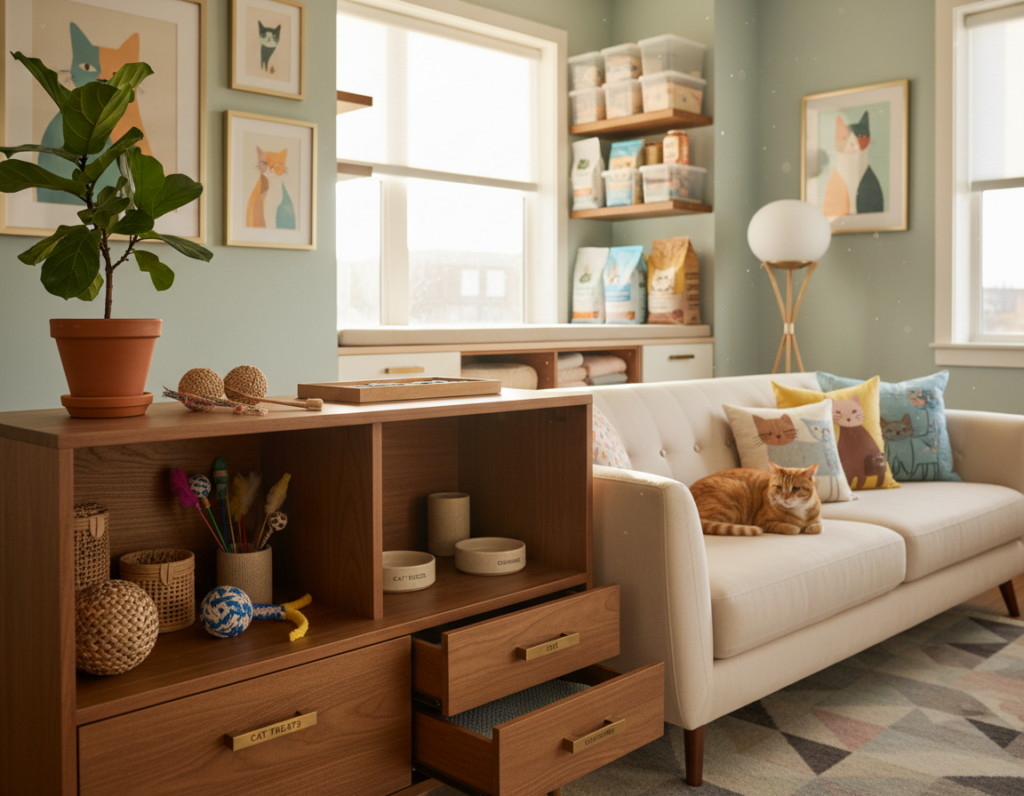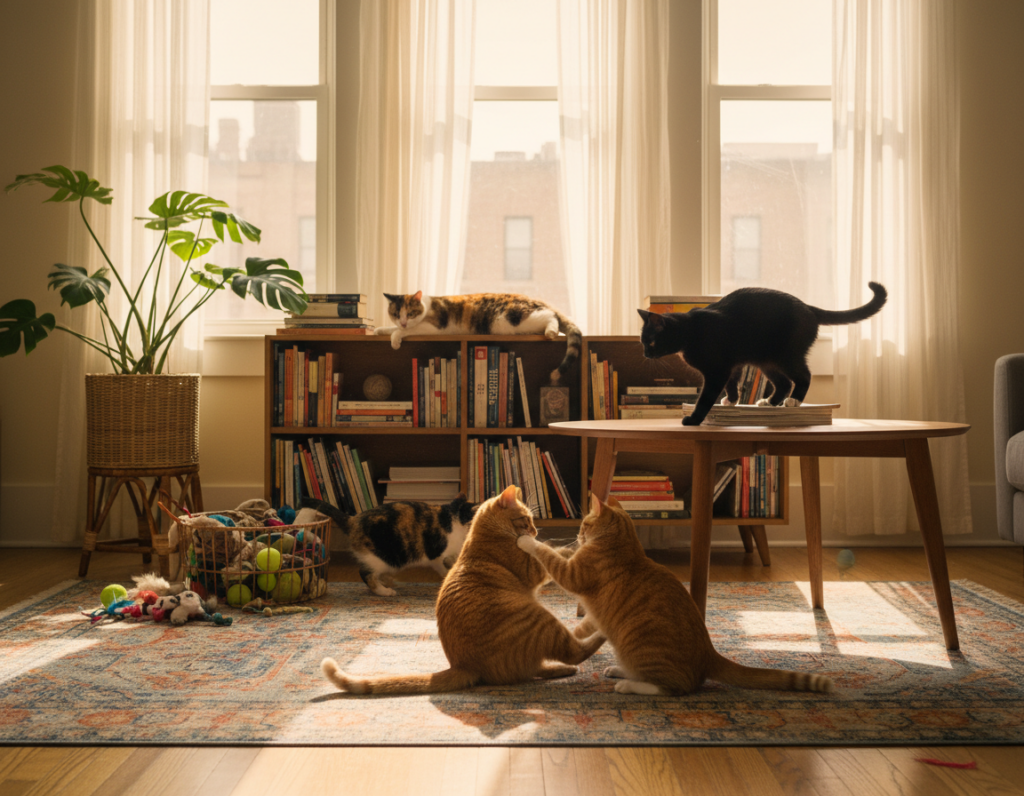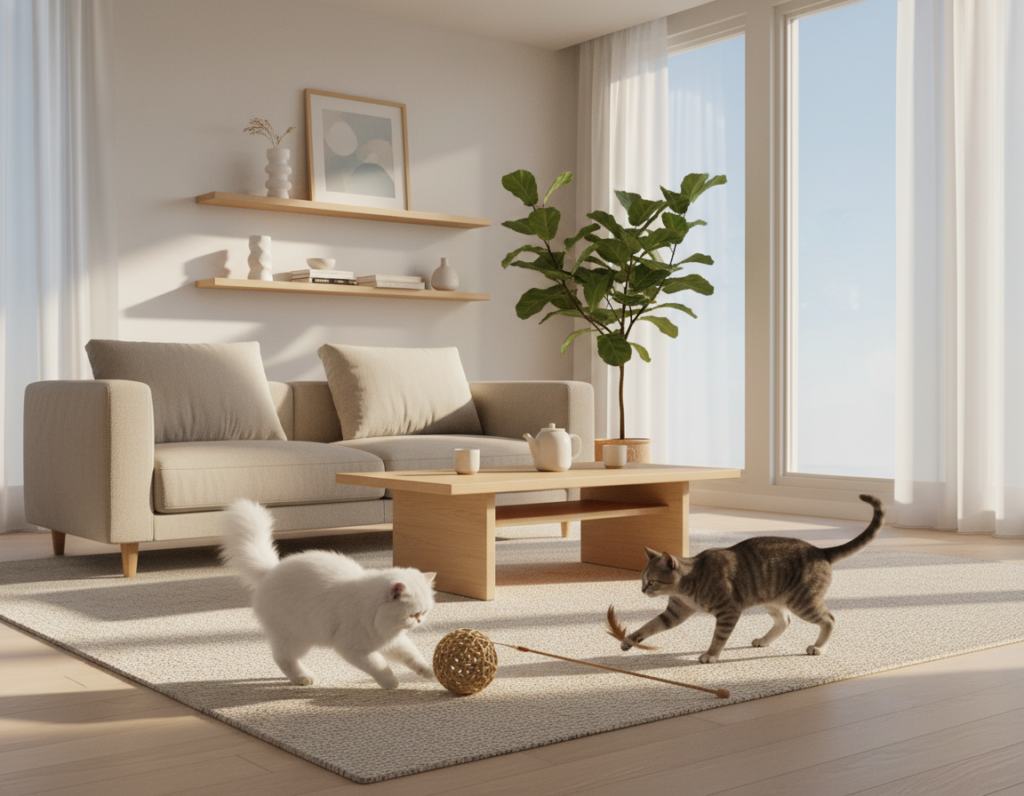
Living in a small home does not mean a pet must be unhappy. Many people in cities such as Minneapolis prove that a cat can thrive in compact spaces. Thoughtful planning and a few smart changes make all the difference.
They prioritize vertical solutions because cats are natural climbers. Adding shelves and tall perches creates usable areas without shrinking floor space. Simple enrichment, like toys and scratching posts, keeps a cat mentally engaged.
Owners do not need to rehome their pet just because they live in a tight layout. Small adjustments to daily routines and careful placement of things help both resident and pet feel at ease. Many find their apartment feels larger once vertical spaces are used well.
Understanding a cat’s needs is the first step toward harmony. With clear planning, the right gear, and brief daily attention, living and pet care are comfortable and rewarding in a modest space.
Understanding the Feasibility of a Studio Apartment with Cats
A compact living area can still offer the retreat and stimulation a cat requires. Carole Wilbourn, The Cat Therapist, notes that felines often seek tight crevices for privacy and stress relief.
Space planning matters. When basic needs are met, an apartment cat adapts quickly. Quiet, predictable routines reduce anxiety and help pets settle into small space living.
Warning signs—like avoiding the litter box or destructive scratching—often mean the feline feels stressed. These behaviors are communication, not spite.
- Provide a dedicated place to retreat for calm and security.
- Use vertical and hidden spaces so floor areas stay open.
- Meet feeding, play, and latrine needs consistently to prevent withdrawn behavior.
Bottom line: Many pets thrive in compact homes when owners create predictable territories and respect the cat’s need for privacy. Thoughtful changes make tight spaces feel larger for both people and cats.
Assessing Your Available Floor Space
Start by measuring the square footage you actually use each day. A cat needs at least 20 square feet of dedicated space to meet basic needs, though more is better for comfort and play.
Evaluating Your Cat’s Personality and Needs
Note energy levels: a high-energy breed may need extra room to sprint or extra vertical options. Young cats or those that “zoom” require creative play areas.
If there are multiple pets, ensure each has its own retreat to cut down on territorial stress. Territorial personalities may need more separation of key resources.
- Map your actual floor plan and mark spots for food, litter, and rest so pathways stay clear.
- Place resources apart to reduce conflict and keep human living areas usable.
- Always provide clear walkways so the cat can move without feeling trapped.
For a simple guide, try a quick floor plan sketch to visualize resource placement and confirm the room meets the minimum space needs.
Maximizing Vertical Territory for Feline Enrichment
Creating layers of activity helps a feline feel like it has more room to roam. Vertical solutions expand usable space while keeping floors clear and human areas comfortable.
Installing Wall Shelves
Wall-mounted shelves let a cat climb, rest, and watch from above. Use staggered placements so the pet can hop between ledges safely. The Katris Mix & Match scratcher doubles as a perch and a place for scratching.
Utilizing Window Perches
Window perches provide hours of visual enrichment. A sunny spot becomes a favored bed and a way to reduce boredom. Ensure the window ledge is secure and offers a clear route up and down.
Selecting Tall Cat Trees
Choose a sturdy cat tree with a wide base and anchored options for extra safety. K&H Pet Products’ over-the-door tower is an excellent pick when there is not much floor space.
- Use a console table as a climbing platform and nap spot.
- Keep toys and food on separate levels to avoid territorial conflict.
- Always make sure walls and shelves have safe transitions to prevent falls.
Creative Solutions for Litter Box Placement
Finding the right spot for a litter box can transform how clean and roomy a small living area feels. A discreet location keeps odors down and gives a cat privacy.
The New Age Pet ecoFLEX litter loo is one smart way to hide a litter box inside an end table. This creates a functional piece of furniture that tucks the box out of sight and frees up bathroom space.
- Keep the box away from food and water. Cats prefer separate places for dining and latrine use.
- Use a visual barrier if floor area is tight. A screen or low divider gives the cat privacy without consuming much space.
- Scoop at least once a day to prevent smells from spreading into the living room.
“A tucked-away litter box can make a home feel cleaner and reduce stress for both pet and owner.”
Avoid placing a covered box where feeding happens. That common mistake is unhygienic and can lead to avoidance. Owners should watch how their cat uses the chosen box and adjust placement if the pet seems uneasy.
For more placement ideas, see litter box placement ideas.
Multifunctional Furniture for Small Living
Well-chosen furniture gives a cat more territory without crowding the human areas. Dual-purpose pieces free floor space and add vertical interest.
Repurposing shelves and cabinets is an efficient way to create hiding spots and climb paths. A lower bookshelf can store books and double as a stepped route to higher perches.
Repurposing Bookshelves and Cabinets
A simple cutout or added board turns a cabinet into a cozy bed nook. Place a small cushion or folded blanket so the cat has a soft rest spot near human traffic.
- Use sturdy shelving to build a safe climb route.
- Add hideaway holes so the pet can retreat without blocking things.
- Anchor tall units to the wall to prevent tipping when a cat jumps.
Using Over-the-Door Storage
Over-the-door organizers keep toys and supplies tidy while saving shelf and table surface space. A hanging pouch near the door holds toys, treats, and grooming gear.
“Multifunctional furniture keeps living areas cleaner and gives cats the resources they need to thrive.”
Practical tips: consider an end table that locks storage inside and supports a perch on top. Use an over-the-arm scratcher to protect upholstery and meet scratching needs.
Providing Essential Mental Stimulation and Play
A few focused minutes of play each day can change how a cat uses small areas and furniture.
Short, regular play sessions meet a feline’s needs and reduce restless energy in limited space. Use interactive wand toys to mimic hunting and encourage climbing the cat tree or hopping on low shelves.
The Frisco Crinkle Play Tunnel is a space-saving option that provides hiding, chasing, and quick sprints. It folds up for storage so it does not take up valuable room when not in use.
Mix in puzzle feeders and video content to keep the cat engaged when no one is home. A food puzzle adds mental work to meal time and slows eating.
- Rotate a few toys weekly to keep interest high.
- Try an exercise wheel only if space and budget allow.
- Teach simple tricks—rewarded training provides bonding and mental challenge.
“Regular, varied play helps prevent boredom and gives a pet purpose inside confined rooms.”
Tip: keep sessions brief but daily. Consistent play meets behavioral needs and makes life in a small space calmer for both pet and owner.
Managing Odor and Cleanliness in Tight Quarters
Good air and clean surfaces make a big difference in how a home feels when a cat lives there. In a small space, odor control helps everyone stay comfortable and reduces stress for the feline.
Effective Odor Control Strategies
Choose containment systems that trap smells. The Litter Genie acts like a diaper pail and seals waste until it is taken outside. The Tidy Cats Breeze system separates solids on a grate and uses an absorbent pad to manage liquid waste efficiently.
- Manage litter box odor by scooping at least once a day to prevent buildup.
- Avoid heavily scented litter; strong fragrances can upset a cat’s sensitive nose in a small bathroom or room.
- Add a small amount of activated charcoal to the box area to neutralize smells without masking them.
- Place a compact air purifier near the litter box to improve air quality throughout the day.
- If wall space is limited, a hooded litter box contains mess and reduces tracking during scratching.
Cleanliness is the best strategy: a tidy litter box and daily care keep the living space pleasant and help a pet stay healthy.
Exploring Outdoor Enrichment Options
Taking a cat outside can add fresh sights and smells that enrich daily life. Short, supervised trips provide novel stimuli that a small space cannot offer.
The Paws & Pals deluxe folding stroller is a safe way to offer a gentle adventure. It lets a pet feel the breeze and watch the world without losing security.
Some apartment residents find hallways offer low-risk exploration. A harness allows controlled outdoor sessions on sidewalks or in quiet common areas.
Balconies can become a secure outdoor room when enclosed with netting. Even window-viewing counts as passive outdoor enrichment when time is limited.
- Start slow: short outings build confidence.
- Always secure a harness or keep the pet inside a stroller.
- Rotate toys and outdoor routes to keep life varied.
“Outdoor enrichment helps reduce stress and adds new stimuli that indoor life alone may not provide.”
Conclusion
With a few focused changes, limited square footage does not limit a cat’s quality of life.
Living in a studio apartment can be rewarding when owners plan for vertical space, secure litter locations, and reliable odor control. Simple perch systems and staggered shelves give a feline safe places to climb and rest.
Short, daily play sessions and puzzle feeders provide essential mental stimulation. Monitor behavior and adapt routes, toys, or box placement to suit each pet’s personality.
Small tweaks make a big difference: tidy resources, anchor tall pieces, and keep cleaning consistent. With creativity and steady care, a compact home becomes a calm, enriching place where both owner and pet thrive.