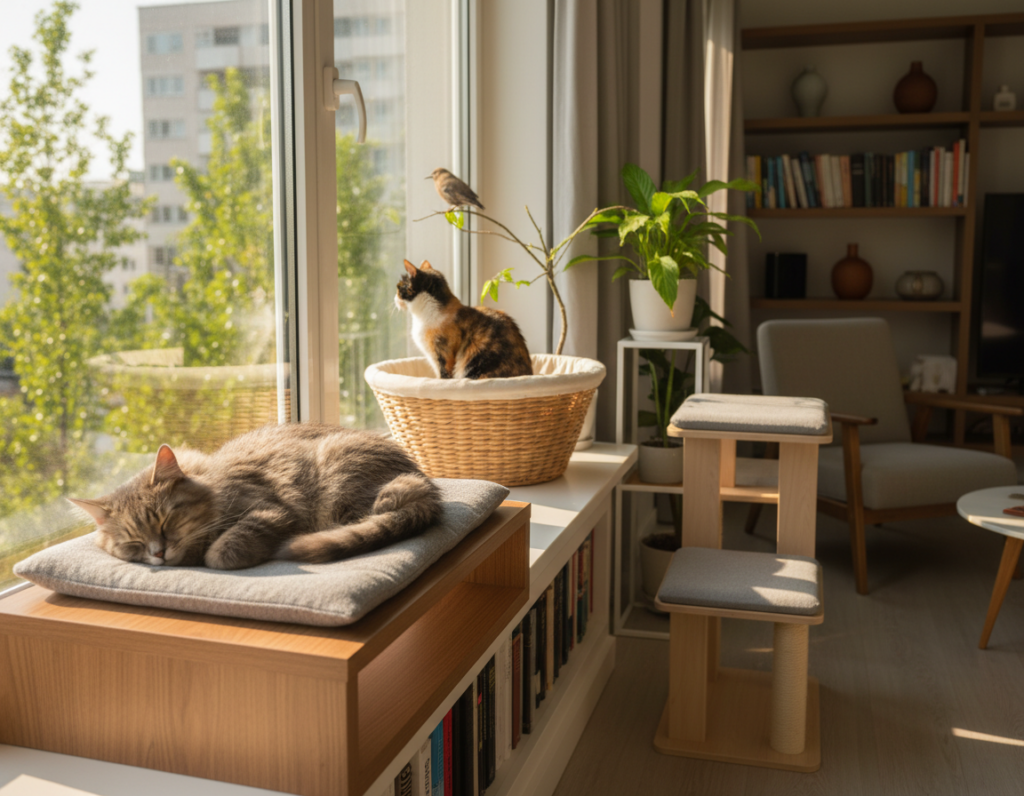
The modern indoor cat often keeps sharp hunting instincts that go unmet. This gap can lead to boredom, loud calling, and furniture damage. Wally Jack noted in Animal Wellness Magazine (April 16, 2024) that mental enrichment matters to feline health.
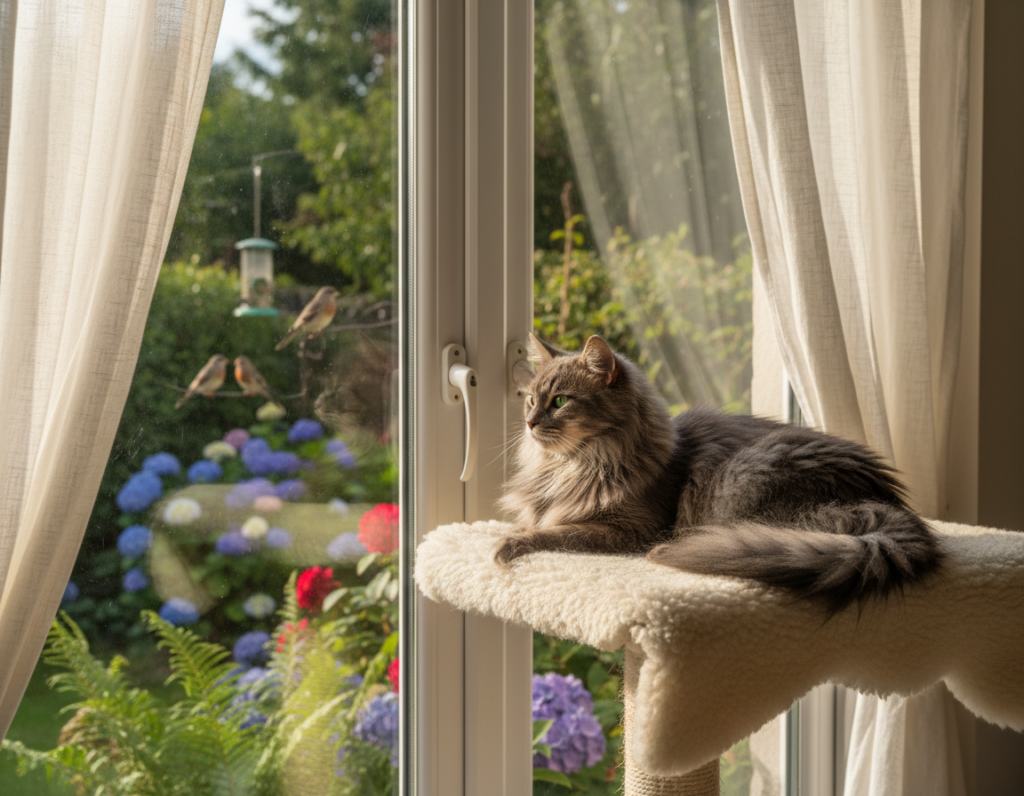
Providing a safe window gives pets a legal and gentle outlet to observe birds and move their minds. Birdwatching through glass lets cats tap natural drives without harming wildlife, which reduces stress at home.
Designating a perch near the window and learning local bird rhythms is a simple way to keep cats engaged in both morning and evening hours. Small changes in layout can cut problem behaviors and improve daily enrichment.
The Importance of Mental Stimulation for Indoor Cats
When a cat gets regular mental challenges, it shows fewer signs of stress or boredom. Indoor life can lack the sights and smells that once drove hunting and play. Adding gentle visual outlets helps pets stay alert and engaged.
Benefits of Enrichment
Mental stimulation reduces destructive behavior and lowers anxiety. A focused animal is less likely to become aggressive or vocal out of frustration. Owners who follow a simple guide to enrichment often report healthier weight and calmer daily routines.
Instinctual Satisfaction
Offering a variety of visual stimuli gives cats a safe way to practice stalking and pouncing. Watching birds through glass provides a natural outlet for predatory drives without harm to wildlife. This kind of enrichment keeps their minds sharp and bodies ready to move.
- Reduces boredom and destructive acts
- Makes pets less likely to develop anxiety
- Supports physical and cognitive health
Setting Up the Perfect Birdwatching Station
A well-placed window perch can turn a dull room into an active viewing hub for a cat. Install a sturdy window perch with reliable suction cups that will support its weight. Cats like a sunny spot, so choose a sunny window where a pet can bask and observe.
To attract birds to the yard, add quality bird feeders stocked with black oil sunflower seeds. A platform feeder gives birds a stable surface and makes it easy for a cat to see them through the glass.
Keep feeders clean and rotate a variety of feeder types to increase visits. This simple setup is a safe way to provide steady visual stimulation and healthy enrichment through supervised birdwatching.
- Use two reliable suction cups per window perch.
- Place a platform feeder and a tube feeder in the yard.
- Make sure feeders are cleaned regularly to protect local birds.
Determining the Best Time for Cat Bird Watching
Observing local avian patterns helps owners schedule short, engaging sessions at the window. Morning brings the dawn chorus, when many species sing and forage. This offers clear visual stimulation for a cat on its perch.
Mid-day is often quieter. Birds are less likely to visit the bird feeder during hot hours, so a pet may find that period less appealing. Owners should make sure a favorite perch is available during peaks.
Evening provides a second surge as birds take a final snack before roosting. Regular, scheduled birdwatching sessions create steady enrichment and help cats learn patterns in yard activity.
- Prioritize early morning access to the window and perch.
- Keep a filled bird feeder to encourage repeat visits.
- Note patterns in the yard to predict when a cat will most likely observe birds.
Morning Activity and the Dawn Chorus
At dawn, yards fill with calling and motion that naturally draw a cat’s gaze. This early surge gives a clear window into local life and helps pets stay mentally sharp.
Why Birds Sing at Sunrise
The dawn chorus is the period around sunrise when many species sing to claim territory and attract mates. That intense vocal display raises overall yard activity, creating vivid movement and sound.
These bursts often mean more visits to a nearby feeder. Observing feathered friends at this hour gives sustained visual enrichment and predictable daily rhythm.
- The dawn chorus peaks in early spring and draws steady attention at the window.
- Birds sing to defend territory and find mates, increasing visible behavior.
- Regular morning sessions help cats anticipate when feeders bring the most action.
For guidance on scheduling outdoor observation and feeder placement, see a helpful resource on seasonal patterns study of optimal bird activity.
Evening Patterns and Sunset Feeding
Late-afternoon feeder visits create a quiet, predictable rhythm that many cats notice.
As the sun begins to set, small groups of birds often return to the feeder for a final meal. This last burst of yard activity gives a pet a calm, focused scene at the window.
Providing fresh food in the late afternoon helps keep birds active until dusk. A steady supply encourages repeat visits and a predictable routine that cats can learn.
Evening behavior differs from the high-energy dawn chorus. Birds move more slowly and settle in. This lets a cat observe quieter behaviors like preening and group calls.
Consistent evening feeding schedules create a reliable environment. Over time, cats find comfort in the routine and enjoy calm birdwatching from their favorite perch.
- Final feeding draws repeat visits and steady activity.
- Late snacks keep birds visible until dusk.
- Predictable patterns help cats relax and engage safely.
Identifying Common Backyard Avian Friends
A suburban backyard can become a lively classroom for identifying local feathered visitors. A short list of frequent species helps residents recognize patterns at a feeder or on a tree near the window.
Attracting Birds with Seeds
Sunflower seeds draw species such as the American Goldfinch, Northern Cardinal, and House Finch. Many people place a platform or tube bird feeder stocked with mixed seeds and sunflower to attract birds to a visible spot.
Keep feeders clean and refill them regularly. A clean bird feeder helps food sources stay healthy and keeps feathered visitors coming back.
Native Plants for Shelter
Planting native plants like purple coneflower, elderberry shrubs, and native trees provides shelter and natural food sources. These plants support insects and berries that help birds through spring and winter.
Native plants also make the yard safer and more inviting. They create cover for feeding and nesting while giving cats a calm view from the window.
Water Features
Adding a birdbath or small fountain supplies water and draws diverse species. The American Robin often forages on the ground while woodpeckers and nuthatches visit trees.
- Use a shallow birdbath and change water weekly to help birds stay hydrated.
- Install decals on the window to prevent collisions and keep birds safe.
- Consult Audubon’s guide to identify avian friends and track seasonal visits.
Essential Safety Precautions for Cats and Birds
Safe viewing habits protect wildlife and keep pets calm while they observe yard activity. Owners should check that window screens are secure and free of holes. This simple step keeps curious cats from reaching the glass or slipping outdoors.
Supervision during birdwatching sessions helps prevent overzealous behavior. When someone watches, cats are less likely to paw at glass or knock down a feeder.
Use window decals or patterned films so birds see the glass and are less likely to collide with it. Decals reduce strike risk and make windows safer for visiting birds.
- Keep screens intact and check them often.
- Supervise short viewing sessions at the window or perch.
- Apply decals or films to reduce window collisions.
- Consider a secure catio or strict indoor life to keep both cats and birds safe.
Since bird populations declined by about 29% since 1970, owners should prioritize conservation-minded choices. Small precautions at windows and feeders make a big difference for local wildlife and for calm, healthy cats.
Conclusion
A simple window perch can turn a quiet room into a daily source of interest and calm.
This approach delivers clear mental stimulation and steady enrichment that helps a cat stay engaged and relaxed. Short, regular sessions reduce restlessness and support healthy play.
By using safe screens, tidy feeders, and a sturdy perch, owners give cats gentle enrichment while protecting local birds and feathered friends. This guide outlines an easy way to set up a visible, safe spot.
Thoughtful birdwatching and bird watching routines strengthen the bond between pet and owner. With the right setup, the home becomes a sanctuary where cats enjoy watching birds and wildlife without harm.