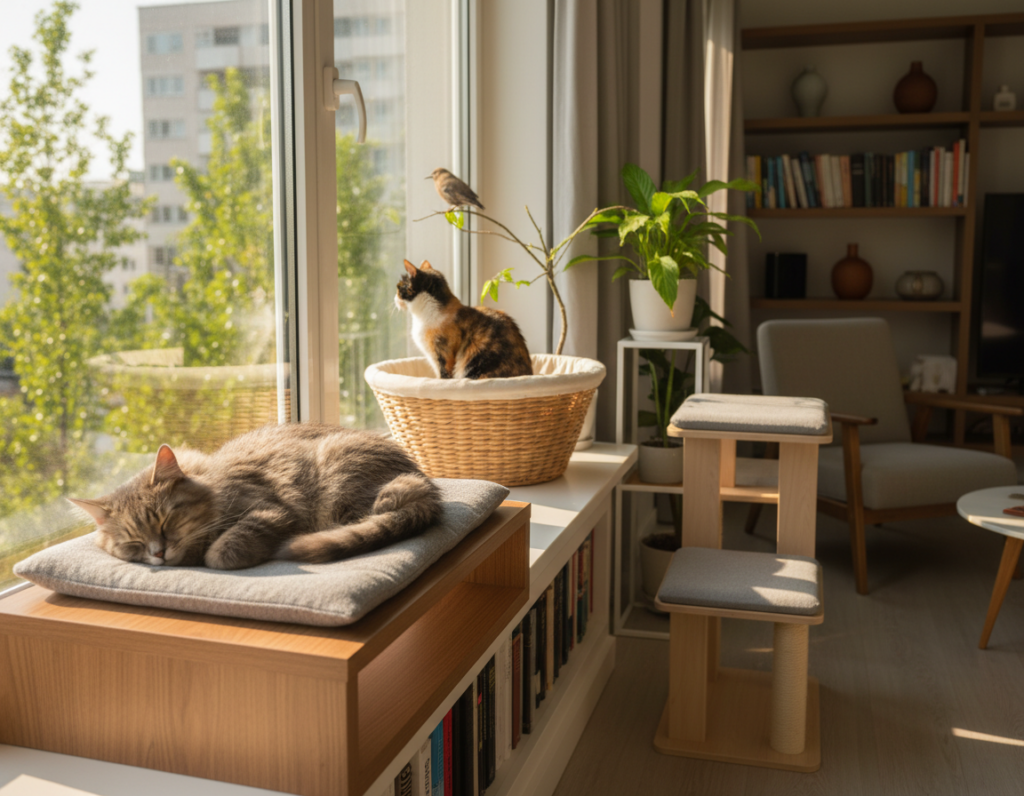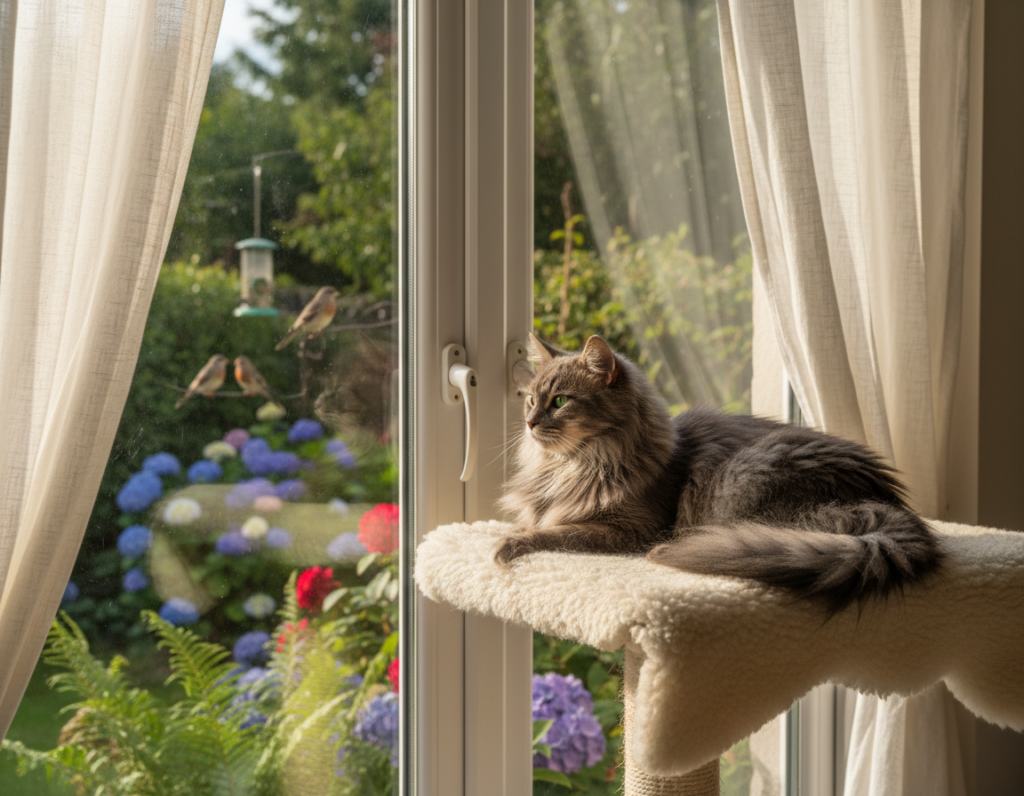
High-rise views entice many indoor pets, but they also bring real risks. Owners weigh the joy of a sunny perch against dangers like High-Rise Syndrome, the term vets use for injuries from falls.
Research and practical guides list 15 creative cat balcony ideas that turn narrow ledges into secure, stimulating spaces. Using heavy-duty mesh, wire netting, tension poles, and bite-proof materials helps make a safe outdoor zone.
Many find that a converted catio or a protected window box becomes a feline vacation spot where whiskers twitch at a passing bird and afternoon naps follow. Designs often add scratching posts, sheltered surfaces, and plants for sensory variety.
Professionals advise regular inspection and choosing solutions to match each pet’s personality. With careful planning and the right materials, tall-building residents can offer outdoor experience without sacrificing safety.
The Appeal of High-Rise Views for Felines
High perches draw felines because they satisfy hunting instincts and offer nonstop visual interest. Elevated spaces let a small predator scan the surroundings and watch birds, bugs, and people without leaving home.
When a bird flits past a rail, focus can narrow and an instinctive lunge may follow. This intense attention explains why many pets lose situational awareness on open edges.
Creating a secure cat balcony provides fresh air and sun while reducing pacing and stress. Owners who add perches, platforms, and sheltered spots report better behavior and more play.
- Safety plus stimulation: protected views let felines watch wildlife without risk.
- Simple additions: poles, posts, and durable materials expand usable space.
- Positive results: happier, more active pets with fewer destructive habits.
Understanding High-Rise Syndrome and Safety Risks
High-rise falls present a real veterinary threat, and owners must recognize how quickly danger can arrive. Data show that falls from two to five stories are often fatal because animals lack time to right themselves during the drop.
The reality of predator instincts means focus on a flying bird or movement outside a window can override caution. A brief lunge at the edge of a cat balcony or an open window can end in a life-threatening fall.
The Reality of Predator Instincts
Attention narrows when prey appears. Even confident indoor cats misjudge gaps and surfaces when hunting impulses kick in.
Preventing Accidental Falls
Use reinforced materials and install a secure wall of netting or mesh with no gaps larger than 1 inch at the bottom. Proper netting prevents lunges and escape.
- High-Rise Syndrome can be fatal for falls from 2–5 stories.
- Netting and wired protection must be inspected regularly for wear.
- Reinforced solutions provide fresh-air experience with safety and peace of mind.
“Preventive measures are the owner’s responsibility because animals do not reliably learn to avoid edges.”
Essential Strategies for Cat Apartment Balcony Enrichment
Owners can combine compact solutions to create safe outdoor spaces that mimic the natural world while minimizing risk.
Window box catio installations save floor space and deliver fresh air to an indoor cat without exposing it to ledge hazards. Pop-up tents also work well. They set up in 30 seconds for short, supervised sessions and fold flat when not in use.
Vertical territory is vital. Add shelves, perches, or short poles so pets can survey their surroundings from a height. Secure all mounts and use weather-resistant materials to prevent falls and loose hardware.
- Choose non-toxic plants and avoid loose soil that can be dragged off the rail.
- Anchor surfaces and check fastenings regularly for wear and tear.
- Rotate toys and add sheltered spots to encourage resting in protected areas.
“Well-designed spaces reduce stress and often lead to better behavior and clearer results.”
Installing Secure Mesh Netting Systems
A properly fitted mesh wall stops escapes and reduces fall risk without sacrificing fresh air. It gives pets clear views while keeping the area safe and usable.
Choosing Bite-Proof Materials
Wire-reinforced netting is the best choice for long-term protection. Unlike standard mosquito mesh, it resists shredding from claws and stays strong under daily use.
For renters, tension poles let owners attach netting from the floor to the ceiling without drilling into concrete. This creates a floating wall of protection that preserves the look of the space.
- Zip-tie the mesh tightly to poles to eliminate gaps and prevent escapes.
- Choose UV-resistant, bite-proof materials so the netting lasts through sun and weather.
- Avoid chicken wire; sharp edges can injure paws or noses during exploration.
- Inspect and tighten fastenings regularly to maintain reliable protection.
“High-quality netting yields a secure, escape-proof environment and years of safe outdoor results.”
Creating Vertical Climbing and Perching Zones
Using the wall and ceiling wisely transforms a small open area into layered zones for climbing and rest.
Wall-Mounted Shelves
Install sturdy, outdoor-safe shelves on the wall to build perches at varied height levels. These platforms let a pet observe the street or a bird without leaving the protected area.
Wood treated for weather and sealed edges resist wear. Anchor each shelf into studs or use heavy-duty anchors for reliable protection.
Outdoor-Safe Scratching Posts
Sisal rope often rots in rain, so choose synthetic, UV-resistant scratching posts. They stand up to humidity on a cat balcony and keep paws busy.
Secure posts to the floor or wall to prevent tipping during play.
Cozy Hiding Spots
Covered boxes or short tunnels offer shelter and a place to retreat during outdoor sessions. A tucked box near a shelf gives a calm hideaway after active climbing.
- Use durable materials for long-term protection.
- Check fastenings and stability regularly for safe daily use.
- Well-installed vertical features show clear results in confidence and fitness.
“Transforming narrow spaces into layered zones lets pets use the full height safely.”
For more design ideas and practical tips, see this guide on how to catify your apartment.
Selecting Non-Toxic Greenery for Outdoor Spaces
Picking non-toxic plants is the single most important decision when outfitting a protected outdoor space. Many common species pose real risks, so owners should verify each choice before placing it near a pet or in a window box.
The Cat Safety Database lists over 1,200 entries to help identify safe and toxic varieties. English Ivy, Lilies, and Oleander are highly dangerous and must be avoided; even a single bite can cause kidney failure or cardiac arrest.
- Safe picks: Spider Plant and Bamboo Palm add greenery without risk.
- Controlled grazing: a pot of fresh cat grass satisfies chewing urges.
- Keep clean: inspect the balcony for stray leaves or debris that could be harmful.
- Materials: place plants in secured pots and pair with mesh or catio protection to prevent spills.
“Careful plant selection yields a lush, beautiful space that is both safe and welcoming.”
The results of cautious choices are clear: a verdant, safe outdoor area that supports play, shelter, and peaceful viewing without compromising safety.
Incorporating Interactive Bird Watching Stations
Setting up a focused bird-watching station turns a protected outdoor ledge into a lively, natural screen for indoor observers. This strategy gives a pet safe visual stimulation while keeping physical contact impossible.
Positioning Feeders for Maximum Stimulation
Mount feeders outside the netting so birds feed within full view but out of reach. Place them at a height that the viewer can see easily but cannot jump to, avoiding frustration and risky attempts.
Secure installation prevents falls and keeps pests away. Use sturdy brackets and check fastenings periodically.
- Position feeders where birds perch naturally to create a steady “Cat TV” effect.
- Keep feeder locations varied to maintain ongoing interest and results.
- Clean feeders regularly to protect wildlife and preserve balcony hygiene.
“A well-planned bird station often yields a calmer, more engaged pet as hunting instincts are satisfied visually.”
Maintaining Your Outdoor Oasis
Routine checks keep a protected ledge safe and help materials last longer. A brief monthly review prevents small issues from becoming hazards.
Inspect all safety features — examine netting, mesh, poles, posts, and ceiling mounts after storms or long sun exposure. Tighten fasteners, zip-ties, and brackets to maintain structural protection.
- Look for wear or frays in netting and replace damaged sections promptly.
- Keep the floor clean of debris to limit pests and protect plants and shelter areas.
- Check scratching posts and shelters for loose hardware or rot and repair as needed.
- Consider professional installation or a consultation to confirm the highest safety standards.
Small actions yield big results. By following a routine maintenance schedule, owners extend the life of materials and keep the space safe for the cat and visitors. ProtectaPet’s low-energy manufacturing for brackets also makes replacements more sustainable when parts must be renewed.
“Consistent maintenance produces durable, long-lasting outdoor spaces that continue to deliver safe outdoor viewing and peace of mind.”
Conclusion
With the right barriers and platforms, a small outdoor area becomes a reliable place for relaxed watching and rest. A protected balcony can offer fresh air and steady stimulation while keeping risk low.
Prioritize secure netting and bite-proof mesh and consider a compact catio or wall-mounted shelves. These measures give the cat safe perches and clear views without exposing it to hazards found on high ledges.
Regular maintenance, careful plant choice, and smart bird placement keep the space healthy and engaging. When safety guides design, balconies turn into durable, enjoyable spaces that cats love and owners trust.