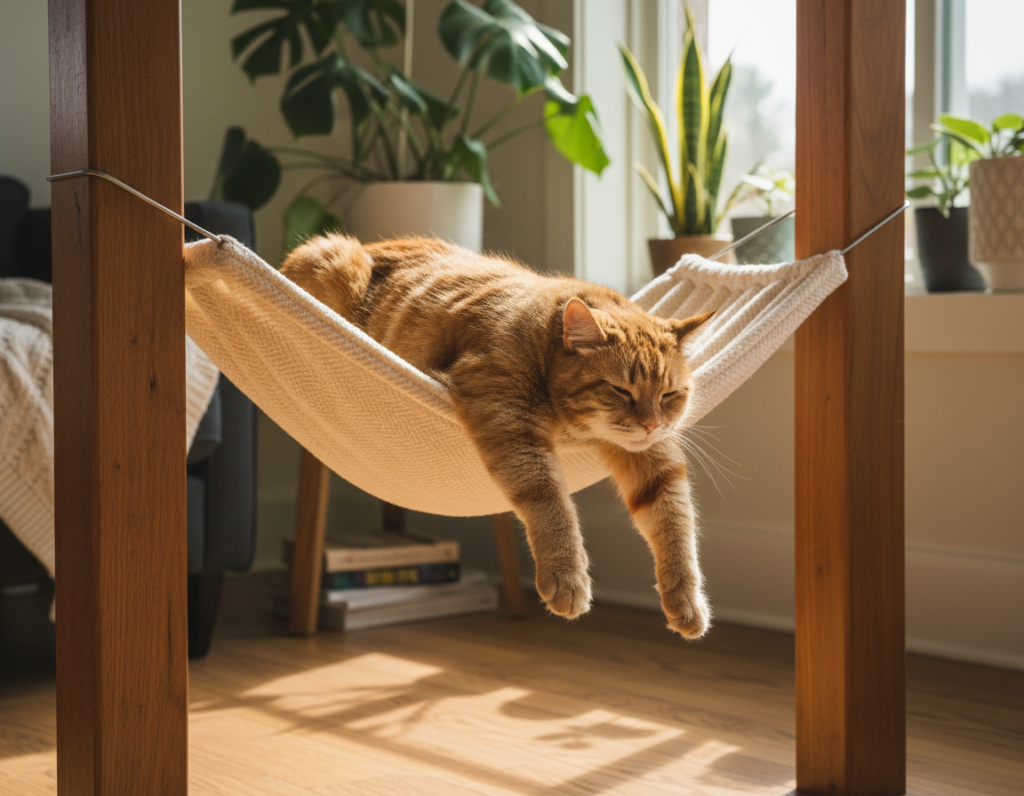
Simple objects from around the home can deliver big rewards for feline enrichment. A photo by Jimmy Ramirez shows a cat splashing in water and highlights how ordinary things spark curiosity and play.
Owners do not need pricey gear to keep their pet active. A toilet paper tube or paper towel roll can become an engaging toy. A cardboard box or paper bag often turns into a favorite hiding spot.
Taking time to watch preferences matters. Observing which items attract attention helps tailor ideas that match each animal’s energy and mood.
Using a pinch of catnip in a box or folding paper into chase-worthy shapes adds extra fun. These DIY solutions promote play and mental stimulation, and they help reduce unwanted behaviors by burning off energy.
Why Feline Enrichment is Essential for Indoor Cats
A well-planned environment helps prevent harmful behaviors in indoor felines. Providing daily mental and physical challenges supports health, mood, and the bond between pet and owner.
The Link Between Boredom and Behavior
When a cat lacks stimulation, it may act out with aggression, lethargy, or destructive behaviors. Owners often see scratching, overgrooming, or redirected hunting instincts as a sign that change is needed.
The American Bird Conservancy reports that free-roaming cats kill roughly 2.4 billion birds annually in the United States.
Benefits of Mental Stimulation
Structured enrichment reduces stress and satisfies instincts that indoor animals cannot express outdoors.
- Health: Regular play and puzzles support weight control and mobility.
- Behavior: Short, consistent training sessions—including clicker training—sharpen focus and curb unwanted behaviors.
- Conservation: Engaging hunting drives at home can help prevent pets from targeting local birds and wildlife.
- Purpose: Simple cat enrichment methods give animals a clear outlet for natural instincts.
In short, enrichment is not a luxury but a necessity to keep cats mentally fit and physically satisfied.
Understanding Homemade Cat Boredom Activities
A few clever DIY setups can transform quiet rooms into rich play spaces for indoor felines.
Veterinarian Lynn Bahr notes that an indoor cat can face health problems when the environment lacks proper enrichment.
Using simple items from around the home lets owners give cat natural outlets for hunting instincts. Allowing a box filled with safe objects encourages foraging, sniffing, and gentle exploration.
Variety is key. Provide several types of things so pets stay interested and do not develop destructive behaviors or depression.
- Rotate toys and one or two DIY puzzles weekly.
- Include foraging spots that mimic hunting without risking birds outdoors.
- Pair short interactive sessions with solo play options so cats can self‑entertain.
“Enrichment at home supports both the physical and mental health of the feline.”
Creative Food Puzzles Using Recycled Materials
Recycled items can turn mealtime into a puzzle that sharpens hunting skills and rewards curiosity. These simple solutions boost enrichment and extend the time a pet spends engaged with food.
Toilet Paper Roll Feeders
Cut holes in a toilet paper or paper towel tube and tuck in small amounts of kibble. As a cat bats the roll, bits of food fall out and the animal learns cause and effect.
The Busy Box Concept
A cardboard box filled with crumpled paper, balls, and hidden treats becomes a tiny foraging zone. This busy box encourages natural hunting behavior while keeping cats busy and mentally fit.
Ice Cube Tray Foraging
Freeze treats or bits of wet food in an ice cube tray for a slow-release snack. Letting a feline paw at each compartment builds problem-solving skills and slows fast eating.
- Tip: Rotate puzzles weekly to maintain interest.
- Safety: Use small kibble or treats and remove choking hazards.
- Outcome: These food puzzles cut hunting of local birds by giving indoor outlets.
Engaging Natural Instincts Through Scent Work
Scent enrichment taps into a feline’s strongest sense and can change how they explore a room. Leonid Privalov’s photo of a cat sniffing plants shows how smell holds attention and sparks investigation.
Grow cat-safe herbs such as valerian, wheatgrass, or silver vine in small pots. Let the pet sniff and investigate under supervision.
Growing Cat-Safe Herbs
Planting herbs is a low-cost way to add new smells to the home. Move a pot near a favorite box to encourage foraging.
- Place a few treats in a box lined with scented paper or herb leaves to prompt hunting and problem solving.
- Scenting an existing toy with catnip or silver vine often boosts interest and extends play time.
- Use scent-based play to redirect predatory instincts away from local birds.
These scent-based ideas help indoor felines feel more confident and satisfied. Small, supervised sessions keep exploration safe and rewarding.
Building an Indoor Obstacle Course for Physical Exercise
Using household objects to design a course taps into natural instincts while keeping exercise playful and controlled.
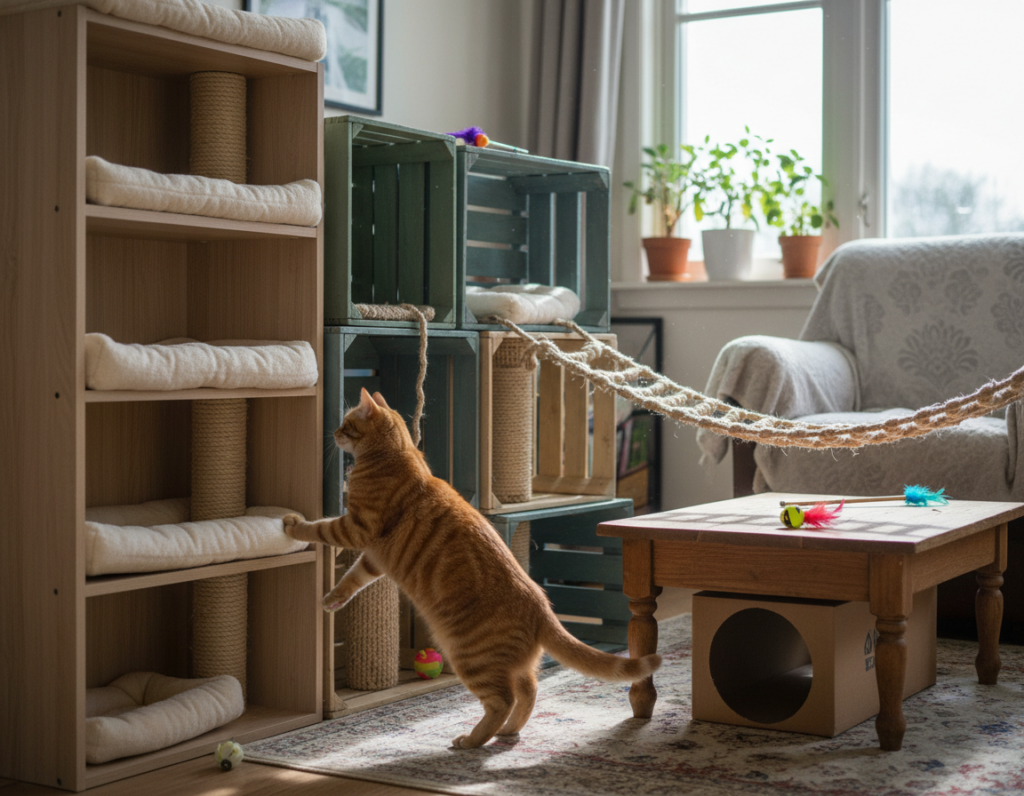
Start with a few boxes and low platforms to create routes for climbing and jumping. Place soft cushions as landing spots and use a ledge or shelf for short, supervised climbs.
Introduce small toys or rolled balls along the path to encourage stalking and bursts of speed. Hand-guided sessions with gentle training cues help pets learn the sequence.
Clicker training can mark successful runs and speed learning. Short, frequent practice keeps the course fresh and supports overall enrichment.
- Rotate a favorite box or toy to maintain interest.
- Keep sessions brief to avoid stress and protect joints.
- Regular physical play reduces the urge to hunt birds outdoors and cuts destructive behavior.
Outcome: A simple DIY course improves weight control, agility, and confidence while offering safe, structured play at home.
Enhancing Playtime with Common Household Objects
Everyday items can turn a quiet room into an engaging playground that boosts feline curiosity. These low-cost solutions support daily enrichment and make the most of brief play sessions.
Wand Toy Techniques
Wand toys mimic prey and prompt pouncing, stalking, and short sprints. Move the toy in irregular bursts to copy real movement and keep interest high.
Use short sessions of two to five minutes, then pause so the pet stays eager. Hide a small treat at the end of play to reward success and link exercise with food.
The Power of Cardboard Boxes
A simple box becomes a hunt-and-hide zone. Tuck treats under crumpled paper or drop a ball into a hole to create a fun puzzle.
Let cats explore at their own pace and rotate toys and boxes to keep novelty. These ideas help keep cat content and reduce the urge to hunt local birds.
- Use balls, crinkled paper, or a dab of catnip to boost interest.
- Short, regular play helps keep the pet fit and engaged.
- Supervise treats and remove hazards after each session.
Safety Considerations for DIY Cat Projects
Before gifting a new plaything, owners should inspect every part for sharp edges and loose bits.
Supervision matters: always watch a pet during play, especially with string, tape, or small pieces that could be swallowed.
Check any paper or box used for enrichment to remove staples, tape, or labels that might cut or choke. Rotate items and discard damaged pieces promptly.
Use secure fastening on toys and avoid loose elastic or long threads. If food is used in puzzles, pick safe portions and check for spoilage after short play time.
- Keep small items out of reach to prevent ingestion.
- Limit string play to supervised sessions only.
- Consider a Birdsbesafe collar cover if a pet goes outdoors; studies show large drops in bird predation when used.
Training tools help: clicker training and short training sessions teach boundaries and reduce risky behavior during play.
Research: Willson et al. (2015) and Ruxton et al. (2019) report 78–87% reductions in bird predation with Birdsbesafe covers.
For more ideas on safe setups, see indoor cat enrichment ideas.
Conclusion
Consistent, short bursts of play and stimulation keep a cat happy and healthy. Simple household items can provide varied puzzles that satisfy instinct and reduce unwanted behavior.
Observe preferences: every cat responds differently, so watch what draws attention and repeat those moments. Rotate options to keep interest high and prevent repetition.
Enrichment also protects local birds by giving indoor outlets for hunting drives. For step‑by‑step ideas and safe outdoor options, see the ultimate cat enrichment guide.
With a little creativity and attention, owners can build a home that supports natural instincts and long‑term well‑being for cats.