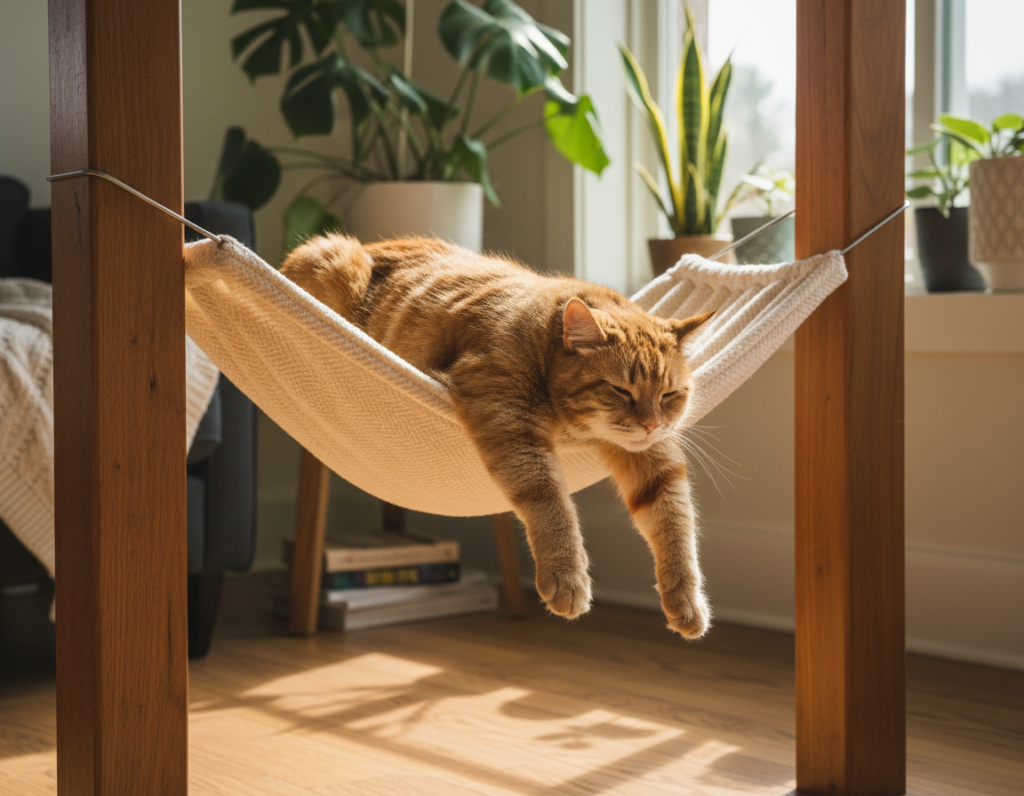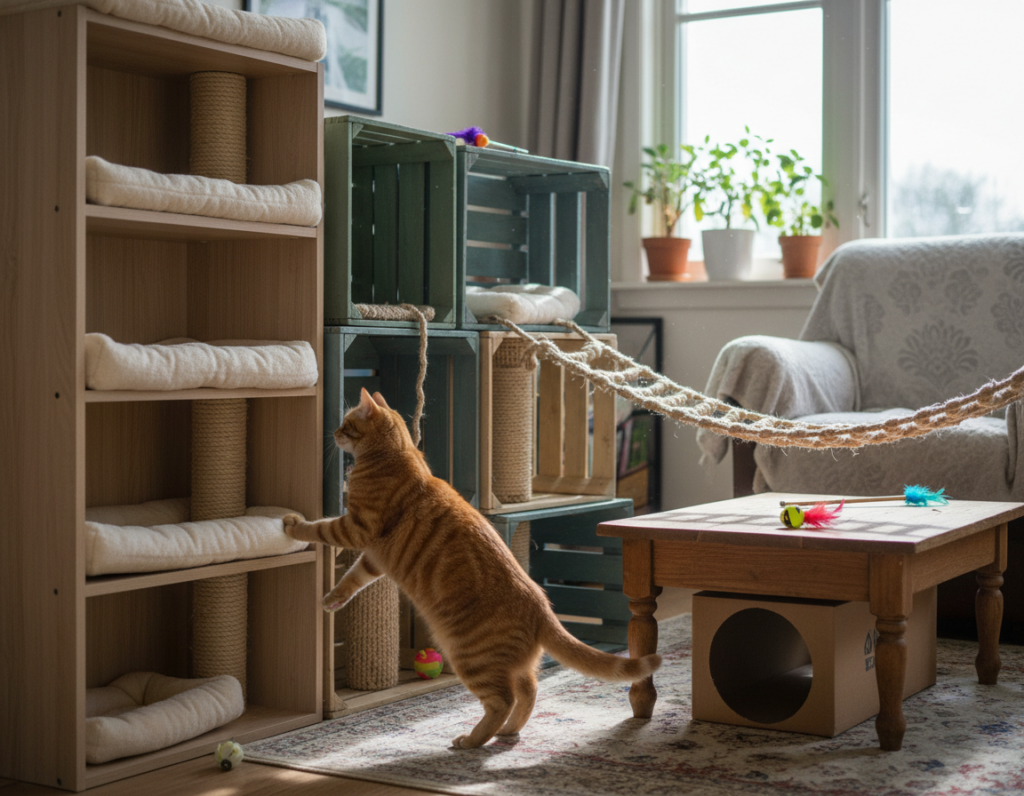
Indoor life can dull a predator’s instincts, and many owners seek gentle ways to keep their feline sharp and engaged. In a modern home environment, providing thoughtful stimulation supports mental health and reduces boredom for each indoor cat.
Careful use of texture-rich toys and simple things around the house can mimic prey cues. A well-chosen toy like the Da Bird Feather Teaser offers lifelike motion that triggers chase and pounce responses.
Owners should spend time observing preferences and rotate items to keep interest high. Interactive play is one of the best ways to strengthen the bond between human and pet while letting a feline express safe hunting behavior.
This article will show practical ways to add texture and variety to the home environment so indoor cats remain active, confident, and well cared for.
Understanding the Instinctual Need for Natural Cat Enrichment Indoors
A healthy home environment gives animals chances to practice seeking and stalking behaviors. This kind of stimulation reduces stress and lowers the risk of anxiety or compulsive disorders in a kept pet.
Many cats have an urge to hunt that is separate from hunger. Even a well-fed indoor cat will respond when they hear or see fast movement.
- Core drives: These behaviors are built in and help maintain mental health for pets.
- Prevention: Proper enrichment and regular play can stop aggression and self-injury before they start.
- Positive outlets: An enriched setting gives cats a safe way to seek, stalk, and capture simulated prey.
Owners should watch preferences and rotate items so many cats stay curious and engaged. Research supports that targeted stimulation improves welfare for both single and multi-pet households.
Selecting Natural Materials for Feline Stimulation
Selecting sturdy fibers and edible greens gives pets safe, textural options to explore.
Choose materials that stand up to regular use and invite healthy behavior. Scratching posts made from sisal rope or solid wood let a cat mark territory and stretch fully. Durable items protect furniture while offering reliable play surfaces.
Natural Fibers for Scratching
Look for posts and pads wrapped in sisal or made from untreated wood. These materials resist wear and let cats deposit pheromones without damaging upholstery.
- Ensure the structure is tall enough for a full stretch.
- Rotate or replace worn covers to keep interest high.
- Select toys and posts that fasten securely to avoid tipping.
Incorporating Grass and Botanical Elements
Growing wheat grass at home is an easy way to provide chewable texture. Pet wheat grass kits are widely available online and at pet stores.
Tip: Place furniture or cardboard planks near a window to mix viewing opportunities with tactile play. Hide small treats or food puzzles to encourage exploration and gentle hunting behavior.
Creating Vertical Hunting Grounds with Wood and Sisal
Adding vertical platforms turns walls and windows into active observation zones for pets. Elevated areas help provide a safe space where a cat can watch movement and unwind. A bird feeder placed in view of a window will often boost a cat’s interest and attention.
Designing Elevated Perches for Observation
Provide cat trees and shelves that let cats climb and survey the room. Placing a perch near a window creates steady opportunities to watch birds and other outside activity.
Vertical space reduces stress by letting a cat escape busy floor zones. It also gives indoor cats a way to practice balance and jumping in a controlled environment.
Securing Climbing Areas and Trees
Mount structures securely so pets can jump safely. Use wall anchors or solid bases for tall posts and attach platforms at different heights to form a climbing route.
- Allow cat access to elevated perches for observation and rest.
- Place furniture near a window to increase bird-viewing opportunities.
- Ensure shelves and trees are stable to protect pets and household members.
“Vertical structures turn ordinary rooms into layered, stimulating environments.”
Utilizing Cardboard and Paper for Foraging Games
Cardboard and paper offer simple, low-cost ways to turn mealtime into a game. They invite exploring and searching without expensive gear. This approach gives cats a chance to use hunting skills safely inside the home.
DIY Cardboard Puzzle Feeders
Make feeders from boxes by cutting holes and hiding kibble or small treats. Use layers of cardboard to create tunnels and peep-holes.
- Place food in folded sections to slow eating.
- Hide toys or wand attachments to lure interest.
- Swap layouts to add variety every few days.
The Benefits of Paper Bags
Paper bags provide sound, texture, and hiding spots. Remove handles and supervise play. Many cats enjoy popping in and out of bags to stalk or rest.
Hiding Treats in Hidden Corners
Scatter small amounts of food behind furniture and in corners. Rotate locations around the house to prevent boredom and encourage foraging time.
“Rotating puzzles and hiding spots keeps play fresh and reduces problem behaviors.”
Incorporating Sensory Textures into Daily Play
Short, texture-focused play sessions help pets stay sharp and satisfied each day. Experts suggest a timer for 5 minutes twice daily to create reliable social play time.
Use a wand toy to mimic the quick movement of mice or birds. Wand toys are effective because they combine motion, sound, and reach.
Offer a variety of toys—plush mice, kicker toys, and small noisy items—to learn which textures and sounds each animal prefers. Rotate items every few days to keep interest high.
Engaging in short sessions helps burn energy and provides mental stimulation that reduces boredom and problem behavior.
“Five minutes twice a day of focused play can make a measurable difference in a pet’s wellbeing.”
- Keep sessions lively but brief to match a short attention span.
- Supervise string-based wand toys to avoid accidental ingestion.
- Use treats sparingly to reward successful pounces and return to play.
Consistency matters: regular tactile play builds trust and keeps cats active, curious, and confident over time.
Managing Safety and Rotation of Enrichment Items
Keep play areas safe and fresh by inspecting gear and swapping toys on a schedule.
Inspect structures weekly. Owners should check cat trees and scratching posts for loose parts and wear. Secure wobbly bases or replace worn rope to prevent accidents during active play.
Rotate toys and cardboard boxes every few weeks so the environment stays novel. LifeLearn Inc. notes this practice keeps cats interested and reduces boredom over time.
- Use a Feliway diffuser in anxious areas to help calm a feline.
- Provide one litter box per cat plus one extra to maintain hygiene and prevent problems.
- Check for small hazards—strings, loose staples, or toxic plants—before play.
“A routine of inspection and rotation preserves safety and keeps play engaging.”
These steps help owners provide cat care that balances curiosity and safety around the house.
Conclusion
Simple daily routines that blend climbing, foraging, and short chase sessions keep a pet active and content.
Creating a stimulating environment with varied textures supports both physical and mental health. Incorporate vertical space, DIY foraging games, and brief interactive play to satisfy hunting drives and reduce boredom.
Always prioritize safety: rotate toys, inspect gear, and supervise string-based items to prevent accidental ingestion or injury. Observe each animal closely and adapt activities to their preferences.
For guidance on assessing the wider environment and planning practical changes, see this environmental assessment resource.