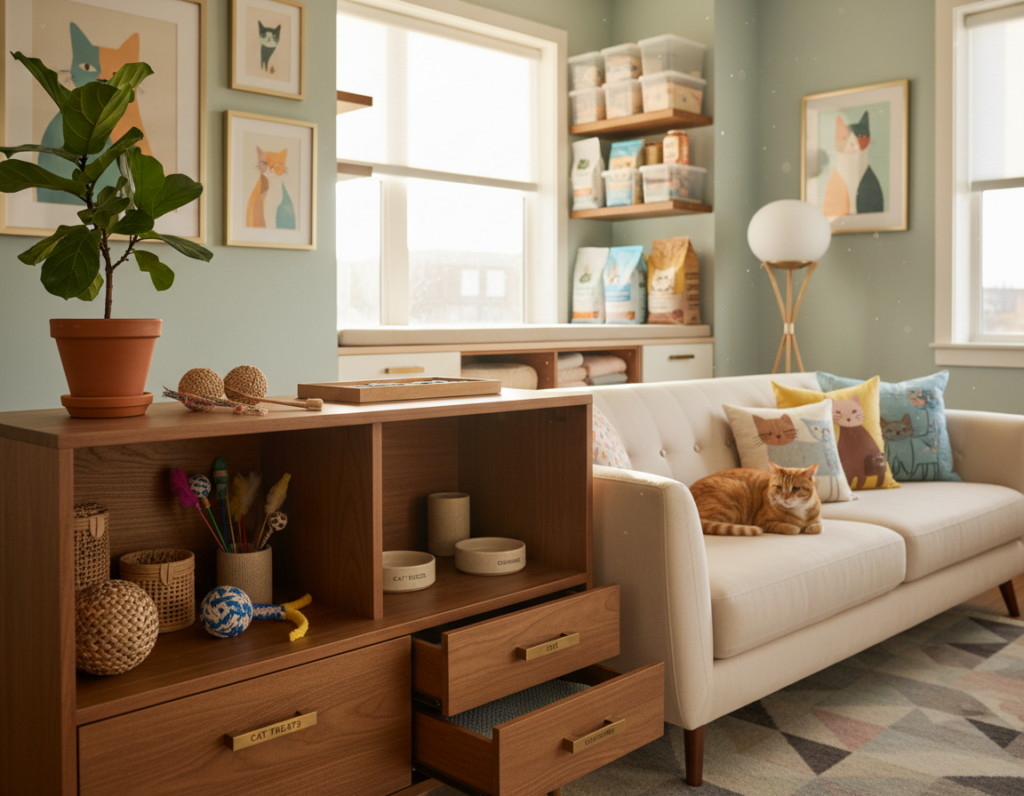
Finding the right spot for a cat’s needs can transform a cramped living area. The author tested several tricks in a San Francisco unit to keep the cat comfortable while preserving the apartment’s look.
The trick is to balance instinct and design. They explored bathroom and closet options, creative covers, and discreet furniture that hides a cat litter box without creating an eyesore.
Practical habits matter: learn how to put litter so tracking drops and odors stay controlled. That keeps the home fresh and guests at ease.
A well-chosen solution stays accessible for the pet and unseen by visitors. With simple planning and a few smart products, the unit can feel cohesive rather than cluttered.
Understanding the Needs of Your Cat
Choosing the right spot for a cat to relieve itself starts with understanding feline behavior. Owners should think about both comfort and access when they select a place for the litter box. The right choice reduces stress and encourages consistent use.
Privacy Requirements
Cats feel vulnerable while they go, so privacy matters. Make sure the chosen area lets them enter and exit without surprise approaches.
- Pick a quiet corner away from busy walkways.
- Avoid noisy machines and frequent foot traffic near the boxes.
- Observe the cat; some prefer semi-enclosed options to feel secure.
Accessibility Standards
Easy access keeps accidents from happening. A cat should reach the box without climbing or navigating tight barriers.
- Keep the box on a flat surface and at a low threshold for older pets.
- Use cat litter that matches texture preferences to encourage use.
- For multi-room living, provide multiple boxes so distance is never a barrier.
Watch behavior closely: if a cat avoids a spot, change the area or the box type to restore confidence.
Strategic Small Apartment Litter Box Placement
Finding an out-of-the-way yet reachable spot for a cat can save both floor space and nerves.
Follow the “n+1” rule recommended by Dr. Justine Lee: have one more box than the number of cats. This keeps a clean option available and reduces territory issues.
Good options include a quiet bathroom or an unused room corner that stays private but accessible. When you put litter box furniture in the living area, it hides mess and preserves style.
Practical checks:
- Don’t block doorways or plumbing access.
- Choose spots with low foot traffic so cats feel secure.
- Integrate a cat litter box into existing furniture for a tidy look.
Many owners find that the best place for a box small apartment is a tucked corner that remains easy to reach. For more placement ideas, see where to put a litter box.
Creative Ways to Conceal the Litter Box
Concealing a cat’s toileting area can boost both hygiene and home style when done thoughtfully. Simple solutions offer privacy for the pet and keep living areas tidy.
Furniture Enclosures
Use furniture that doubles as a cabinet to hide the box and match the room’s decor. Many owners place a cat litter box inside custom pieces to keep the living room neat.
- Ventilation: make sure the cabinet has airflow to avoid trapped smells.
- Size: allow space for the cat to turn and for easy cleaning.
Decorative Dividers
Folding screens or an open shelving unit create a discreet corner. These options give cats privacy while blending with interior design.
Plant Coverage
Tall plants or a green screen offers a natural barrier that softens sightlines. For multi-cat homes, choose larger enclosures so all cats feel comfortable and unhurried.
Locations You Should Always Avoid
Some locations pose clear health and behavior risks that owners should avoid when placing a cat’s toileting station. Choosing the wrong spot leads to skipped use, odors, and hygiene issues.
Keep both pet and people safe: never locate a litter box near where food is prepared or served. Cats avoid eliminating near meals, so a kitchen or any area with food and water creates stress and poor habits.
The Danger of Kitchen Proximity
Do not put a litter box in the kitchen. This exposes the home to bacteria and smells and conflicts with basic food safety. It also makes cats uncomfortable.
- Avoid dark, unventilated closets or under-sink cabinets—these trap odors and encourage bacteria growth.
- Keep boxes out of high-traffic or noisy areas; loud appliances or vibration can scare cats and cause accidents.
- If a laundry room is considered, ensure machines don’t shake while the cat uses the box.
Bottom line: the best place is quiet and private. Choose an area that protects both household hygiene and the cat’s sense of safety.
Essential Rules for Multi-Cat Households
In homes with more than one feline, rules keep stress low and harmony high.
Follow the “n+1” guideline: provide one litter box per cat plus one extra to avoid territorial issues. This simple rule reduces competition and prevents common behavioral problems.
Spread the boxes around the home. Placing each unit in a different area lets each cat have a private option. That reduces ambushes and gives room for shy animals to go when they need to.
Keep cleaning frequent. Cats will avoid a box that smells like another cat, so scoop daily and change cat litter on a schedule. Clean pans and mats to cut odor and tracking.
- Provide at least one litter box per cat, plus one extra.
- Locate boxes in separate zones so cats have choices.
- Use clumping cat litter for faster, easier maintenance.
- Maintain daily scooping to prevent avoidance issues.
Space constraints? Choose high-quality, quick-clumping cat litter and prioritize maintenance. Good materials and steady routines keep the house calm even with many cats.
Maintaining Freshness in Compact Living Spaces
Keeping a compact home smelling clean depends on a simple, daily routine more than any single product. A focused schedule helps keep the area inviting for both people and pets.
Daily Cleaning Routines
Daily scooping prevents smells and encourages a cat to use the area. Scoop at least once a day and remove clumps promptly.
Use 99% dust-free cat litter to protect breathing health in a tiny apartment. Place a mat to catch stray particles and reduce tracking into the living room.
Odor Control Technology
Modern tools make a big difference. Consider an air purifier with a HEPA and activated carbon filter for persistent odors.
- Specialized litter: choose odor-neutralizing formulas for long-lasting control.
- Ventilation: ensure airflow near the box to disperse smells.
- Deep cleaning: replace cat litter and sanitize the pan every few weeks to prevent bacteria buildup.
“Consistent care and the right gear keep living spaces fresh and welcoming.”
Selecting the Right Equipment for Limited Square Footage
Choosing gear that fits both cat and floor plan makes daily care easier and keeps the room tidy. Owners should match size and features to the pet and to the home’s layout.
Consider two proven options:
- Neakasa M1 Plus — designed for cats up to 33 lbs, this enclosed unit suits heavier pets while saving floor area.
- Litter‑Robot EVO — a compact automatic option that clears waste after each use and slips under furniture to free up floor space.
They can put litter in an automatic unit like the EVO to reduce odors and hands‑on scooping. Top‑entry designs also help cut tracking and keep the room cleaner.
Practical tips: choose a unit that allows the cat to turn around easily. Look for furniture-style shells that double as seating or storage to hide the device and preserve visual flow.
“Investing in quality materials and the right design saves time and keeps living areas fresh.”
Monitoring Your Cat for Behavioral Feedback
Careful observation tells whether a new location suits the pet. Owners should watch body language, frequency, and any accidents to learn if the spot works.
Gradual Relocation Techniques
When moving a unit, shift it incrementally—only a few feet every day. This slow approach reduces confusion and prevents stress that can cause avoidance.
Keep the area clean and quiet. Remove any food and water bowls so the cat feels safe and maintains privacy while using the unit.
- Watch for signs: accidents outside the unit, circling, or hesitation indicate the spot may be wrong.
- Try swaps: if issues persist, change the type of litter or the furniture enclosure to improve comfort.
- Bathroom or closet moves: make sure access is easy and smells are controlled during transitions.
“A calm, consistent spot and attentive monitoring prevents most behavior issues.”
Conclusion
A balanced approach ensures the pet has privacy and the home remains welcoming for people.
Choosing the right equipment and keeping a steady cleaning routine keeps the living area fresh. This lets owners preserve style and maximize usable space.
Prioritize the cat’s comfort. Make sure boxes sit in quiet spots that the pet can reach easily. Use odor-control products and regular service to reduce chores.
With thoughtful choices, even a small apartment can be tidy and cat-friendly. A well-planned setup makes the home calmer and the pet happier.