Maintaining a lively home life helps pets stay healthy. Experts at The Ohio State University Indoor Pet Initiative stress that varied stimulation supports mental health. International Cat Care and the Feline Veterinary Medical Association also advise diverse daily activities to keep felines engaged.
Rotating simple toys and views gives a cat new chances to show natural behaviors. When owners spend time offering safe challenges, they meet emotional needs and reduce problem behaviors.
Consistent care and creative planning build a stronger bond. Short play sessions across the day keep attention high and offer regular rewards for curiosity.
In practice: vary toys, change window perches, and introduce brief novel sounds or movements. These steps follow global care recommendations and help pets lead happier lives.
Understanding the Importance of Indoor Cat Visual Enrichment
Changing what a pet can see or chase helps it follow instincts and stay engaged. A thoughtful environment offers safe outlets for hunting and exploring without risking outdoor harms.
The Role of Natural Instincts
Predatory play satisfies a feline’s urge to stalk, pounce, and capture. Products like the Da Bird Feather Teaser let cats act out hunting behaviors in a controlled way.
Cardboard boxes and hiding spots add simple pleasures. Puzzle feeders make a cat work for food and treats, which mirrors searching for meals in nature.
Preventing Boredom and Stress
To prevent stress, many cats need varied toys and a quiet retreat. Feliway diffusers or NurtureCALM collars can help reduce anxiety in a busy home.
- Rotate toys and store extras with catnip to keep play novel.
- Offer puzzle feeders for food and small treats to boost daily mental stimulation.
- Make sure there are cardboard boxes and safe hiding places for plenty of independent play.
Small, regular changes in the environment go a long way toward healthy behaviors and a happier pet.
Creating Dynamic Viewing Areas Near Windows
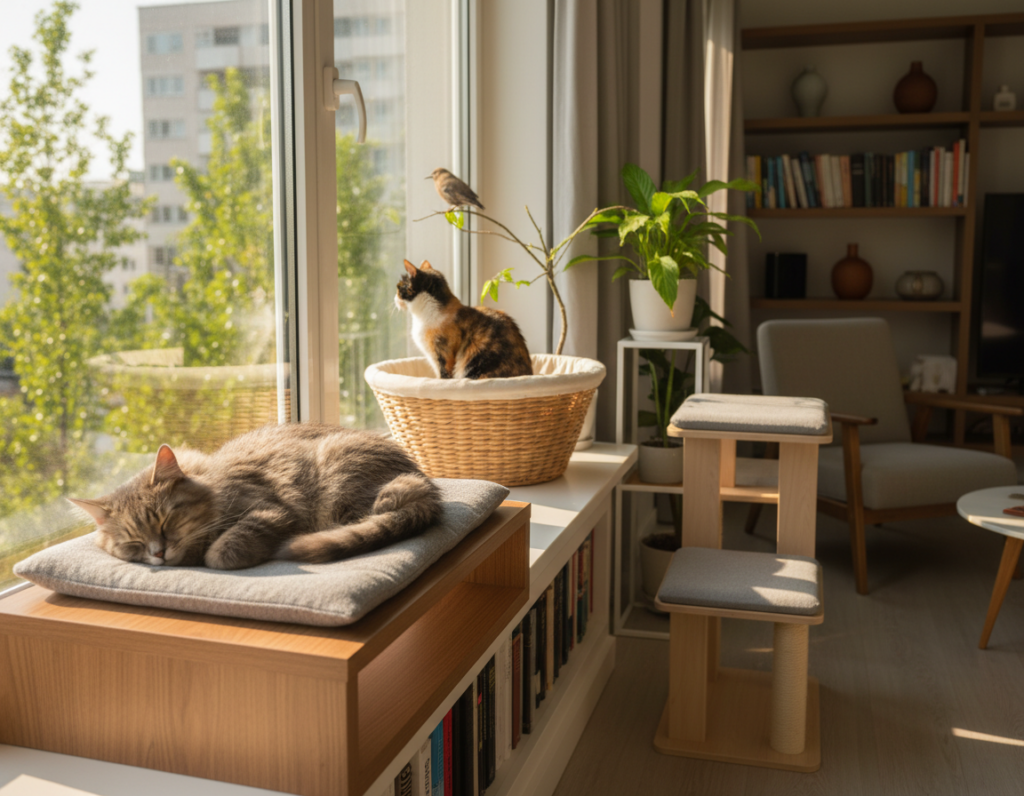
A few well-placed perches can turn a plain window into a daily theater of birds and weather. This gives a cat steady, safe stimulation without leaving the home.
Utilizing Bird Feeders and Nature Views
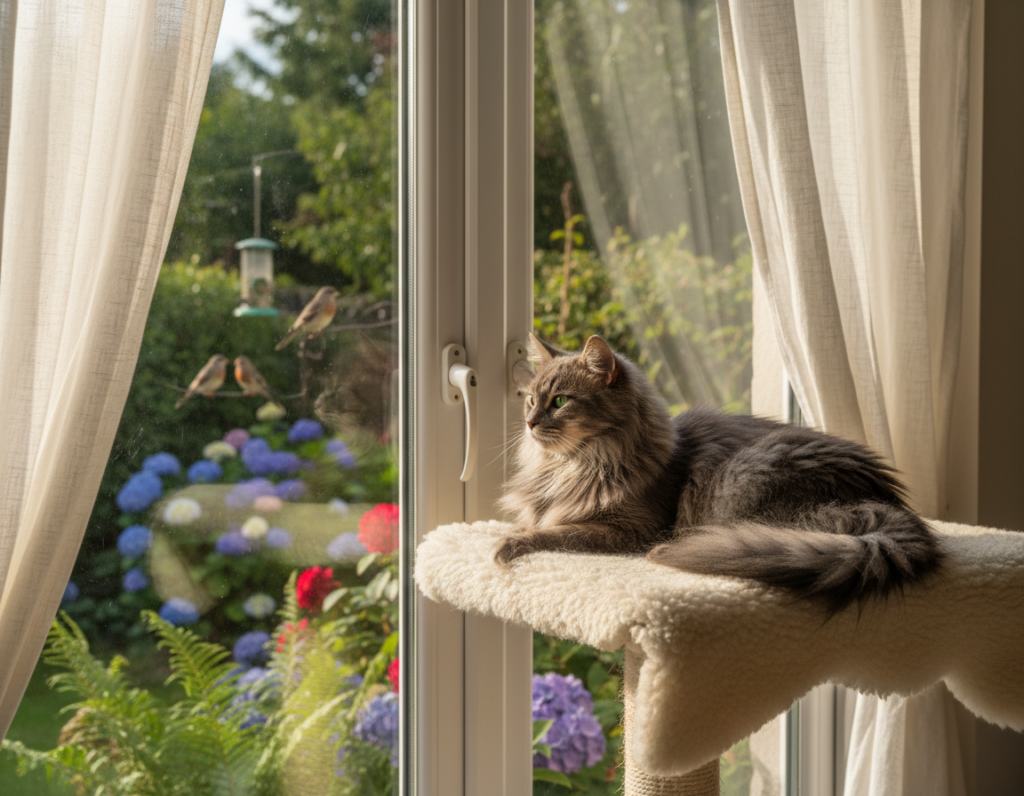
Placing a bird feeder within sight of a window provides a changing scene that holds attention. Birds will often habituate to watchers, making the feeder a lasting way to entertain many cats.
“Installing simple perches and an outside feeder creates hours of interest and helps reduce boredom.”
- Install a feeder near a favored window to create a dynamic, natural show.
- Arrange elevated spots and modified furniture so each pet can claim a clear lookout.
- Offer a variety of perches around the house so cats can pick a new view through the day.
- Keep one dedicated window perch for naps and focused watching; add a treat or toy nearby to reinforce the habit.
Simple changes matter. Dedicated viewing areas boost mood and keep an indoor cat engaged with the environment.
Implementing a Rotation Schedule for Visual Stimuli
Scheduling short swaps of playthings and perches helps maintain steady attention throughout the day. A simple plan saves time and keeps cats curious.
Start small: rotate two to three toys and one cardboard box every two to three days. Store wand toys and similar items in a container with catnip to renew scent and interest.
Divide a meal into several portions and hide them around the house. This hides food and turns a meal into a search game that rewards natural hunting behavior.
- Dedicating ten minutes each day to play with a wand toy satisfies hunting urges.
- Swap perches and boxes so each spot feels fresh and inviting.
- Rotate treats and puzzle feeders to provide plenty of variety and novelty.
Consistent rotation offers an easy, proven way to keep a pet engaged at home. Make sure the schedule fits family routines so the changes become a regular, stress-free habit.
Enhancing the Environment with Vertical Space
Adding vertical climbing and lookout points gives pets more control and makes their home feel larger. This approach supports natural behaviors and adds restful high spots that many animals prefer.
Installing Cat Trees and Perches
Choose sturdy cat trees and wall shelves to provide climbing routes and vantage points. High platforms let a cat observe the house and relax safely.
Well-placed towers also offer scratching surfaces and a range of heights for play and naps.
Modifying Existing Furniture
Simple mods turn ordinary furniture into usable areas. Add carpeted steps to sofas, attach shelves to bookcases, or convert a tall dresser into a series of platforms.
- Provide vertical space to satisfy climbing, scratching, and lookout needs.
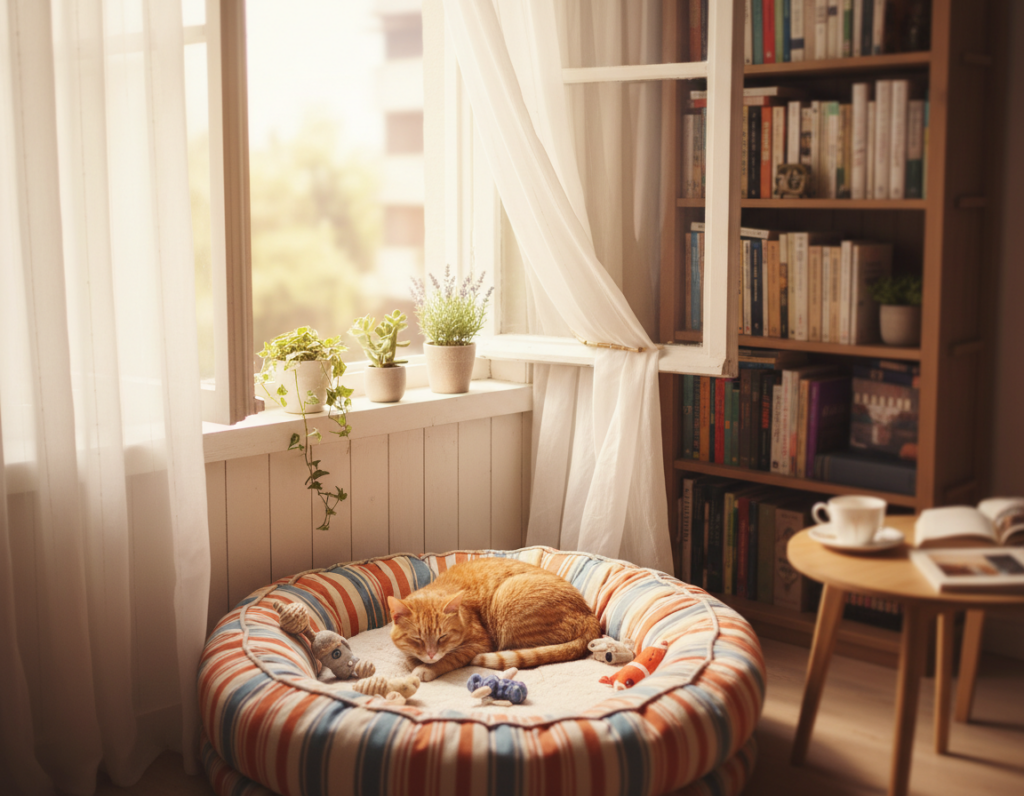
- Create hiding places with boxes and elevated beds for quiet retreats.
- Mix toys and perches near a window to extend interest and comfort.
For detailed plans on racks and shelves, see this guide on vertical space for cats. These steps make the home richer and more rewarding for indoor cats.
Integrating Interactive Play to Complement Visual Stimulation
Using wand toys and hidden treats turns ordinary time into a stimulating hunt. Short sessions of focused play give purpose and satisfy hunting drives.
Daily timing matters: spend 10 to 15 minutes each day with a wand toy to deliver consistent mental stimulation. End each session by letting the cat catch the toy and receive a small treat or portion of a meal.
Mix the methods: hide treats or food portions around the home to encourage searching and problem solving. Rotate toys and include catnip-infused items to keep interest high.
- Short wand play sessions meet hunting needs quickly and safely.
- Hiding meals turns feeding into a rewarding game.
- Letting them win by catching the toy completes the hunt and strengthens the bond.
Interactive play is a proven way to keep cats active and mentally sharp. It also builds trust and offers another practical way to support long-term mental stimulation.
Safety Considerations for Outdoor-Facing Enrichment
Designing viewing areas requires attention to both curiosity and comfort to keep animals secure. Thoughtful setup helps pets enjoy the outdoors from inside without added stress.
Monitoring and retreat options are essential when a window view shows activity outside. The sight of roaming cats or sudden movements can trigger anxiety. Owners should provide hiding places and elevated platforms so a cat can leave the scene quickly.
Managing Stress from Roaming Neighborhood Cats
- When placing a window perch or cat trees, make sure the spot has an easy exit to a quiet room.
- The sight of other cats in the yard can cause stress; offer covered places where cats can retreat.
- Take care not to position feeders or toys where they attract predators or increase tension for pets.
- Placing a bird feeder near a window is a good way to entertain, but ensure the area stays secure and calm.
- Monitor each pet in viewing areas to watch for signs of stress and adjust the setup as needed.
Regular checks and small changes keep the home comfortable and safe. Simple care and observation prevent problems and support long-term wellbeing.
Conclusion: Sustaining Long-Term Mental Health for Your Cat
Making small, regular updates to toys and lookout spots prevents boredom and supports wellbeing. Consistent attention and steady care help maintain a healthy routine for a pet.
Rotate toys and food puzzles to keep curiosity fresh across the day. Short play sessions and a single favorite toy at the end of each session reward natural hunting behaviors and make mealtime more fun.
Provide varied ways for a feline to express natural behaviors. Offer hiding places, elevated perches, and safe things to scratch so they can choose how to use their space.
Every cat is an individual. Tailor care to preferences and track changes over time to keep cats happy and mentally fit.