Claire Stares, a feline behaviourist, notes that many owners feel frustrated when a new toy does not engage their pet. Owners often pay a high price and expect long play. Yet the object may not match the feline mind.
A key issue is lack of mental enrichment. Simple things that look fun to people can fail to mimic the sudden, unpredictable motions of prey. When a cat seems bored, the item loses attention within seconds.
Short, guided sessions often work better than leaving items out all day. Observing a pet helps owners learn which object triggers hunting instincts and sustains interest. Properly timed play can turn a brief moment into a meaningful, active session.
Understanding Feline Instincts and Play
A domestic cat treats play as practice for stalking and catching prey. Claire Stares explains that what owners call play mirrors the full hunting sequence: stalk, pounce, and kill.
Static items rarely trigger natural hunters. If a toy lacks sudden movement, a feline will lose interest fast, no matter the price. Movement that mimics a living creature keeps attention longer.
Each cat has a unique experience with play. Owners should watch body language and trial different approaches. A simple string can outperform an expensive gadget when it recreates erratic prey motion.
“Play is rehearsal; the hunt must feel real for the cat to be satisfied.”
Successful sessions use unpredictable movement and short bursts of activity. Observing interaction helps owners match toys and play style to natural instincts, improving the overall cat play experience.
Why Cats Ignore Toys in the Home
Predictability in placement and motion often matters more than gadget features for domestic felines. A July 2025 study found that many prefer when a toy reappears in the same location instead of popping up unexpectedly.
The Impact of Neophobia
The Impact of Neophobia
Neophobia makes some cats wary of a new toy that appears suddenly in their environment. After a busy day, they may avoid anything unfamiliar until it feels safe.
Practical cues:
- Introduce a new toy near familiar spots and let it sit for a few hours.
- Rotate one item at a time so novelty stays fresh over days.
- Use gentle movement that mimics prey instead of erratic motion.
Age and Health Considerations
Age and Health Considerations
Older cats often change hunting style and may ignore toys that need sustained high-energy movement across the floor. Joint pain or dental issues can make chasing a wand or mouse toy uncomfortable.
Simple objects—like a cardboard box or a paper bag—can spark curiosity even when complex gadgets fail. Providing a window perch for bird watching also offers low-effort enrichment for a feline that skips play.
The Role of Novelty and Environment
Small changes in a home can spark fresh curiosity and keep a feline engaged for longer.
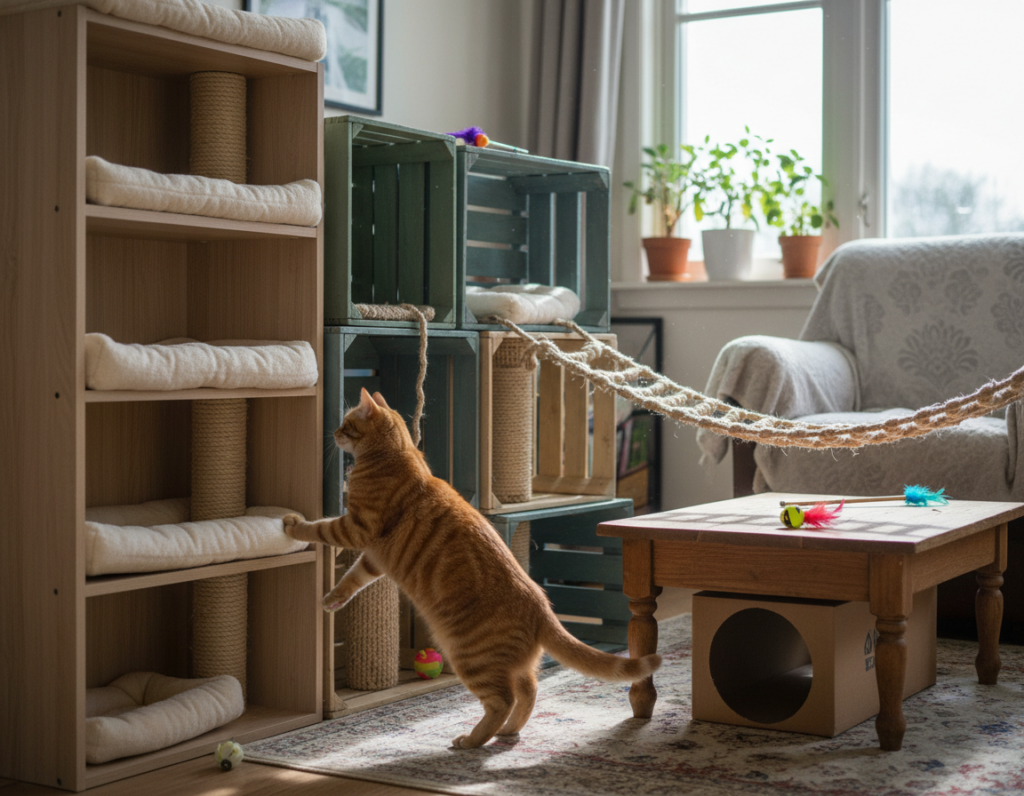
Rearranging space — moving a cat tree or creating a new hidey-hole reignites interest without buying a new toy. Placing the perch near a window adds natural enrichment as birds or passing people provide live prey-like motion.
Owners should rotate playthings every few days. This simple habit prevents boredom and keeps the environment lively without extra cost.
- Introduce a new toy slowly; let it sit in a familiar spot before active play to avoid neophobia.
- Try hiding treats in different rooms to encourage hunting and exploration throughout the day.
- Even a plain cardboard box moved to a new location can provide hours of curiosity and enrichment.
“Consistent novelty is the simplest way to keep a cat curious about ordinary things.”
Being mindful of price helps; rearranging furniture or shifting a box costs nothing but often restores a cat’s drive to hunt and explore.
Matching Toys to Individual Hunting Styles
Different hunting instincts shape which play items hold a feline’s interest. Owners who match gear to a pet’s drive see longer, more rewarding sessions.
Ground Hunters vs Aerial Hunters
Ground hunters will stalk and pounce on a small mouse or ball that moves along the floor.
Aerial hunters prefer a wand with feathers that copies birdlike motion high off the ground.
- Ground: low, erratic movement; mouse or small ball works best.
- Aerial: feather wands or a wand with a dangling feather attract attention.
- Observe at a window whether the cat watches birds or insects to infer preference.
Texture Preferences
Some felines like soft, fur-like fabric while others chase smooth, hard balls.
Testing a range of textures helps owners learn what their cat values.
- Soft fabric or faux fur can trigger rubbing and biting.
- Rubber or plastic balls favor chasers that bat and fetch.
- Avoid noisy plastic if the cat shies from sound.
Sound and Movement Sensitivity
A cat with high sound sensitivity will avoid loud electronic toys. Silent, subtle motion often wins.
- Choose quiet items if the cat startles easily.
- Match movement speed to hunting style; slow for stalkers, fluttering for aerial hunters.
- Remember that others in the home can change interaction patterns.
Key point: Even a high-price item will fail unless it fits the cat’s hunting style. Offer variety—feather wands, balls, and mouse-like toys—so the cat can choose what engages them most.
Practical Strategies to Revive Interest
Brief, repeatable play periods match a feline’s natural rhythm and can restore interest fast.
The Importance of Interactive Play Sessions
Five to ten minutes, two or three times a day, mirrors a natural hunt. These short sessions prevent fatigue and keep a toy feeling like prey.
End each session with a clear victory. Let the cat catch the toy so endorphins reward the chase.
Simple, practical tips
- Use a wand that mimics a mouse or feathered bird and move it away from the cat to encourage pursuit.
- Rotate playthings every few days so novelty stays fresh and the collection does not lose appeal.
- Scent a new toy with catnip if a new toy fails to attract attention.
- Offer a small meal or food treat after play to complete the hunt-eat-rest cycle.
“Interactive play builds engagement and a stronger bond between owner and pet.”
Participation matters more than price. Even an expensive item will not work if the owner does not lead the session.
Short, consistent interaction brings measurable enrichment and keeps a cat returning to the same box, wand, or mouse over hours and days.
When to Consult a Professional
A sudden lack of interest in familiar play can signal something deeper than boredom.
If a cat stops engaging, a veterinarian should rule out pain or medical causes first. A vet can check joints, teeth, and other conditions that reduce activity.
Behavioural support helps too. A professional like Claire Stares, with over 20 years working in homes, rescues, and clinics, can assess whether interaction style or stress from others is the issue.
Common signs that merit a consult include sudden withdrawal from a favourite toy, changed appetite, or avoidance of people or other pets.
- Medical check to rule out pain or illness.
- Behaviourist evaluation for stress or social issues.
- Tailored strategies that match the feline’s preferences and household routines.
Seeking help is not a failure. The right guidance can be worth the price if it restores a healthy, active life and improves long-term interaction between owner and cat.
Signs of Under-Stimulation in Felines
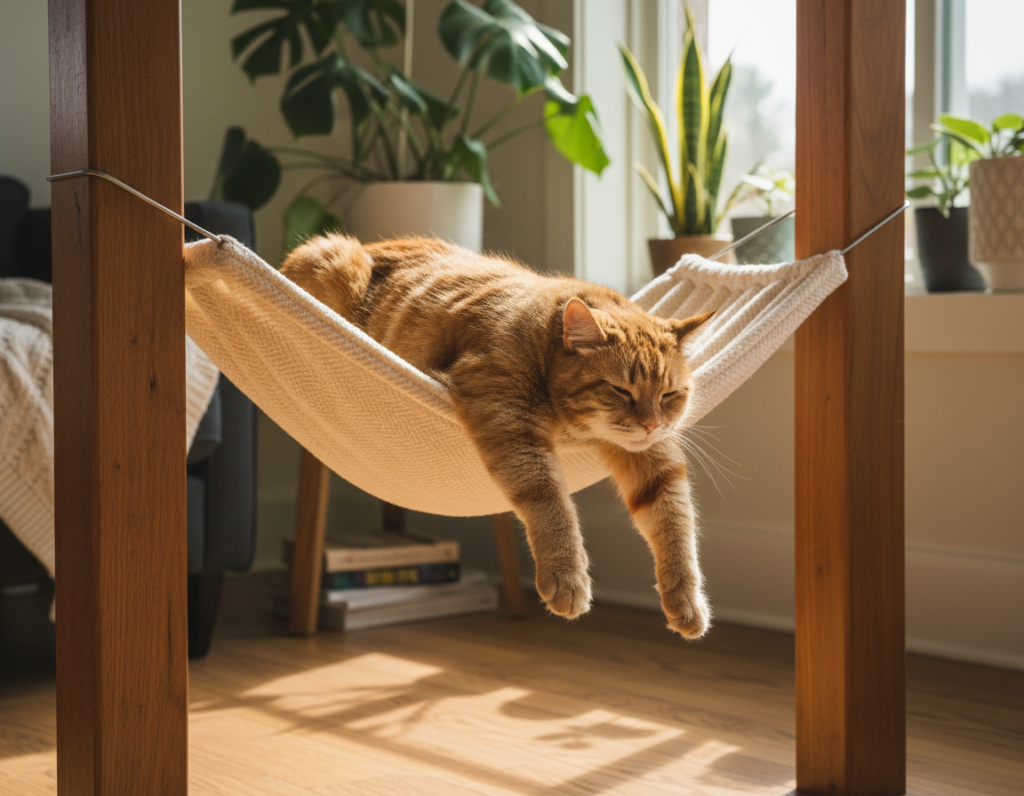
Under-stimulated felines often trade curiosity for long naps and low energy. A cat that sleeps most of the day and avoids active behaviour may be under-challenged by the home environment.
Destructive actions — scratching furniture or knocking things over — can be an attempt to grab attention. Persistent meowing or following an owner also signals unmet needs for mental and physical engagement.
Overgrooming is a serious red flag. Excessive self-cleaning often points to stress or boredom and needs fast enrichment changes.
- Loss of curiosity about surroundings is a warning sign that every cat should be monitored.
- Restless pacing or sudden aggression can appear when regular play sessions are missing.
- Simple solutions include food puzzles and a secure window perch to boost engagement.
Owners should watch these signs closely and act early. For practical steps on restoring curiosity and attention, consult a concise cat enrichment guide.
Conclusion
Closing the loop on play means matching movement, texture, and timing to a pet’s instinctive drive. Owners who focus on these elements will see steady gains in engagement.
Understand the purpose: a cat plays to simulate hunting and to practice catching prey. Short, guided sessions make each moment feel real.
Match simple objects to a pet’s style. Rotate items, lead sessions, and allow small victories. With patience and clear interaction, even low-cost toys can spark joy and deepen the bond in a lasting, healthy way.